






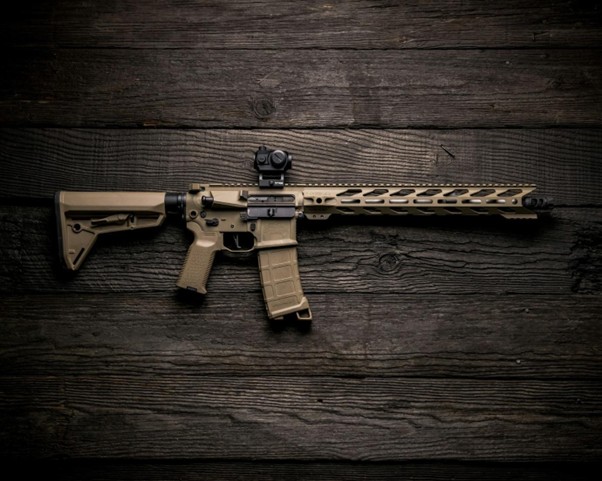
For many outdoorsmen and hunting fans, the AR-15 feels like more than a tool. You see it at the range. Hunters carry it to camp. You hear it mentioned in stories after long days outside. Thinking about taking up hunting yourself? You’ve probably noticed how often this rifle shows up in those circles. But if it is that common, what does it ask from you in return? AR-15 safety turns into a clear promise you make to yourself and your partners. You choose to protect one another first, so every hunt stays about the day, the field, and the memorable moments you actually want to keep.
Understanding the Platform and Its Responsibilities
The AR-15 is a lightweight, semi-automatic rifle. It’s popular because of its modular design and relatively low recoil. These features have made it approachable for experienced shooters and adaptable for different outdoor purposes. But we should never ever confuse that ease of use with what you might refer to as simplicity of responsibility.
The team at Redacted Arms LLC has said that safety with modern sporting rifles begins long before anyone’s pressed the trigger. Likewise, within the whole hunting discourse, it’s often pointed out that hunters have to understand not only how their rifles are functioning (mechanically speaking), but how various environmental conditions and terrain can interact with that platform. For instance, a rifle that’s known to perform predictably on a controlled range will behave very differently across open farmland. Outdoorsmen have to know this.
Beyond mechanical readiness, AR-15 safety demands some situational awareness. Semi-automatic capability means follow-up shots occur quickly. That’s what makes target identification and backstop awareness highly important here. Each shot must be absolutely deliberate; every trigger press must be a direct consequence of clear visual confirmation of what’s beyond the target.


AR-15 safety also requires situational awareness.
Alt. text: A trail inside the woods.
Core Principles of AR-15 Safety in the Field
The AR-15 follows the same basic safety rules as regular hunting equipment. Treat it as loaded. Respect the muzzle. Know your target. Yet its specific features pull more attention. Lightweight. Fast follow-up shots. Modular parts. Does that change how you behave in the field? It should.
If AR-15 safety matters to you, discipline has to cover everything. How do you transport it? Where and how you store it. How do you manage the muzzle and trigger when you move? How you pick your ammunition and study what it does in real terrain, not just on paper. Every step in your routine either supports safety or weakens it. Which side do you want to stand on?
Safe Transport and Storage
Safe transport starts with one simple rule: the AR-15 stays unloaded, and then you remove the magazine. Then you check the chamber both visually and with a finger, not just one quick glance. Do you follow local regulations closely here? You should, because they tell you how to secure the rifle on the road.
On the road, a locked case usually makes the most sense. Sometimes the law even demands it. Do you also separate the rifle from the ammunition? In many situations, that step removes any doubt about your intent.
The same mindset should follow you home or back to camp. Where does the rifle sit when you’re done for the day? A secured spot, well out of reach of kids, guests, or tired hunters, matters more than people admit. Good storage keeps everyone safe, even when the fire is out, the tent is zipped, and no one is watching.
Muzzle Discipline and Trigger Control
Muzzle awareness sits at the heart of AR-15 safety. How often do you stop and notice exactly where your barrel points? As an outdoorsman, you need control over that direction every single moment. The risk grows when you climb into a tree stand, step over deadfall, or move across uneven ground. One slip, one careless swing of the rifle, can change everything.
Trigger discipline stands right beside muzzle control. Your finger stays indexed along the receiver until you truly mean to fire. Do you treat that as a non-negotiable rule? You should. Repeating this habit at the range and during real hunts helps it sink in. Over time, it feels natural, like settling your breathing before you take a shot.
Ammunition Awareness
The rounds you load matter as much as the rifle itself. Maybe even more. Every cartridge should match a clear purpose. Are you hunting deer in open fields? Chasing smaller game in tight cover? The load changes with the task.
Do you know what that specific round does after it leaves the barrel? Not in theory, in reality. Outdoorsmen need a sharp sense of their performance at different ranges. They also need to see how wind, cold, heat, or rain change that flight. The box can’t tell you all of that.
Regular range time pulls the picture together. Practice shows the real point of impact. It teaches how recoil feels and how your sights settle when your heart is pounding. Over time, that work builds quiet confidence. Out in the field, that confidence cuts hesitation, rash shots, and split-second choices you could regret later.
Understanding Ballistics and Potential Impact
We can’t talk honestly about AR-15 safety without talking about ballistics. The platform fires high-velocity rounds. Those speeds can cause far more severe injury on impact and sharply lower a person’s chances of survival in a shooting. That sounds intense, but it is the reality. Hunting and defensive use differ, of course. Yet the physics stay the same: velocity matters. High-speed rounds also travel far when they miss. Even in wide, rural areas, houses, roads, or livestock may sit beyond a treeline or just over a hill. Do you always picture what might be there?
Understanding ballistic performance means facing these facts head-on. Responsible hunters study their rifle’s effective range and its limits. They think through angles of fire, especially from stands, ridges, or any raised spot. They accept that a missed shot is not just wasted—it can be dangerous.
Ethical hunting depends on quick, humane harvests. The same force that can cause terrible injury to a person must be directed carefully toward the game. Shot placement matters. So does distance. When you respect both, animals go down faster and suffer less, and your ballistic choices match the standards you set for yourself in the field.
Ongoing Education
Outdoors never stays the same. Trails wash out. New shooting spots open up. Gear improves. Laws change more often than many hunters think. Do you treat your skills and knowledge the same way, or let them sit? Committed hunters choose to keep learning. They spend time at the range, repeat safety drills, and talk with local wildlife agencies. In doing so, they stay current on new rules and updated best practices.
This kind of mindset keeps AR-15 safety alive, not frozen in old habits. It pushes you to adapt when conditions shift. It also builds humility, because you accept that you do not know everything yet. Over time, that attitude strengthens you as a hunter and lifts the entire hunting community around you.
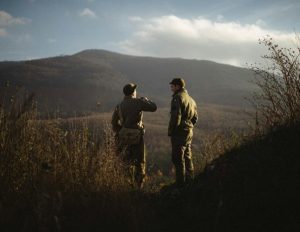

Committed hunters have to keep learning through practice and safety updates.
Alt. text: Two hunters in the field.
Public Perception and the Future of Hunting
Modern sporting rifles occupy a visible place in public discourse. How outdoorsmen handle the AR-15 platform influences perceptions of hunting more broadly. Demonstrating disciplined AR-15 safety will help preserve trust between hunters and the communities around them.
When hunters buy a new rifle, they need to transport it discreetly and follow regulations faithfully, all while engaging respectfully with non-hunters. They’re reinforcing the image of hunting as a responsible and conservation-oriented tradition. Conversely, careless handling or reckless behavior can erode hard-earned credibility.
Strong hunting communities recognize this reality. They understand that every safe interaction, every properly cleared chamber, every carefully chosen shot, contributes to a larger narrative about responsibility and stewardship.
A Commitment That Extends Beyond the Trigger
At its core, AR-15 safety is about mindset. It begins before a hunt and continues long after the rifle’s cleaned and stored. It includes mechanical understanding, disciplined handling, ethical judgment, and awareness of ballistic realities. The AR-15 is a capable and adaptable rifle. In responsible hands, it serves legitimate outdoor purposes effectively. But capability must always be paired with restraint. Outdoorsmen who embrace that balance strengthen their communities, protect their traditions, and ensure that hunting remains rooted in respect: for wildlife, for fellow hunters, for the power of the tools they’re carrying.