






From forgiving first short reeds to premium Canada goose calls and purpose-built snow goose options, these picks cover the calling situations most waterfowl hunters actually encounter.
There are few things in waterfowl hunting that can humble a person faster than a goose call. A guy can sound pretty good driving down the road by himself, then climb into a blind with geese sliding downwind and suddenly every cluck sounds wrong. I have always looked at goose calls the same way I look at shotguns or decoys: the best one is not necessarily the most expensive. It is the one you can run cleanly when birds are actually working.
Goose calls have come a long way. There are affordable molded calls that sound far better than bargain calls did years ago, premium acrylic calls with broken-in guts, and purpose-built calls for everything from snow geese to hunters just learning a short reed.
For this list, I wanted calls that fit real hunting situations. Every category has a winner and a runner-up that makes sense for the hunter shopping for that specific job.
Jump to a Section
Comparison table
How we chose
Quick selector
Price comparison
Call reviews
Buyer’s guide
FAQs
Final thoughts
Our Picks at a Glance
Slayer Honker Slayer
A premium Canada goose call with enough range for traffic work, normal calling and finishing birds.
Buck Gardner Canada Hammer
An easy-operating short reed that lets a new caller learn without fighting the call.
Legendary Gear Snowfall
A dedicated high-octave snow goose call built around speed, power and aggressive pitch.
Legendary Gear Big Dog + Chaos
Two molded-acrylic calls for hunters who regularly switch between Canadas and mallards.
Zink Call of Death Poly
A roughly $30 version of a proven Call of Death design with room for a caller to improve.
Goose Call Comparison Table
We kept this table to four columns so it stays useful on a phone. The “Key Details” column combines the material, call style and current price information that matters most when deciding which model belongs on your lanyard.
Short reed · $168
Short reed · $160
Quick-Tune guts · $24
Minimal backpressure · $34.99
Higher octave · $159
High-volume design · $89
Two-call setup · about $80–$88
Beginner bundle · $130
Short reed · $29.99
Softer tone · about $69
How We Chose the Best Goose Calls
A goose call has to do more than sound good when an experienced caller runs it indoors. We looked at how each model fits a real hunting job, then compared call design, tuning, material, ease of operation, sound range and price. Beginner calls were rewarded for forgiveness. Premium calls were expected to provide more room for an experienced caller to work. Dedicated snow goose calls were judged on the job they are specifically designed to do.
Ease of Operation
How easily the call breaks over, how much air and back pressure it needs, and whether a newer caller can learn it without constantly fighting the reed.
Useful Sound Range
The ability to move from louder attention-getting notes into clucks, moans, murmurs and more controlled finishing work when birds get close.
Construction & Tuning
Material matters, but gut system, reed setup, moisture resistance and how the call arrives tuned can matter just as much in actual use.
Value for the Hunter
A $30 call can be the smarter choice when it matches the hunter. Premium pricing only earns extra credit when the design gives the caller useful capability in return.
Which Goose Call Should You Buy?
If you do not want to compare every reed and material, start with the way you hunt. These are the quickest paths through the list.
Buck Gardner Canada Hammer
Start here before spending premium-call money.
Slayer Honker Slayer
Premium construction without making the call unnecessarily demanding.
Legendary Gear Snowfall
Buy the specialized call instead of forcing a honker call into a second job.
Price Comparison: Our Five Category Winners
Goose calls in this roundup range from about $30 to nearly $170. Price alone does not tell you which call is the best fit: two of our category winners are also the two least expensive calls in this comparison.
Legendary Gear Snowfall
$159
Manufacturer prices checked September 1, 2026. Big Dog + Chaos pricing reflects the two calls purchased separately and varies by selected style. Retail and sale prices may differ.
The Best Goose Calls of 2026
Each pick below solves a different problem. Use the award, call design, price and tradeoffs to choose the model that best matches the geese you hunt and the way you like to call.
Best Overall Goose Call
Slayer Calls Honker Slayer


If I could only pick one goose call from this list to cover the widest range of Canada goose hunting, the Honker Slayer gets the nod. It is a 100-percent acrylic short-reed call designed to run with less air and provide enough back pressure for deep clucks, double clucks, moans, murmurs and honks.
Slayer tunes the call to be manageable and gives the user room to adjust it for softer or harder calling. That gives it the range I want in an all-around call. In the field, one call can handle loud traffic work, normal conversational calling as birds approach and quieter finishing sounds when feet start dropping.
The biggest reason it wins overall is that it does not force you to choose between beginner-friendly operation and experienced-caller capability. A hunter can learn on it, then continue using the same call as his air control and vocabulary improve.
Reasons to Buy
- Premium acrylic construction
- Designed to run with less air
- Wide volume and sound range
- Can stay useful as calling skills improve
Reasons to Consider
- $168 is a lot for a first call
- Budget calls can still kill plenty of geese
- Not a dedicated snow goose call
Overall Runner-Up
GK Calls Solution


GK Calls’ Solution is right there with the Honker Slayer and could easily be the better fit for some callers. GK calls it its all-time best-selling goose call and equips it with OTE broken-in guts so it arrives ready to run.
The Solution stands out because it is user-friendly without being limited to beginner-level calling. GK notes that it finished in the top five on the world stage the year it was introduced, which says plenty about its ceiling. For a hunter who likes a quick, responsive call with plenty of range, the Solution is hard to argue with.
Reasons to Buy
- GK’s best-selling goose call
- OTE broken-in guts
- Hand-tuned
- Strong beginner-to-expert range
Reasons to Consider
- Premium $160 price
- Personal preference between this and Honker Slayer will matter
Best Goose Call for Beginners
Buck Gardner Canada Hammer


Learning a short-reed goose call can be frustrating. The first few practice sessions usually involve a lot more squeaks and air than anything that sounds like a Canada goose. That is why I like a beginner call that gives a new caller some help instead of making him fight the reed.
The Buck Gardner Canada Hammer fits that role well. It is a polycarbonate short-reed call built around Buck Gardner’s Quick-Tune guts, with fast reed pickup and double O-rings that help keep the insert sealed. Those details matter because a call that responds consistently makes it easier to learn where the break point is. Instead of blowing harder and harder, you can start learning air control, hand position and back pressure.
It is also priced where a beginner can buy one without committing to a premium acrylic call. The Canada Hammer has enough range to stay useful after the basics are learned, which is important. A good beginner call should help you start without being something you immediately outgrow.
Reasons to Buy
- Very approachable first short reed
- Quick-Tune gut system
- Hand-tuned and responsive
- Only about $30
Reasons to Consider
- Polycarbonate rather than premium acrylic
- Experienced callers may eventually want a more specialized call
Beginner Runner-Up
Primos Honky Tonk
The Primos Honky Tonk is another good place to start, especially for somebody who has struggled to get a short reed to cooperate. Primos designed it to run with minimal back pressure, and the sounding board uses patented ditches intended to help prevent sticking from moisture.
The reed system can also be taken apart for cleaning and reassembled without turning a simple cleaning job into a tuning project. That is what I want in a first goose call: simple, forgiving and inexpensive enough that you are willing to carry it everywhere and practice with it.
Reasons to Buy
- Minimal back pressure
- Designed to resist sticking
- Easy cleaning and reassembly
- Affordable
Reasons to Consider
- Built around ease of use rather than premium materials
- Advanced callers may prefer more resistance or a different tone
Best Snow Goose Call
Legendary Gear Snowfall
Snow geese are a different animal. When a big flock is in the air, there is already so much noise that a call has to have bite, pitch and enough power to become part of the racket.
Legendary Gear’s Snowfall was built around that problem. The call originates from the company’s Omega design and is intended to produce a higher-octave sound with speed, aggressive pitch and murmurs. A snow goose call has to get loud, but pure volume is not enough. You still need variation so you can sound like birds instead of somebody leaning on one note.
I also like that the Snowfall is a purpose-built snow goose call rather than a Canada call being asked to do a second job. If I am investing in a dedicated snow goose call, I want one designed around the sharper, busier sounds those birds make.
Reasons to Buy
- Purpose-built for snow geese
- Higher-octave design
- Built for power and speed
- Useful aggressive murmurs in addition to volume
Reasons to Consider
- $159 is expensive for an occasional snow goose hunter
- More specialized than an everyday Canada call
Snow Goose Runner-Up
Slayer Calls Snowstorm
Slayer’s Snowstorm makes sense for the hunter who spends long days in a snow goose spread. It is designed for reaching high migrators and for finishing birds over the decoys, and that working range is why it makes the list.
Snow goose hunting can change quickly. One flock may be way up there and require everything you have to get its attention. The next may already be circling and need something more controlled. At $89, the Snowstorm comes in well below the Snowfall while remaining a dedicated snow goose tool.
Reasons to Buy
- Dedicated snow goose design
- Built for high-volume field use
- Designed for both traffic and finishing work
- Lower price than premium snow calls
Reasons to Consider
- Still specialized for one species
- Premium Snowfall remains our top snow pick
Best Duck and Goose Call Combo
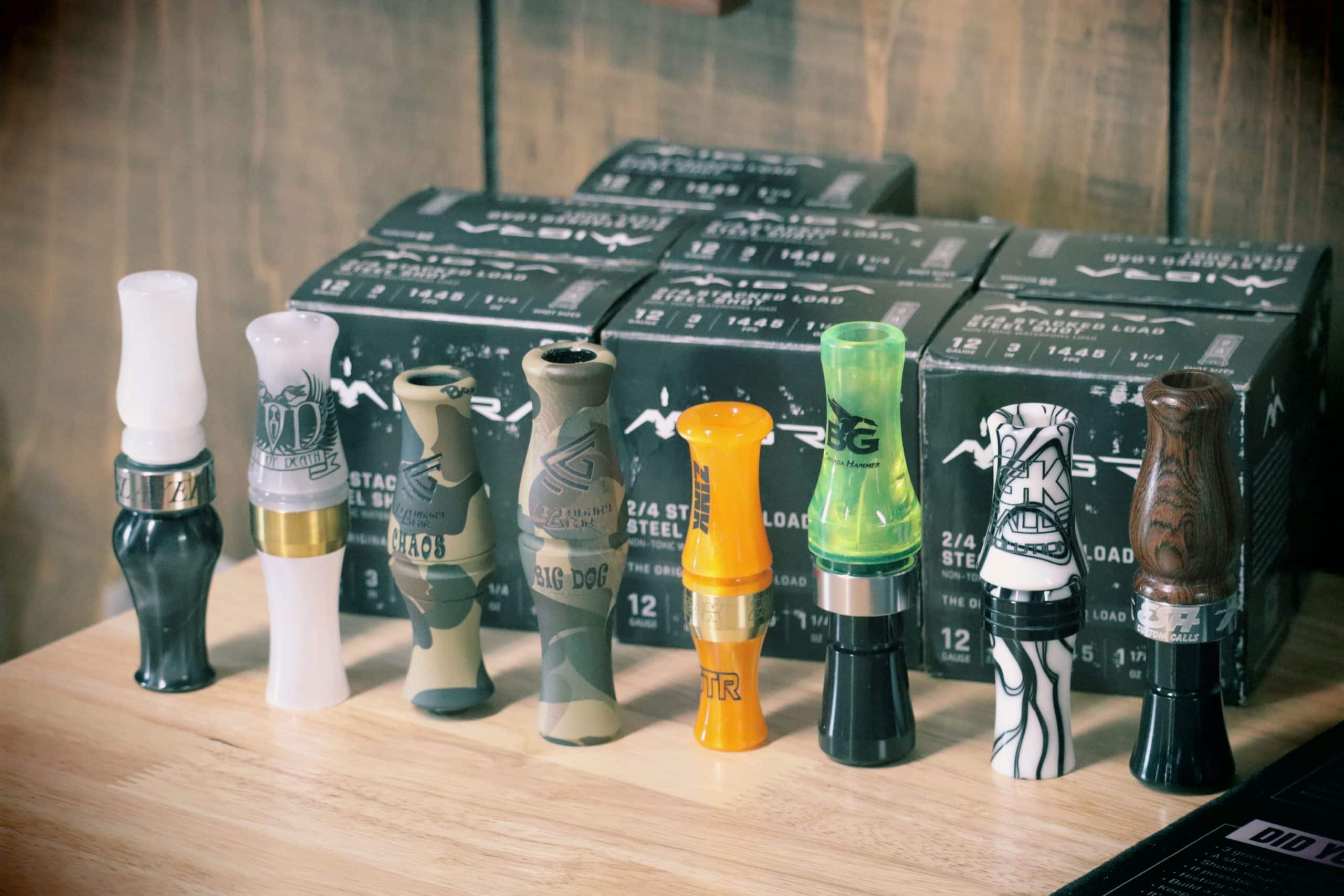
Legendary Gear Big Dog + Chaos

Most waterfowl hunters are not goose-only hunters. One morning may be a cornfield full of Canadas, and the next could be a marsh where mallards are the main event. If you’re still working on your mallard sounds, our guide to how to call ducks covers the basic quack, hail call and feeding chuckle.
Legendary Gear’s Big Dog and Chaos make a strong pairing. The Big Dog is an injected molded acrylic Canada goose call with broken-in guts and hand tuning. The Chaos is also molded acrylic, hand-tuned and available in either a single- or double-reed version.
What I like most is that the combination gives a hunter two purpose-built calls without the price of two machined acrylic models. The Big Dog covers honkers while the Chaos lets you choose a more forgiving double reed or a faster single reed depending on your duck-calling style.
Reasons to Buy
- Covers ducks and Canada geese
- Molded acrylic keeps pricing reasonable
- Chaos available in single or double reed
- Both calls are hand-tuned and American-made
Reasons to Consider
- You are still buying two separate calls
- Species specialists may prefer one premium call instead
Duck + Goose Combo Runner-Up
Slayer Dagger + Mallard Reaper
Slayer’s Dagger and Mallard Reaper set is an easy recommendation for a newer all-around waterfowler. Both calls are made from Delrin, and both were designed with ease of use in mind.
The Dagger is a short-reed goose call, while the Mallard Reaper is a double-reed duck call. Double reeds are generally forgiving for new duck callers, while the Dagger gives a beginner a manageable path into short-reed goose calling. Put the pair on the same lanyard and a new hunter has a legitimate setup for mixed duck-and-goose seasons.
Reasons to Buy
- Designed as a beginner bundle
- Durable Delrin construction
- Forgiving double-reed duck call
- One purchase covers both species
Reasons to Consider
- Costs more than the Legendary Gear molded-acrylic pairing
- Experienced callers may prefer more specialized individual calls
Best Goose Call for the Money
Zink Call of Death Polycarbonate


There are certain names most waterfowl hunters recognize, and Zink’s Call of Death is one of them. The premium acrylic COD is known for power, speed and a strong low end, but the polycarbonate version is what interests me when we are talking value.
The poly Call of Death brings the basic COD design into a much more affordable price range. Zink uses a worn-in tone channel and short-reed design intended to provide the calling abilities of the original Call of Death. You give up the feel of premium acrylic, but you get a proven call concept at a price that makes sense for a working hunter.
This is the type of call I like for somebody who has learned the basics and wants more capability without jumping straight to a $150-plus call. It is inexpensive enough to hunt hard, but has enough range to stay useful as your calling improves.
Reasons to Buy
- Only $29.99
- Short-reed Call of Death design
- Worn-in tone channel
- Useful as skills improve
Reasons to Consider
- Polycarbonate rather than premium acrylic
- Experienced callers may prefer a premium model
Value Runner-Up
ESH Custom Calls The Freezer


The Freezer takes a different route to value. Instead of being a molded version of a premium acrylic call, it uses wood and a barrel design intended to be easy to run. The wood gives it a softer, mellower tone with natural rasp, which can be an advantage when geese have heard hard calling all season.
That is why I like The Freezer as a runner-up. Value is not always about finding the cheapest call. Sometimes it is about getting a different sound and useful craftsmanship without spending premium-acrylic money. The Freezer can reach out with louder hail calls, but its real appeal to me is the softer side — clucks, moans and yodels when birds are close and thinking about finishing.
Reasons to Buy
- Distinctive softer wood tone
- Designed for loud and soft calling
- Easy-running barrel design
- Less expensive than premium acrylic
Reasons to Consider
- Wood requires more care than synthetic materials
- Not the cheapest value option in this guide
How to Choose a Goose Call
Start With the Species You Actually Hunt
A good Canada goose short reed covers a broad vocabulary, but a dedicated snow goose call is built around a different sound profile. If Canadas make up nearly all of your hunting, buy the best Canada call for your ability. If spring snow goose hunting is a major part of your season, a purpose-built snow call becomes much easier to justify.
Short Reeds Reward Technique
Most of the Canada goose calls in this roundup are short reeds. They can produce honks, clucks, double clucks, moans and murmurs from one compact call, but the caller has to learn controlled air and back pressure. New callers often try to fix every bad note by blowing harder. Usually the better fix is cleaner air presentation and hand control.
Polycarbonate vs. Molded Acrylic vs. Premium Acrylic
Polycarbonate keeps cost down and handles hard hunting well. It is the obvious place to begin if you are learning or need a backup call. Molded acrylic occupies the middle ground, giving calls such as the Big Dog and Chaos a different construction than basic polycarbonate without the price of machined acrylic. Premium acrylic commands the highest price and makes the most sense once the caller can use the extra responsiveness, volume control and refinement.
Wood Still Has a Place
Wood calls can produce a warmer, mellower tone with natural rasp. That can be attractive around pressured birds or on smaller water where a hard, sharp call may be more sound than the situation needs. The tradeoff is that wood generally deserves more care than synthetic materials.
Broken-In Guts Can Shorten the Learning Curve
When a maker advertises broken-in guts, the goal is a reed-and-tone-board system that behaves more like one that has already been run for a long time. That can mean quicker response and less of the frustrating break-in period some callers associate with a new short reed.
Do Not Buy More Call Than You Can Use
A $160 acrylic call does not automatically make a hunter sound better than a $30 polycarbonate call. If you are still learning a basic honk and cluck, a forgiving call that responds consistently is more useful than a premium call you have to fight. Upgrade when you know what additional response, resistance or tonal range you want.
Frequently Asked Questions
What is the best goose call for a beginner?
The Buck Gardner Canada Hammer is our first choice for a new short-reed caller because it is easy operating, uses Quick-Tune guts and costs only about $30. The Primos Honky Tonk is another forgiving option, particularly for callers who struggle with back pressure.
What is the best overall Canada goose call?
The Slayer Honker Slayer is our best overall pick because it combines premium acrylic construction, manageable airflow and enough sound range for both louder traffic work and controlled finishing calls.
Are acrylic goose calls worth the money?
They can be, particularly for experienced callers who appreciate the response and range of a premium call. A beginner does not need acrylic to kill geese. Good polycarbonate calls are much less expensive and can be easier to learn.
Do I need a separate snow goose call?
Not if snow geese are only an occasional target. Hunters who spend serious time over snow goose spreads can benefit from a dedicated call designed around their higher-pitched, faster and more aggressive vocalizations.
How often should I practice?
Short, regular sessions are better than occasionally trying to practice for an hour. Work on clean honks and clucks first, then add speed and vocabulary once you can hit those notes consistently.
Final Thoughts
A good goose call helps, but the call itself will never replace practice. I have heard hunters make inexpensive calls sound incredibly goosey, and I have heard expensive acrylic calls sound terrible in the wrong hands.
Start with the basic honk and cluck. Learn to control the call with air and hand pressure instead of simply blowing harder. Listen to real geese whenever you can. More important, learn when to stop calling. Some of the best calling I have heard in a goose field ended with the caller going quiet because the birds had already committed.
That is the part no product description can teach you. The best goose call for 2026 is still the one that fits your air, your hands and the way you hunt. Buy a good one, practice until the sounds become automatic, and then let the geese tell you how much of it they want to hear.