





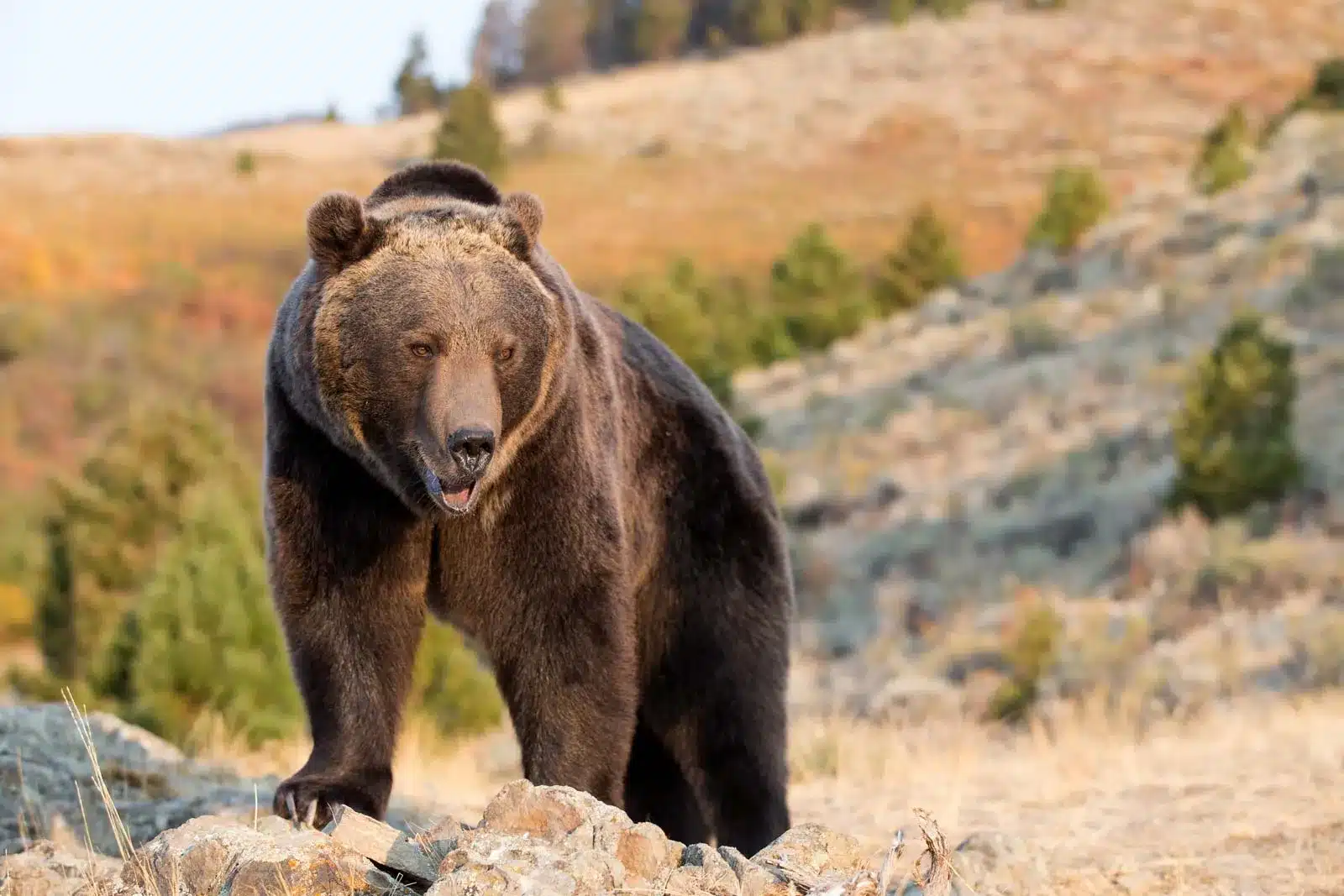
The Department of the Interior (DOI) announced a revised proposal on July 14 that would give Western states additional authority to manage grizzly bears in areas where populations have met or exceeded federal recovery benchmarks. The proposal represents a significant change in how grizzly bears could be managed across portions of the Lower 48. However, it would not remove the species from the federal threatened-species list or immediately establish a regulated grizzly bear hunting season.
Instead, the U.S. Fish and Wildlife Service is proposing revisions to the special rule issued under Section 4(d) of the Endangered Species Act. A 4(d) rule allows the federal government to establish management provisions tailored to the conservation needs of a threatened species.
Under the revised proposal, state and tribal wildlife agencies would receive greater flexibility to respond to human-bear conflicts, livestock depredation, and public-safety threats while grizzly bears remain federally protected. The proposal would not change existing experimental population designations.
A Different Approach to Managing Grizzly Bears
Previous federal efforts focused on removing recovered grizzly bear populations from the Endangered Species Act. Those efforts encountered repeated legal challenges, including litigation over the Greater Yellowstone Ecosystem population.
The Fish and Wildlife Service removed Greater Yellowstone grizzlies from the threatened-species list in 2017 after determining that the population had recovered. That decision was later overturned in federal court, returning the bears to federal protection. The new proposal takes a different route. Rather than delisting the bears, it would retain their threatened status while expanding the management actions that authorized agencies could take.
Secretary of the Interior Doug Burgum described the proposal as recognition of decades of successful recovery work. “The science is more than clear: grizzly bears have recovered and far exceeded every federal recovery benchmark,” Burgum said. “Today, DOI is returning conservation leadership to the Western states instead of Washington bureaucrats.”
Burgum was joined for the announcement near Bozeman, Montana, by Montana Governor Greg Gianforte, Wyoming Governor Mark Gordon, Idaho Governor Brad Little, and U.S. Fish and Wildlife Service Director Brian Nesvik.
Are Grizzly Bears Endangered?
Grizzly bears would remain protected under the Endangered Species Act, but Montana, Wyoming and Idaho could receive greater flexibility to address conflicts and public-safety concerns. Grizzly bears are federally protected in the contiguous United States, but their precise legal classification is threatened, not endangered.
Under the Endangered Species Act, an endangered species is considered in danger of extinction throughout all or a significant portion of its range. A threatened species is one that is likely to become endangered in the foreseeable future. Grizzly bears in the Lower 48 states have been listed as threatened since 1975. They generally cannot be harmed, harassed or killed except under limited circumstances, including defense of human life and authorized wildlife-management actions. Grizzly bears in Alaska are not included in the Lower 48 federal listing.
Grizzly Bear Populations Have Recovered Significantly
The threatened designation does not mean every grizzly bear population is currently declining. In fact, several populations have experienced substantial recovery. When grizzlies received federal protection in 1975, the population in the contiguous United States was estimated at approximately 700 to 800 bears. The Greater Yellowstone Ecosystem contained as few as 136 grizzlies.
Federal estimates now identify at least 1,030 grizzly bears in the Lower 48, including major populations in the Greater Yellowstone and Northern Continental Divide ecosystems. The actual Yellowstone population extends beyond its official monitoring area, meaning some estimates place the broader ecosystem population at more than 1,000 bears.
This growth is the result of decades of work by state and federal agencies, tribal governments, private landowners, hunters, ranchers, conservation organizations and local communities.
Why Are Recovered Grizzly Bears Still Federally Protected?
The federal government has previously attempted to remove Greater Yellowstone grizzly bears from the Endangered Species Act list. The U.S. Fish and Wildlife Service delisted that population in 2017 after determining that it had recovered. A federal court later overturned the decision, and the bears were returned to threatened status in 2019.
One difficulty is that grizzly recovery varies considerably by region. The Greater Yellowstone and Northern Continental Divide populations are relatively large, while populations in the Cabinet-Yaak and Selkirk ecosystems remain much smaller. Some designated recovery areas still have no established grizzly population.
Federal officials must therefore consider the condition of grizzly bears across the listed area, including population size, habitat, genetic diversity, and connections between populations.
What Would the New Federal Proposal Change?
The Interior Department’s July 2026 proposal would not delist grizzly bears or change their threatened status. Instead, it would revise the special management rule issued under Section 4(d) of the Endangered Species Act. The revision is intended to give states and tribes greater flexibility to manage grizzly bears in areas where recovery benchmarks have been met.
That authority could help wildlife officials respond to bears involved in livestock depredation, repeated conflicts near homes or situations presenting a danger to the public. The proposal does not establish a general grizzly hunting season or make hunting tags immediately available.
Supporters believe state wildlife agencies need greater authority to manage expanding bear populations and increasing conflicts. Critics are concerned that broader management authority could result in more grizzly mortalities and weaken progress toward fully connected, sustainable populations.
Are Grizzly Bears in Danger of Extinction?
As a species across North America, grizzly bears are not currently on the verge of extinction. Large populations remain in Alaska and Canada, and important populations in Montana, Wyoming, and Idaho have increased considerably.
However, grizzlies occupy only a portion of their historical range in the Lower 48, and some regional populations remain small or isolated. That is why federal law continues to classify Lower 48 grizzly bears as threatened.
The most accurate answer is therefore: Grizzly bears are not legally classified as endangered, but they remain federally listed as threatened in the contiguous United States. Some populations have exceeded recovery goals, while others remain small, isolated or absent from designated recovery areas.
The current policy debate is no longer simply about saving grizzly bears from extinction. It is about determining when recovered populations can be managed with greater state authority while maintaining the protections needed for their long-term survival.
Grizzly Bear Recovery Brings New Challenges
Grizzly bears in the Lower 48 were listed as threatened in 1975. At the time, the Greater Yellowstone Ecosystem was estimated to contain approximately 136 bears. Today, estimates place the Greater Yellowstone population at more than 1,000 animals. Federal documents have estimated that approximately 2,200 grizzly bears live among the established populations in the Lower 48.
The increase is widely regarded as a major wildlife-conservation achievement resulting from cooperation among state and federal wildlife agencies, tribal governments, private landowners, hunters, conservation organizations, and local communities.
Recovery has also brought bears into areas where they have not regularly occurred for generations. “The grizzly bear recovery story is one of America’s great conservation successes,” Gianforte said. “With this success has come a challenge—bears have expanded into new areas, and conflicts have increased with farmers, ranchers, recreationists and residents.”
Gianforte said Montana is prepared to balance continued conservation with the safety and economic concerns of communities living in bear country. Supporters of the proposal argue that state wildlife professionals are better positioned to respond quickly to local conditions. They also contend that the current federal system can make it difficult to remove individual bears that repeatedly kill livestock, enter developed areas or present an identifiable danger to people.
Nesvik said the proposal recognizes the recovery progress achieved in several portions of the species’ range while providing what he called “common-sense flexibilities” for wildlife managers.
Conservation Groups Raise Concerns
Not everyone supports expanding state authority.
Some wildlife advocates are concerned that broader management exemptions could increase the number of grizzly bears killed without adequately addressing habitat loss, connectivity between populations, and human-caused mortality.
Andrea Zaccardi, carnivore conservation program legal director for the Center for Biological Diversity, said the organization is disappointed that the administration is seeking to make it easier to kill grizzly bears.
The group maintains that grizzlies remain absent from substantial portions of their historical range and that long-term recovery requires protection of habitat and movement corridors connecting isolated populations. Despite its objections, the organization acknowledged that the proposal would leave the bears listed as threatened under the Endangered Species Act. Those concerns are likely to play a central role during the federal rulemaking process and in any legal challenges that follow a final decision.
This is Management, Not a Grizzly Bear Hunting Season
The proposal does not authorize general grizzly bear hunting, create hunting licenses, or allow states to immediately offer grizzly tags. Any future regulated hunting season would require additional legal and regulatory steps. As long as grizzly bears remain listed as threatened, federal law would continue to govern when and under what circumstances a bear could legally be killed.
The immediate effect of the proposed 4(d) revision would be to broaden the circumstances in which authorized wildlife managers could act. Those actions could include responding to bears involved in repeated livestock losses, conflicts near homes or other situations involving public safety.
Jess Johnson, government affairs director for the Wyoming Wildlife Federation, characterized the proposal as a transition rather than the end of grizzly bear recovery. “Grizzly bear recovery has reached a critical point where management, not just protection, must lead the next chapter,” Johnson told MeatEater. Johnson said greater state responsibility should also bring an expectation that states will maintain successful conservation programs and demonstrate that they can manage grizzly populations sustainably.
Public Comment Period Opens on Grizzly Bear Management
The Fish and Wildlife Service is reopening the public comment period for 30 days. The agency said the review is limited to the revised Section 4(d) provisions and does not reopen other elements of the broader rule proposed in January 2025.
The comment period is scheduled to run from July 17 through August 17, 2026. Comment HERE
After reviewing public comments, scientific information, and agency input, the Fish and Wildlife Service may modify the proposal before issuing a final rule.
The debate will likely center on whether the revised rule strikes the proper balance between maintaining federal protections and giving states enough authority to manage a recovered and expanding large-carnivore population.
Regardless of the final outcome, the proposal marks an important point in the grizzly bear recovery story. The question is no longer limited to whether grizzly bears can survive in the American West. It is increasingly focused on how growing bear populations should be managed alongside the people who live, work, hunt, ranch and recreate in grizzly country.