




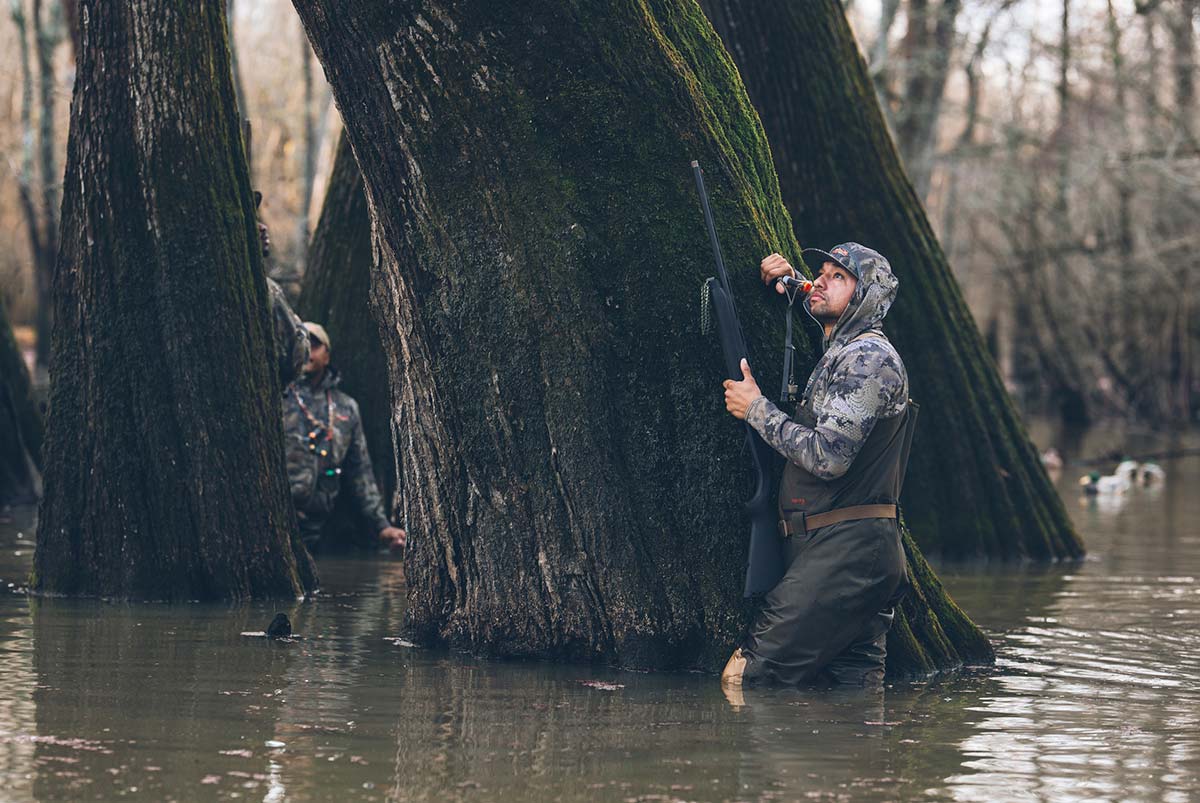
From long walks into flooded timber to icy late-season duck blinds, these eight duck hunting waders cover a range of hunting conditions, budgets and personal preferences.
As an avid waterfowl hunter, there are few pieces of gear I depend on more than my waders. We use them to reach some of the roughest locations, stand in freezing water and navigate deep mud, all while expecting them to keep us comfortable and dry.
When spending your hard-earned money, you should expect plenty from your waders. Waterproofing is essential, but durability, mobility, insulation, traction and product support also matter. A pair of waders that performs well for short walks during early season might be completely wrong for standing in a frozen marsh in December.
For this roundup, I evaluated waders across different price ranges and hunting conditions. Some selections have multiple seasons of field use behind them, while newer models have more limited testing. Those differences are noted throughout the reviews.
Jump to a Section
Comparison Table
Which Wader Should You Buy?
How We Chose
Full Reviews
Buyer’s Guide
Wader Care
FAQs
Our Picks at a Glance
Sitka Delta VentLite Zip GTX
Premium waterproofing and outstanding mobility for serious waterfowl hunters.
Drake Waterfowl Insulated Hardline
Breathable waterproof construction and insulated boots without the premium price.
LaCrosse Wetlands II 1600G
Heavy boot insulation and a warm upper for freezing late-season duck hunts.
TideWe Neoprene Chest Waders
Affordable neoprene protection for new and occasional waterfowl hunters.
Gator Waders Shadow
Thick neoprene and insulated boots for hunters who prioritize cold-weather warmth.
Frogg Toggs Amphib
Traditional neoprene warmth, insulated boots and a high-back design.
Banded Black Label Elite
Breathable construction and flexible layering for waterfowl hunting and fishing.
Canvasback Full-Body Waders
Integrated upper-body waterproof protection with insulated boots and useful storage.
Duck Hunting Wader Comparison Table
Prices are approximate and may change by retailer, color, size and availability. The most important consideration is choosing the right wader for your hunting conditions.
Prices are approximate. Check the retailer for current availability, sizing and pricing.
Which Duck Hunting Wader Should You Buy?
Choose Sitka for premium waterproofing, exceptional mobility and longer walk-ins.
Breathable waterproof construction and cold-weather insulation at a midrange price.
Heavy insulation makes these an excellent choice for freezing late-season conditions.
Affordable neoprene protection for occasional waterfowl hunts.
Five-millimeter neoprene and 1000g insulated boots suit colder hunts.
Comfortable neoprene with moderate insulation and a high-back design.
A breathable upper and flexible layering make these useful across several activities.
Integrated waterproof coverage with insulated boots and convenient storage.
How We Chose the Best Duck Hunting Waders
This roundup is based on real-world hunting and outdoor use rather than a controlled laboratory comparison. Field testing involved navigating muddy bottoms, entering ponds and creeks, walking through flooded cover and wearing the waders during early- and late-season conditions.
Waterproofing
How well do the seams, upper and boots prevent water penetration when wading?
Durability
Can the waders withstand brush, submerged cover, abrasion and repeated kneeling?
Comfort and Mobility
Can I walk, crouch, climb and navigate thick mud without fighting the waders?
Warmth and Breathability
Does the insulation match the intended conditions without causing unnecessary overheating?
Boot Traction
How confidently can I move through mud, wet vegetation and uneven bottoms?
Value and Product Support
How do price, construction, warranty coverage and long-term durability compare?
The Best Duck Hunting Waders of 2026
Sitka Delta VentLite Zip GTX Wader
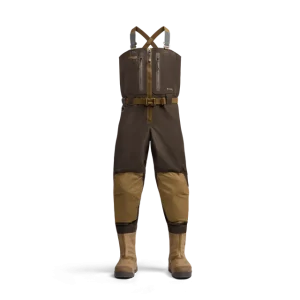

The original Sitka Delta waders have long been my go-to choice for waterfowl hunting and trapping. I didn’t think Sitka could make a better version until I tried the Delta VentLite GTX.
The first thing I noticed was how light these waders felt. They fit more like a pair of pants than traditional waders, making it noticeably easier to walk through muddy creek bottoms, climb over cover and navigate flooded timber.
Four-layer GORE-TEX construction provides the waterproofing I expect from premium waders while allowing moisture to escape during long walks. The PrimaLoft Gold insulation in the boots adds warmth, and the Sitka Apex tread offers traction across varying terrain.
I also appreciate the serviceability of Sitka’s waders, although warranty terms and repair turnaround times should be considered. At approximately $1,500, these aren’t for everyone. But for dedicated waterfowl hunters spending dozens of days in the field each season, they’re a worthwhile premium option.
Reasons to Buy
- Exceptionally lightweight and mobile
- Premium waterproof, breathable construction
- Comfortable insulated boots with traction
- Repair support from Sitka
Reasons to Consider
- Extremely expensive
- Repairs may require extended turnaround
Drake Waterfowl Insulated Hardline Breathable Waders
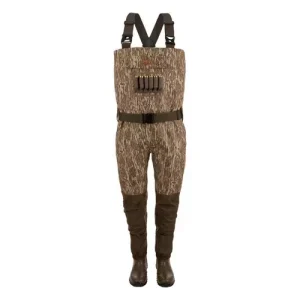
The Drake Waterfowl Insulated Hardline Breathable Waders take our top spot for the best duck hunting waders for the money. Drake delivers an impressive combination of warmth, durability-focused construction and comfort without the premium price tag.
Featuring a three-layer waterproof, windproof and breathable shell, reinforced high-wear areas and a sewn-in insulated liner, these waders are designed to handle cold mornings in flooded timber and muddy marshes.
The 800-gram Thinsulate boots provide additional cold-weather protection. At approximately $360, the Hardline offers an appealing balance of practical performance features and affordability, particularly for hunters who want a dependable insulated option without spending $500 or more.
The biggest trade-offs are the absence of a front zipper and the built-in insulation, which makes them less adaptable in warmer conditions. Extended field testing is still needed before making long-term durability claims, but their construction and price make them a compelling value choice.
Reasons to Buy
- Excellent features for the price
- Waterproof, windproof and breathable shell
- 800g insulated boots
- Reinforced high-wear areas
Reasons to Consider
- No front access zipper
- Less versatile during warm weather


LaCrosse Wetlands II 1600G
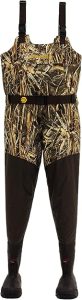

LaCrosse is a familiar name when it comes to hunting boots, but its Wetlands II waders deserve attention. I tested these during sub-zero temperatures while chasing geese around Ohio and found them among the warmest and most comfortable waders I’ve worn.
The 1600-gram Thinsulate boots make a noticeable difference during late-season hunts. The breathable nylon upper features quilted insulation and a convenient handwarmer pocket.
I tested the waterproof construction by wading through ponds, creeks and shallow rivers. The waders kept me dry and comfortable throughout those hunts.
The Swamp-Lite outsole provides traction through snow and mud, while LaCrosse’s Active Fit boot design makes them easier to put on and remove. They’re not the best choice for warm early-season hunts, but when temperatures drop below freezing, the insulation is a major advantage.
Reasons to Buy
- Excellent extreme-cold insulation
- Warm quilted upper and handwarmer pocket
- Good traction in snow and mud
- Field-tested in sub-zero temperatures
Reasons to Consider
- Too warm for mild early-season hunts
- Bulkier than lightweight breathable alternatives
TideWe Neoprene Chest Waders
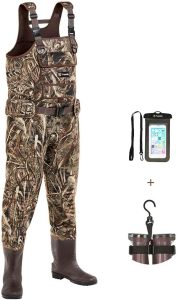

For hunters working with a smaller budget, TideWe remains a reasonable option. Its traditional chest waders feature 3.5mm neoprene construction and insulated rubber boots.
Depending on the model, boot insulation options include 600 or 800 grams of Thinsulate. Neoprene provides built-in warmth, making these practical for cold-water conditions.
I spent several days testing TideWe waders in different hunting environments and found them comfortable and waterproof during that initial use.
The biggest limitations are breathability and long-term durability compared with premium options. However, if you’re just getting started or only hunt a handful of mornings each season, TideWe offers a practical entry point. Prices vary, so these are not always available for less than $100.
Reasons to Buy
- Affordable entry-level price
- Warm neoprene construction
- Different boot insulation options
- Comfortable during initial field testing
Reasons to Consider
- Less breathable than technical shell waders
- Limited long-term durability evidence
Gator Waders Shadow
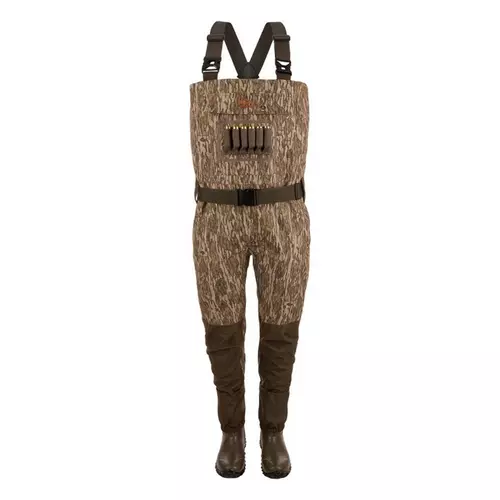
I spent two seasons wearing the Gator Waders Shadow through a variety of hunting environments and temperatures. They’ve held up well during that field use and remained comfortable throughout my hunts.
These waders use 5mm abrasion-resistant neoprene and 1000-gram Thinsulate boots. That combination provides substantial built-in insulation and protection in colder conditions.
The rubber boots feature aggressive tread and were comfortable while moving through mud and uneven terrain. The waders also performed well at keeping water out during normal field use.
The biggest drawback is weight and breathability. Heavy neoprene can become uncomfortable during long early-season walks, particularly when air temperatures are still warm.
Reasons to Buy
- Durable 5mm neoprene construction
- Warm 1000g insulated boots
- Aggressive tread for muddy conditions
- Two seasons of first-hand field use
Reasons to Consider
- Heavy compared with breathable shell waders
- Not ideal for warm-weather activity
Frogg Toggs Amphib Neoprene Waders
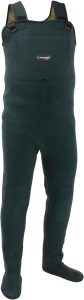

The Frogg Toggs Amphib has long been a good midrange choice for hunters who prefer neoprene. The 3.5mm construction offers warmth and comfort, while the high-back design provides extra coverage when wading.
I found these waders particularly useful during early fall, when the water was cold but the air temperature was still manageable.
The 600-gram Thinsulate boots provide moderate insulation, and the aggressive tread helps maintain footing on muddy creek bottoms. A built-in handwarmer pocket is another useful feature.
They’re a good choice for hunters who prefer a traditional neoprene fit, but aren’t as breathable as lightweight technical shell waders when walking long distances in warmer conditions.
Reasons to Buy
- Comfortable 3.5mm neoprene construction
- High-back design improves coverage
- Moderately insulated boots
- Convenient handwarmer pocket
Reasons to Consider
- Less breathable than modern shell waders
- Not ideal for long warm-weather walks
Banded Black Label Elite Waders
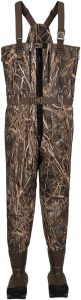

Banded has been a staple in the waterfowl community for years, and its Black Label Elite waders are among the most versatile options in this roundup.
The uninsulated breathable upper allows hunters to control warmth through their base layers. This is particularly useful during early-season hunts and changing temperatures.
I’ve used these waders for both waterfowl hunting and creek and river fishing. The fit allows good mobility, and the waterproof construction held up well during my use.
The boots provide substantial insulation and traction, although that insulation can be excessive during warmer conditions. At approximately $650, they cost more than many midrange options, but their versatility makes them appealing for hunters who spend time in the water throughout the year.
Reasons to Buy
- Breathable upper allows adjustable layering
- Good mobility and comfort
- Useful for hunting and fishing
- Reinforced waterproof construction
Reasons to Consider
- Higher purchase price
- Heavily insulated boots can run warm
Canvasback Full-Body Waders
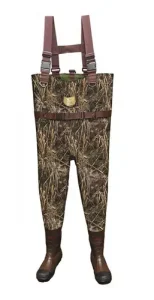

I’ve never been the biggest fan of full-body waders. I prefer to adjust my upper-body layers separately and want as much freedom as possible when shouldering a shotgun.
That said, I was impressed by the Canvasback Full-Body Waders. They use four-layer waterproof material and provide coverage beyond the waist, making them appealing to hunters who want one primary outer layer.
Storage is another positive. The waders include multiple pockets, including fleece-lined handwarmer pockets on the chest.
The 1200-gram insulated boots provide warmth during cold-water use, while the outsole offers traction across shallow-water hunting environments.
The biggest drawback is reduced flexibility for adjusting upper-body clothing independently. For hunters who prefer full-body coverage, however, the Canvasback is a practical alternative to traditional waders.
Reasons to Buy
- Full-body waterproof protection
- Four-layer shell construction
- Convenient chest and handwarmer pockets
- 1200g insulated boots
Reasons to Consider
- Less flexible for upper-body layering
- May feel restrictive when shouldering a shotgun
Best Accessory for Duck Hunting Waders
Savior Heat Bluetooth Heated Socks
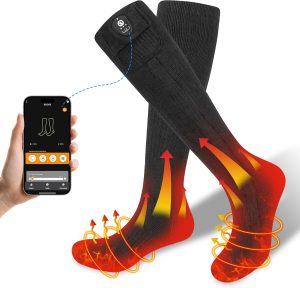

For late-season duck hunters standing in icy water, heated socks can provide another way to stay comfortable during long sits.
Savior Heat rechargeable heated socks feature Bluetooth and on-sock controls, allowing hunters to adjust their heat settings without removing their waders.
One advantage is being able to leave the heat off during the walk to avoid unnecessary sweating, then turn it on once settled into the blind.
They aren’t a replacement for properly fitted insulated boots, but they can be a useful addition to a cold-weather setup.
Reasons to Buy
- Adjustable heat settings
- Bluetooth controls
- Useful during stationary cold-weather hunts
- Can remain off during the walk in
Reasons to Consider
- Batteries require charging
- Additional bulk can affect boot fit
Duck Hunting Wader Buyer’s Guide
Breathable vs. Neoprene Waders
Breathable waders allow moisture vapor to escape while keeping outside water out. They’re generally more comfortable for longer walks and changing temperatures. Neoprene provides built-in insulation, making it appealing in colder conditions, but it usually breathes less effectively.
How Much Insulation Do You Need?
Boot insulation matters because your feet often remain submerged for extended periods. Moderately insulated boots can work well during cool conditions, while heavily insulated boots become more valuable in extreme cold. Proper boot fit, circulation and socks are just as important as insulation ratings.
Durability and Reinforcement
Look for reinforced knees, abrasion-resistant materials and properly sealed seams. Hunters regularly kneel in mud, step over submerged trees and push through vegetation, all of which can damage poorly constructed waders.
Fit and Mobility
Your waders should allow enough freedom to squat, climb, walk and shoulder a shotgun comfortably. Boots should fit securely without restricting circulation. Always consult the manufacturer’s sizing chart.
Front-Zip vs. Traditional Waders
Front-zipping waders offer convenience, particularly when wearing multiple layers. Traditional waders can cost less and avoid the complexity of a waterproof front zipper. Both can work well when properly designed.
Traction and Boot Design
Wet grass, mud, ice and slippery creek bottoms all present different traction challenges. Look for an aggressive outsole appropriate for your primary hunting environment, and remember that no tread design eliminates the risk of slipping.
How to Make Duck Hunting Waders Last Longer
Proper care can make a significant difference in the lifespan of your waders. After each hunt, remove mud and debris and allow the waders to dry thoroughly before storing them.
- Rinse mud and vegetation from the boots and seams.
- Dry both the inside and outside before storage.
- Avoid prolonged exposure to direct heat.
- Inspect knees, seams and boot connections for wear.
- Follow manufacturer repair and cleaning instructions.
- Store waders in a cool, dry location.
Frequently Asked Questions About Duck Hunting Waders
What are the best duck hunting waders for the money?
Our current pick is the Drake Waterfowl Insulated Hardline Breathable Waders. At approximately $360, they offer waterproof breathable construction, insulated boots and reinforced high-wear areas for substantially less than many premium waders.
Are breathable or neoprene waders better?
Breathable waders are generally more comfortable for active hunters and longer walks, while neoprene provides built-in insulation for colder conditions. The right choice depends on when and how you hunt.
How much insulation do duck hunting waders need?
Moderate insulation may be sufficient for cool early-season hunts, while heavily insulated boots become more valuable during freezing conditions. Proper fit and circulation are important regardless of insulation rating.
Can I use the same waders for early and late season?
Yes. Breathable waders with adjustable underlayers are often the most versatile choice. Heavily insulated waders can be less comfortable when temperatures are warm.
How much should duck hunting waders cost?
Entry-level models may cost around $100–$160, midrange options often fall between $200 and $450, and premium models can exceed $1,000. Match your investment to how often and where you hunt.
Do I need chest waders for duck hunting?
Chest waders provide more coverage than hip waders and are generally more versatile for setting decoys and navigating flooded areas. However, always remain within safe wading depths and conditions.
Final Thoughts: Best Duck Hunting Waders of 2026
Finding the right duck hunting waders comes down to matching the construction, insulation and price to the conditions you encounter most often.
For dedicated waterfowl hunters seeking premium mobility and waterproofing, the Sitka Delta VentLite GTX remains my Best Overall choice.
For hunters who want the strongest balance of affordability and practical cold-weather features, the Drake Waterfowl Insulated Hardline Breathable Waders earn our Best for the Money award.
The LaCrosse Wetlands II stands out for extreme cold, while the TideWe Chest Waders remain a reasonable entry-level choice. No matter which you select, prioritize proper fit, waterproofing and traction so you can concentrate on the hunt rather than your gear.