




Modern hunting apparel has come a long way from the heavy wool coats and cotton thermals hunters once relied on. The best hunting clothes of 2026 are highly specialized pieces designed around temperature, precipitation, activity level, terrain and the type of game you’re pursuing.
That’s important because there really isn’t one hunting outfit that works everywhere. A September elk hunter gaining thousands of feet of elevation has completely different needs from a whitetail hunter sitting motionless in a tree in December. Spring turkey hunters need breathable, quiet clothing. Waterfowl hunters need serious weather protection. Backcountry hunters have to consider every ounce they carry.
For this roundup, we looked beyond simply naming the biggest hunting brands. Instead, we selected clothing based on where each piece makes the most sense in the field. That includes hot-weather gear from King’s Camo and First Lite, wind protection from SITKA, backcountry apparel from Stone Glacier, heated thermals from Fieldsheer, insect-protection clothing from FORLOH, scent-control gear from ScentLok and specialized systems from HECS, DSG Outerwear and Orvis.
If you’re building one hunting wardrobe from scratch, don’t buy an outfit — build a system.
Start with a moisture-managing base layer, add breathable insulation, use a wind-blocking layer when needed and keep dedicated rain protection available. The heavier your activity level, the more important ventilation becomes. The more stationary the hunt, the more insulation matters.
Our Picks at a Glance
King’s Camo XKG Sonora Air Pant
An extremely lightweight hunting pant built specifically for high-output early-season hunts where airflow, fast drying and mobility matter more than insulation.
First Lite Wick Hoody
A lightweight merino-blend hoody that works during hot early-season hunts but remains useful as the first layer in a larger cold-weather system.
FORLOH Insect Shield Performance Hoodie
Warm-weather coverage with integrated insect protection for spring turkey, scouting and early-season hunts when mosquitoes and ticks are part of the problem.
SITKA Jetstream Jacket
A versatile wind-blocking softshell for hunters who need one jacket to handle cool mornings, active hunts and changing fall weather.
King’s Camo XKG Stormtrek Rain Jacket
A lightweight, packable rain shell with serious waterproof protection for hunters who need rain gear they’ll actually carry.
Stone Glacier De Havilland LITE Pant
A technical mountain pant that prioritizes low weight, mobility and temperature regulation for hunters covering serious country.
King’s Camo XKG System
The Preacher Pant, Covert Hoodie and Lone Peak Jacket combine into a versatile system for hunters who hike, climb, glass and stalk.
SITKA Fanatic Jacket
Purpose-built for long, cold treestand sits where quiet fabric, wind protection and insulation matter far more than minimum weight.
Fieldsheer Baselite Heated Baselayer
A slim heated first layer that supplies active warmth to stationary hunters without requiring another thick insulating layer.
First Lite Turkey System
The Wick Hoody, Corrugate Foundry Pant and Treeline Turkey Vest create an adaptable system for mobile spring hunters.
ScentLok Ridge System
Quiet mid season whitetail clothing that combines warmth, treestand-specific features and ScentLok’s odor-control technologies.
HECS HECStyle Lightweight System
A lightweight under layer incorporating HECS’ conductive-carbon grid technology and designed to work beneath your normal hunting clothing.
DSG Outerwear Kylie 6.0
A serious cold-weather jacket-and-bib combination designed specifically around female hunters rather than adapted from men’s apparel.
Orvis PRO Upland System
Purpose-built jacket, brush pants and vest for pheasant, grouse and other hunts where miles of walking and abrasive cover destroy ordinary clothing.
SITKA Waterfowl System
Weather-focused outerwear for duck hunters dealing with the difficult combination of moisture, wind, cold and extended periods of inactivity.
Frogg Toggs Vapor Rain Suit
Affordable, lightweight emergency rain protection for hunters who can’t justify spending several hundred dollars on a premium shell.
Best Hunting Clothes Comparison Table
Prices shown are approximate manufacturer or current retail prices and can change by size, color, retailer and sale. Use the Shop links to check current pricing.
| Award | Product | Approx. Price | Season | Primary Strength | Best For |
|---|---|---|---|---|---|
| Best Hot-Weather Pant | King’s XKG Sonora Air | About $100 | Early | Airflow & low weight | Hot, active hunts |
| Best Hot-Weather Top | First Lite Wick Hoody | $130 | Early / Layering | Merino versatility | Warm weather |
| Best for Bugs | FORLOH Insect Shield | $119 | Spring / Early | Integrated insect protection | Turkey & humid climates |
| Best All-Around Jacket | SITKA Jetstream | $375 | Mid-season | Wind protection | Variable fall weather |
| Best Rain Jacket | King’s XKG Stormtrek | About $200 | All Season | Packable waterproofing | Rain protection |
| Best Backcountry Pant | Stone Glacier De Havilland LITE | $195 | Early / Mid | Mobility & low weight | Mountain hunting |
| Best Cold-Weather Jacket | SITKA Fanatic | $500 MSRP | Late | Warmth & silence | Treestand whitetails |
| Best Heated Base Layer | Fieldsheer Baselite Shirt | $139.99 | Late | Active heat | Stationary cold hunts |
| Best Turkey Vest | First Lite Treeline | $250 | Spring | Turkey-specific organization | Run-and-gun hunters |
| Best Scent Control | ScentLok Ridge Jacket | $189.99 | Mid | Odor control & quietness | Whitetail |
| Best Women’s System | DSG Kylie 6.0 | $299.99 each | Late | Women’s fit & insulation | Cold-weather hunting |
| Best Upland System | Orvis PRO Upland | $198 jacket | Fall | Brush durability | Pheasant & grouse |
| Best Budget Rain Gear | Frogg Toggs Vapor Suit | $79.99–$110 | All Season | Low-cost waterproofing | Emergency rain gear |
Which Hunting Clothes Should You Buy?
Hot September Bowhunt
Lightweight, breathable layers for high-output early-season hunts where heat management matters more than insulation.
Bug-Heavy Early Season
FORLOH Insect Shield Performance Hoodie
A strong choice for warm hunts where ticks, mosquitoes and other biting insects are a constant problem.
Mobile Western Hunt
A flexible layering system for hiking, glassing and hunts with major temperature swings.
Backcountry Mountain Hunt
Stone Glacier De Havilland LITE Pant
Stone Glacier Grumman Down Jacket
Low-weight technical layers for hunters covering serious elevation and carrying everything on their back.
Late-Season Whitetail
Fieldsheer Baselite Heated Baselayer
Insulating Mid-Layer
Active heat underneath serious insulation for long, motionless sits in freezing temperatures.
Spring Turkey
First Lite Corrugate Foundry Pant
First Lite Treeline Turkey Vest
A mobile spring system built for changing temperatures, repeated setups and long days chasing gobblers.
How We Chose the Best Hunting Clothing
Hunting clothing is difficult to rank because the warmest jacket isn’t automatically the best jacket, and the lightest pant isn’t automatically the best pant. Each product has to be judged against the conditions it was designed to handle.
We focused on six major considerations:
- Weather protection: How well the garment handles wind, rain or cold.
- Breathability: Whether heat and moisture can escape during activity.
- Mobility: Stretch, articulation and overall freedom of movement.
- Noise: Especially important for whitetail and bowhunters.
- Pack-ability: Particularly important in the backcountry.
- Value: Whether the performance makes sense at the product’s price point.
We also gave preference to clothing designed around a specific hunting problem rather than generic outdoor apparel with camouflage added to it.
King’s Camo XKG Sonora Air Pant
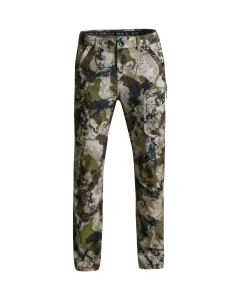
Bottom line: The Sonora Air is our hot-weather winner because King’s designed it around one job: keeping hunters comfortable when heat and high exertion collide.
Early archery hunting creates an unusual clothing problem. You still need protection from sun, vegetation and terrain, but traditional midweight pants can trap a tremendous amount of heat once you start hiking.
That’s where the XKG Sonora Air makes sense. Its lightweight construction prioritizes airflow and rapid drying. The four-way stretch also matters more than it may sound on paper. Climbing, kneeling, stepping over dead-fall and crawling into position all expose restrictive pants quickly.
At roughly 10 ounces, the Sonora Air is dramatically lighter than many all-season hunting pants. UPF protection also makes sense on Western hunts where hunters may spend hours above tree line or in open country.
There is a tradeoff. This is not the pant we’d choose for November whitetails, nasty thorns or extended cold rain. Its entire advantage comes from prioritizing ventilation and minimum weight.
For hunters who routinely overheat in September, that’s exactly why we like it.
About 10 oz.
4-way
UPF 30
About $100
Reasons to Buy
- Very lightweight
- Excellent airflow
- Four-way stretch
- Quick-drying construction
- Good warm-weather sun coverage
Reasons to Consider
- Too light for cold-weather hunting
- Less protection in nasty brush than heavier pants
- You’ll eventually need another pant as temperatures fall
First Lite Wick Hoody
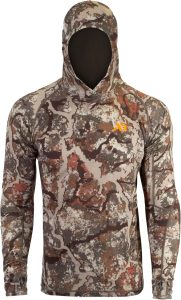
Bottom line: If you want one lightweight shirt that can remain useful throughout most of hunting season, the Wick Hoody is difficult to beat.
The Wick is built around First Lite’s lightweight merino blend, which gives it an advantage over a purely warm-weather shirt. It can handle hot, high-exertion hunts but doesn’t become irrelevant the first time temperatures fall.
During early season, wear it by itself. During mid season, add fleece over it. During late season, it becomes the moisture-managing layer closest to the skin.
That versatility is important because premium hunting apparel gets expensive quickly. A $130 shirt that works during several months of hunting is easier to justify than a highly specialized top you’ll wear twice a year.
Lightweight merino blend
Early / layering
High exertion
$130
Reasons to Buy
- Excellent seasonal versatility
- Light enough for hot conditions
- Useful as a base layer later in the year
- Moisture-managing merino blend
- Hood adds sun and concealment coverage
Reasons to Consider
- More expensive than basic synthetic hunting shirts
- Hunters who are especially hard on clothing may prefer a heavier synthetic outer layer in thick brush
FORLOH Insect Shield Performance Hoodie
Bottom line: This is one of the most specialized warm-weather tops in the roundup and makes the most sense where heat and insects are both constant problems.
Spring turkey and early-season deer hunting can mean mosquitoes, ticks, chiggers and biting flies on top of already uncomfortable heat.
FORLOH addresses that problem by integrating Insect Shield treatment into a lightweight performance hoodie. That gives the garment a different purpose from a standard sun hoodie.
The hoodie also uses stretch fabric and moisture-management features, so insect protection isn’t achieved by forcing hunters into a heavy garment.
At $119, it isn’t inexpensive, but the price is easier to understand if your hunting season routinely involves ticks and mosquitoes.
About 10.2 oz.
4-way
Insect protection
$119
Reasons to Buy
- Integrated insect protection
- Lightweight enough for warm weather
- Four-way stretch
- Good head and neck coverage
- Made in the USA
Reasons to Consider
- Specialized use makes it less important for hunters in dry, low-insect regions
- Costs considerably more than a basic sun hoodie
SITKA Jetstream Jacket
Bottom line: The Jetstream is expensive, but few pieces cover as much of fall hunting season as well.
Wind is one of the most overlooked factors in hunting comfort. Temperatures that feel manageable in calm conditions can become miserable once steady wind begins stripping away body heat.
The Jetstream is built around that problem. Its WINDSTOPPER construction blocks wind while remaining more breathable than a fully waterproof shell. That’s why it works so well for active big-game hunters.
Pit zips are another feature we appreciate. Being able to release heat without completely removing the jacket is useful when a climb suddenly turns a comfortable morning into a sweaty one.
The downside is price. At roughly $375, this is firmly premium hunting apparel. But because it can be used during elk season, mid season whitetails, Western hunts and general cool-weather hunting, it sees more field time than many specialized pieces.
Wind / light precipitation
Pit zips
Mid-season
$375
Reasons to Buy
- Excellent wind protection
- More breathable than a hard rain shell
- Pit zips help regulate temperature
- Works across many hunting styles
- Useful for active hunting
Reasons to Consider
- Premium price
- Not a substitute for dedicated rain gear
- Not insulated enough for very cold stationary sits by itself
King’s Camo XKG Stormtrek Rain Jacket
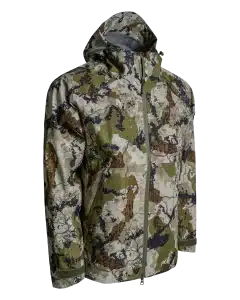
Bottom line: The Stormtrek combines the waterproof protection we want from a dedicated rain shell with a weight and packed size that make it realistic to carry.
That’s more important than it sounds. Heavy rain gear often gets left in the truck or at camp, which makes its waterproof rating irrelevant when a storm arrives.
The Stormtrek uses King’s 20K/20K waterproof/breathable construction, taped seams and waterproof-style zippers. At roughly 14 ounces, it remains light enough for a pack.
Two-way stretch also helps the jacket feel more like hunting apparel than traditional stiff rain-wear.
For hunters wanting full protection, King’s offers a matching Stormtrek pant.
About 14 oz.
20K
20K
About $200
Reasons to Buy
- Highly packable
- Fully waterproof construction
- Good breathability for rain-wear
- Stretch improves mobility
- Matching pant available
Reasons to Consider
- Premium rain gear is considerably more expensive than emergency rain suits
- Hard shells are naturally noisier than soft mid-layers
Other Rain Gear We LikeFirst Lite Vapor Stormlight: Better suited to hunters prioritizing low weight and pack-ability. Check price.
First Lite Omen Stormshelter: A heavier-duty option when protection matters more than minimum weight. Check price.
Stone Glacier Backcountry System
Bottom line: Stone Glacier earns this category because the brand consistently builds around the weight, mobility and layering demands of mountain hunters.
De Havilland LITE Pant
The De Havilland LITE is approximately 25% lighter than Stone Glacier’s standard De Havilland pant and is designed primarily for early-season backcountry use.
That makes it particularly attractive when every piece of gear eventually has to be carried uphill.
At $195, it isn’t a value pant, but premium backcountry gear is usually purchased because of the balance between durability and weight rather than price alone.
M5 Jacket
The M5 fills the weather-protection role within the system. It’s the layer we’d add as wind and changing mountain conditions begin to matter more than pure ventilation.
Grumman Down Jacket
Backcountry insulation should spend much of the day compressed in a pack and then provide serious warmth when movement stops. That’s the role of the Grumman.
It’s the piece we’d pull out while glassing, sitting around camp or whenever high activity turns into a long stationary period.
Why This System Works
- Pieces have clearly separated jobs
- Weight is treated as a performance consideration
- Excellent for mountain hunters covering significant distance
- Easy to layer as elevation and activity change
King’s Camo XKG System
Bottom line: XKG makes the most sense for hunters who move constantly and want individual layers they can adjust throughout the hunt.
XKG Preacher Pant 2.0
The Preacher is a more substantial active-hunting pant than the ultralight Sonora Air. Stretch construction and ventilation make it useful when temperatures fluctuate but the hunt still requires serious movement.
XKG Covert Hoodie
The Covert Hoodie bridges the gap between base layer and outerwear. That is especially useful for bowhunters because quiet mid-layers can often be worn as the outermost piece during mild weather.
XKG Lone Peak Jacket
When temperatures fall or wind increases, the Lone Peak becomes the outer layer. It adds protection without abandoning the stretch and mobility focus of the XKG system.
Our XKG Layering Approach
Covert Hoodie → insulation when necessary → Lone Peak Jacket
Pair with the Preacher Pant for moderate weather or Sonora Air when temperatures are high.
SITKA Fanatic Jacket
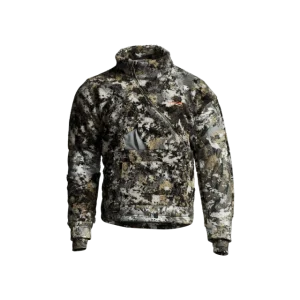
Bottom line: If your hunting involves sitting almost motionless in a lot of cold weather hunting situations, the Fanatic solves a completely different problem than lightweight Western apparel.
Late-season whitetail hunting is difficult because your body isn’t generating much heat. That changes the clothing equation. Weight and maximum breathability become less important while insulation, wind resistance and quiet construction become critical.
The Fanatic combines Berber fleece, a WINDSTOPPER liner and PrimaLoft insulation. SITKA also builds hunting-specific features around the jacket rather than treating it as a normal winter coat.
The outer fabric is designed to remain quiet, the hand-muff system keeps hands protected without forcing hunters into massive gloves, and the fit accounts for bowhunting movement.
The biggest drawback is obvious: $500 MSRP is serious money. But this is also one of the most specialized jackets in the roundup.
Treestand
Windproof
PrimaLoft
$500
Reasons to Buy
- Extremely warm
- Windproof
- Very quiet outer fabric
- Built specifically around whitetail hunting
- Excellent hand-warming design
Reasons to Consider
- Expensive
- Far too warm and bulky for active Western hunting
- Highly specialized
Fieldsheer Heated Base-layers
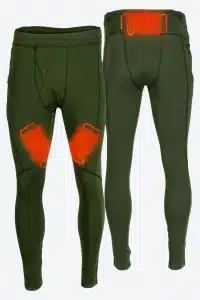
Bottom line: Heated thermals are one of the few hunting-clothing technologies that can fundamentally change how a cold-weather layering system works.
Normal insulation preserves the heat your body already produces. Heated apparel actively adds heat.
That distinction matters most to hunters who are sitting rather than moving. A mobile elk hunter may produce more body heat than he knows what to do with. A whitetail hunter five hours into a December sit has the opposite problem.
Baselite Heated Baselayer Shirt
Our favorite starting point in Field-sheer’s current lineup is the Baselite Heated Baselayer Shirt. It uses three heating zones — two on the chest and one on the back — and is designed to sit beneath the rest of your clothing.
At $139.99, it costs considerably more than a standard thermal shirt, but it can potentially replace some of the bulk hunters normally add to compensate for long periods of inactivity.
3
Up to 9 hours
Included
$139.99
Other Fieldsheer OptionsPrimer Heated Base Layer Shirt
Don’t build a clothing system that depends entirely on the battery. Heated clothing should supplement normal insulation. If the battery eventually dies, your other layers still need to keep you safe and reasonably comfortable.
First Lite Turkey System
Bottom line: Turkey hunters need a system that can handle cold dawn setups, warm midday hikes, kneeling, crawling and constant repositioning.
Wick Hoody
The Wick gives the system a lightweight, moisture-managing top that can be worn by itself once temperatures climb.
Corrugate Foundry Pant
The Corrugate Foundry is a better match for spring terrain than a thin warm-weather pant because turkey hunting routinely involves brush, kneeling and crawling into setups.
Treeline Turkey Vest
The $250 Treeline is purpose-built for turkey hunting, with dedicated call storage, an expandable game bag and a stowable seat.
That integrated seat becomes especially useful during a day when you’re constantly setting up, moving and sitting against different trees.
Our Turkey Setup
Wick Hoody + Corrugate Foundry Pant + Treeline Turkey Vest
ScentLok Ridge System
Bottom line: The Ridge system makes sense for mid season whitetail hunters who care about quietness, moderate warmth and scent-control technology.
ScentLok’s Ridge Jacket uses a quiet micro-tricot exterior with a fleece lining, DWR treatment and safety-harness access.
ScentLok also incorporates its Carbon Alloy and Silver Alloy odor-control technologies. Like any scent-control clothing, we would treat that as another tool rather than a replacement for wind discipline.
The jacket and pant both currently carry a $189.99 price, making a full system a significant investment but still below some premium whitetail outerwear combinations.
Mid-season
Quiet micro-tricot
DWR treated
$189.99
Reasons to Buy
- Very quiet exterior
- Built around whitetail hunting
- Moderate insulation for mid season
- Harness access
- Scent-control technologies incorporated into fabric
Reasons to Consider
- Not warm enough to replace true late-season insulation
- Scent-control apparel still doesn’t eliminate the need to play the wind
HECS HECStyle Lightweight System
Bottom line: HECS is different from every other brand in this roundup because it isn’t primarily trying to be the warmest, driest or lightest hunting apparel.
The HECStyle Lightweight System incorporates conductive carbon into its fabric. HECS says that grid is designed to reduce the wearer’s bioelectric signature.
That performance claim belongs to HECS, but the physical design of the clothing makes it interesting regardless: the lightweight system can be worn underneath other hunting clothing.
That means a hunter doesn’t necessarily have to choose HECS instead of King’s, SITKA or First Lite. It can become the first layer beneath those systems.
Claims relating to bioelectric concealment are HECS’ claims. We would not treat the system as a replacement for conventional concealment, movement discipline, wind awareness or good hunting technique.
DSG Outerwear Kylie 6.0 System
Bottom line: Women’s hunting clothing should be designed around women from the beginning rather than created by shrinking men’s clothing.
That’s why DSG belongs in this roundup. The Kylie 6.0 Jacket and Bib form one of the company’s warmest hunting systems.
The jacket uses a 3-in-1 design with insulation and a removable fleece liner, allowing hunters to adjust it as temperatures change.
The matching bib carries 120 grams of insulation and includes a drop-seat design — exactly the kind of practical feature that demonstrates why purpose-built women’s hunting gear matters.
Both pieces currently sell for $299.99, putting the complete system at just under $600.
3-in-1
120g
$299.99
$299.99
Orvis PRO Upland System
Bottom line: Upland hunting places very different demands on clothing than treestand or backcountry big-game hunting.
Pheasant and grouse hunters may spend an entire day walking through grass, briars, brush and agricultural cover. That makes abrasion resistance and unhindered movement more important than camouflage.
PRO Upland Softshell Jacket — $198
The PRO Upland Softshell Jacket provides a mobile outer layer without the bulk of a heavy cold-weather coat.
PRO Upland Brush Pants — $198
The Brush Pants use Orvis’ abrasion-focused construction through areas most exposed to vegetation and cover.
PRO Upland Vest — $298
The vest functions more like a small hunting pack than a traditional blaze vest and is designed around all-day hunts far from the truck.
SITKA Waterfowl System
Bottom line: Waterfowl hunters face one of the most difficult combinations in hunting apparel: cold, wind, water and prolonged inactivity.
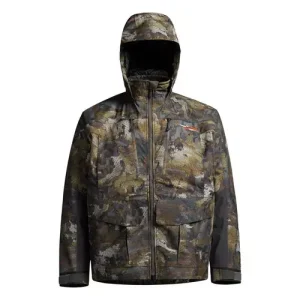
A waterfowl system needs to keep hunters protected while still allowing enough movement to set decoys, work around a blind and shoulder a shotgun.
That’s why we prefer building this category around SITKA rather than using a generic waterproof jacket.
Don’t underestimate wind. A cold marsh or exposed blind can make a moderate temperature feel considerably worse once steady wind starts moving across wet clothing.
Frogg Toggs Vapor Rain Suit
Bottom line: If your rain gear is primarily insurance against an unexpected storm, it’s difficult to ignore Frogg Toggs on price.
The Vapor Rain Suit currently starts around $79.99 and provides both a jacket and pants. That’s dramatically less expensive than purchasing premium hunting rain-wear piece by piece.
It also weighs roughly 19.5 ounces for the suit and uses fully taped seams.
There are obvious compromises. Premium rain-wear generally provides a better hunting fit, greater durability, quieter fabrics and more refined ventilation.
But not every hunter needs a $400-plus rain system. For occasional use or emergency protection kept in a truck or pack, Frogg Toggs remains compelling.
Jacket + pants
About 19.5 oz.
Fully taped
$79.99–$110
Reasons to Buy
- Much less expensive than premium rain systems
- Jacket and pants included
- Lightweight and packable
- Good emergency weather protection
Reasons to Consider
- Less durable than premium hunting shells
- Not as quiet
- Fit and ventilation are more basic
Hunting Clothes Buyer’s Guide
Start With Your Activity Level
High-activity hunting: elk, mule deer, mountain hunting, spot-and-stalk and mobile turkey hunting.
Prioritize:
- Breathability
- Ventilation
- Stretch
- Quick-drying fabric
- Low weight
Low-activity hunting: tree-stands, blinds, predator stands and long glassing sessions.
Prioritize insulation, wind protection and warmth while stationary.
Build a Layering System
Base layer: Moves moisture away from the skin.
Mid-layer: Adds moderate warmth while maintaining breathability.
Insulation: Adds serious warmth when temperatures fall or activity decreases.
Weather layer: Blocks wind, rain or snow.
Avoid Cotton in Cold Conditions
Cotton absorbs moisture and dries slowly. Once sweat or rain saturates it, the fabric becomes a poor choice for cold-weather hunting. Merino wool and technical synthetics are generally better next-to-skin materials.
Don’t Underestimate Wind
Hunters often respond to cold by adding insulation when wind may be the actual problem. A wind-blocking jacket can sometimes improve comfort more dramatically than adding another thick fleece layer.
Noise Matters for Bowhunters
A shell that performs perfectly in a laboratory can still be a poor bowhunting jacket if it produces a loud crinkle every time you draw. Hunters expecting encounters inside 20 yards should pay close attention to outer-fabric noise.
Price vs. Versatility
A $375 jacket isn’t automatically worse value than a $150 jacket.
If the expensive jacket works during elk season, mid season whitetails, scouting trips and cool-weather hikes, its cost per hunt may actually be lower than a specialized piece you only wear a few times.
Rain Gear Has to Be Packable
A waterproof jacket doesn’t protect you when you left it back at camp because it weighed too much. Mobile hunters should consider packed size and weight alongside waterproof ratings.
Don’t Overdress for the Walk In
Late-season hunters often become cold because they wore too much clothing during the hike. If you arrive at the stand soaked in sweat, even good insulation will struggle. Carry the heavy layer in and put it on after your body temperature drops.
Frequently Asked Questions
What are the best hunting clothes for hot weather?
For extremely warm conditions, we like the King’s XKG Sonora Air Pant paired with a lightweight top such as the First Lite Wick Hoody. Hunters dealing with heavy insect pressure should also consider the FORLOH Insect Shield Performance Hoodie.
What is the best hunting jacket for all-around use?
The SITKA Jetstream is our all-around pick because wind protection, breathability and ventilation make it useful across a broad range of fall hunts. It is not a dedicated rain jacket or extreme-cold jacket, however.
What are the best hunting clothes for extreme cold?
For stationary whitetail hunting, we’d combine a moisture-managing or heated base layer with conventional insulation and a purpose-built cold-weather outer layer such as the SITKA Fanatic.
Are heated hunting clothes worth it?
They can be, particularly for hunters who spend long periods stationary. Heated clothing makes less sense during strenuous hiking because your body is already creating significant heat. Where it shines is in tree-stands, blinds and other low-activity situations.
Is expensive hunting clothing worth the money?
Sometimes. Premium gear generally becomes easier to justify when it solves a specific problem — very low weight, extreme weather protection, quiet late-season insulation or exceptional durability. Hunters who only go out a few times per year may be better served by less expensive alternatives.
Should hunting clothes fit tight or loose?
Base layers generally work best relatively close to the body so they can manage moisture. Midlayers and insulation need enough room to trap air, while outer shells should accommodate the layers underneath without becoming excessively baggy.
Is merino wool better than synthetic hunting clothing?
Neither is universally better. Merino performs well across temperature changes and is popular for base layers. Synthetics often dry faster and may withstand abrasion better. Many of the best hunting systems use both.
What should I wear hunting in the rain?
Use a moisture-managing base layer beneath a dedicated waterproof shell. Avoid piling excessive insulation underneath during active hunting, because overheating and trapped perspiration can leave you wet from the inside.
Final Thoughts
There isn’t one jacket, pant or camouflage pattern that wins every hunt. In fact, specialization is one of the biggest improvements we’ve seen in modern hunting apparel.
King’s XKG gives active hunters some of our favorite options for warm weather, rain and high-mobility hunting.
SITKA remains particularly strong when wind, cold-weather whitetail hunting and serious waterfowl conditions become the priority.
First Lite continues to make versatile merino layers and some of the most purpose-built turkey hunting apparel available.
Stone Glacier deserves a place near the top for backcountry hunters who obsess over weight without wanting to give up real hunting durability.
Fieldsheer adds something genuinely different to the conversation with heated thermals that can reduce the need for excessive bulk during stationary cold-weather hunts.
Specialized systems from FORLOH, ScentLok, HECS, DSG Outerwear and Orvis also demonstrate why it doesn’t make sense to declare a single hunting brand best for everyone.
The smartest approach is to build around the hunts you actually do.
Start with a good base layer. Add breathable insulation. Protect yourself from wind and rain. Use specialized clothing when your environment demands it, and save the heaviest insulation — or active heat — for conditions where you actually need it.
That’s how you stay comfortable without carrying half your closet into the woods.
Per our affiliate disclosure, we may earn revenue from the products available on this page. To learn more about how we test gear, click here.