



Table Of Contents
-
Intro
-
Quick Verdict
-
Where to Buy
-
Product Description
-
Key Features/Benefits
-
Range Performance
-
Field Performance
-
Specs
-
Pros/Cons
-
FAQ’s
Is the GRL335 a Good Thermal Scope for Predator Hunting?
Predator hunting has evolved more in the last decade than it did in the previous fifty years combined. When I first started calling coyotes, my setup consisted of a heavy cassette-style electronic caller, something that today’s lightweight wireless e-callers have long since replaced with far more advanced features. Back then, night hunting technology was simple. A spotlight with a red lens and a favorable moon phase were about as advanced as it got.
Fast forward to today, and the game has completely changed. Thermal optics have rewritten the script, giving hunters the ability to detect and pursue predators in ways we could only imagine just a few years ago.
For many years, my home state of Missouri prohibited the use of any artificial light while hunting at night. Because of that, the only way I could pursue coyotes after dark was to travel out of state. That changed a few years ago when Missouri updated its laws and regulations, finally allowing night hunting for predators.
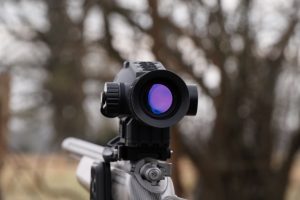
Now, with several seasons of night hunting under my belt, along with more than twenty-five years of predator hunting experience overall, I’ve developed a real appreciation for new gear and technology. I enjoy testing the latest equipment to see how it can help me and other predator hunters gain every possible advantage in the field.
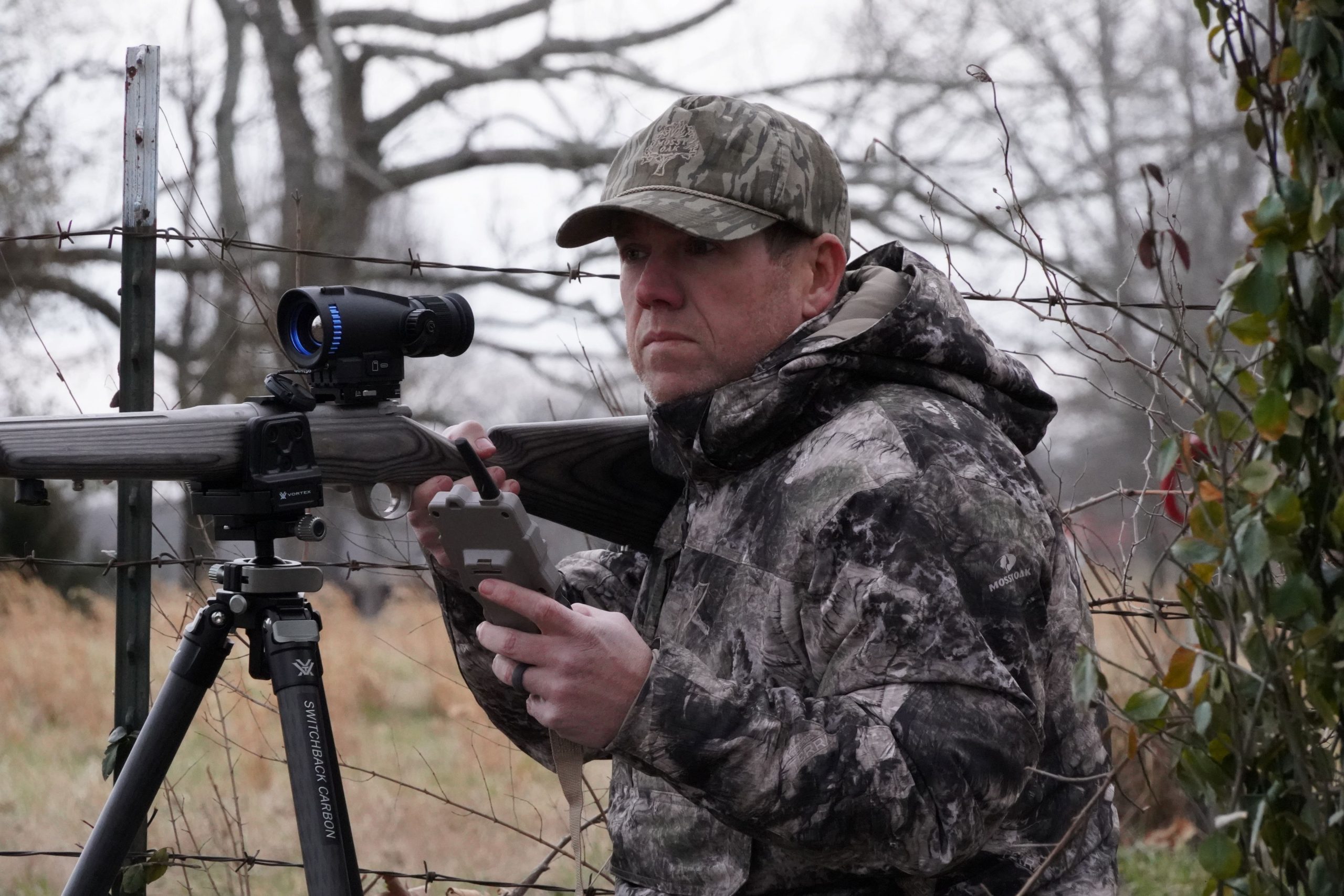
When I got my hands on the GOYOJO Optics GRL335 Thermal, I wanted to evaluate it the same way I would any serious hunting tool: mount it, zero it, take it to the range, and then take it to the field on real predator stands. No bench only impressions. No backyard only testing. If a thermal can’t perform in cold night air, in wooded or wide open fields with real coyotes moving, it doesn’t matter what the spec sheet says.
So that’s exactly what I did. After putting it through its paces at home, I took it to the field for several nights of coyote calling to see how it would perform in real hunting situations. Here’s how the GRL335 held up.
Quick Verdict: GOYOJO Optics GRL335 Thermal Scope
| Category | Details |
|---|---|
| Best For | Predator hunters entering thermal hunting |
| Sensor | 384×288 thermal core |
| Lens | 35mm objective |
| Effective Hunting Range | 100–300 yards |
| Optical Zoom | 4× |
| Digital Zoom | 1×–4× |
| Recording | Built-in video recording |
| Mount | Standard Picatinny |
| Price Range | $849-$949 |
Bottom Line:
The GOYOJO Optics GRL335 delivers reliable detection, solid image clarity, and practical predator-hunting performance at a price that makes thermal technology accessible to more hunters. For calling coyotes, hog hunting, or nighttime varmint control inside realistic hunting distances, it provides the core features hunters need without the premium price tag of high-end thermals.
Where to Buy the GRL335 Thermal
Hunters looking for the best current pricing can find the GRL335 here:
🛒 View Current Deals on GOYOJO
PRODUCT DESCRIPTION
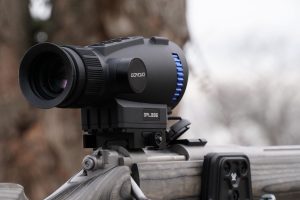
The GOYOJO Optics GRL335 is a compact thermal riflescope built specifically for night hunters who want clarity, durability, and practical field performance without jumping into the high price tier, which has become a drawback for many predator hunters wanting to get started in thermal hunting.
This thermal sensor, paired with a 35mm objective lens, is a very versatile combination for predator hunting within 300 yards, which, honestly, is about the extent of my range in southern Missouri. If hunting in western states, where the country is open, then you would need something that could reach farther.
After testing and reviewing, I would say this scope is designed for predator hunters (coyotes, fox, bobcats), hog hunters, and nighttime varmint control around a farm or private property.
KEY FEATURES AND BENEFITS
384×288 Thermal Sensor (NETD Sensitivity)
The heart of any thermal optic is the sensor. The GRL335 runs a 384-resolution core, which is widely considered the “sweet spot” for practical hunting performance. In real world conditions, such as coyote hunting, the heat signatures were crisp, the body outlines easy to distinguish, and movement instantly recognizable.
When I first got the GRL335 mounted, I picked up several whitetail deer, cattle, and a large owl perched in a tree at 100 yards. All were easy to identify due to the clarity. On my first coyote set, I was able to clearly distinguish a single animal working through knee high grass at just over 150 yards, not just a heat blob, but a defined K9 body shape, which I knew had to be a coyote.
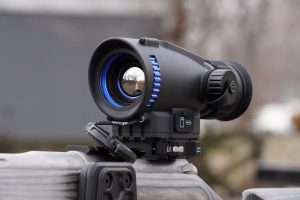
The 35mm lens provides a balanced field of view, wide enough for scanning fields and timber edges. It was easy to sight in on the range, which I felt was tight enough for confident shot placement inside 250 yards, maybe 300. And like I said, I don’t shoot much farther than that in the daylight. For most predator hunters, that covers 95% of realistic engagement distances.
Multiple Color Palettes
Thermal palettes aren’t gimmicks; they matter depending on terrain and weather. The GRL335 includes common viewing modes like ‘white hot’, ‘black hot’, and ‘red hot’. Personally, I prefer ‘white hot’ for scanning and ‘black hot’ for shooting. The contrast feels more natural to my eyes. But having options is helpful when humidity or background temperatures start blending targets into the environment.
Digital Zoom
Digital zoom allows the hunter or shooter to magnify the image without physically adjusting the optic. As with most thermals, clarity drops slightly as you zoom in. That’s normal. However, inside 200 yards, the zoom remained very usable for confirming the animal before shooting and ensuring shot placement.
Built-In Recording
One of the best features of the GRL335 is its built-in recording options. This feature, which modern hunters appreciate most, is onboard recording.
With the built-in recording, I was able to capture hunts and help review shot placement. Those are the two most practical features for hunters. But let’s be honest, the best part of recording what you see while hunting is sharing footage easily on social media or YouTube.
The GRL335, having an onboard recording function, was a big bonus for this price class of thermal.
Recoil Rated and Durable Housing
One of the most impressive features of the GRL335 was discovered, right out of the box, and that is the feel and durability. It feels strong and seems to hold up to the abuse that predator hunters can inflict on equipment. Predator rifles range from .223s to .22-250s, and even larger calibers used for hogs.
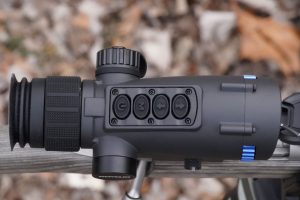
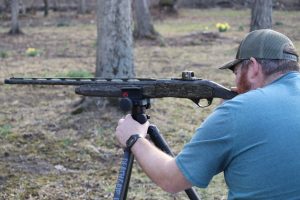
The GRL335 is built to handle standard centerfire recoil. During my testing, I mounted it on a Kimber .22-250 bolt-action rifle. I have used this rifle on many of my predator hunts. I was uneasy about taking my regular rifle scope off and replacing it with the GRL335 thermal. Yet, once I shot a few times and began hunting with it, I was glad I did. Basically, I took a rifle I am confident with to harvest coyotes and made it better. When shooting, it held zero across multiple range sessions and hunts. I plan to continue shooting this same setup throughout the summer while coyote hunting.
The housing feels solid and well sealed, and the controls and buttons seem of good quality. They are glove friendly, which is a must for winter calling, and easy to use. When the fast action of coyote hunting heats up, easy-to-use buttons and functions can make or break the hunt.
RANGE PERFORMANCE
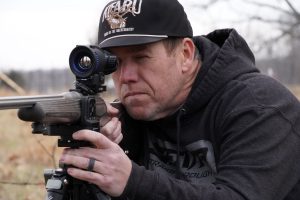
Zeroing a thermal is different from zeroing traditional glass, but once you understand the digital reticle adjustment system, it’s straightforward.
I completed this task in my backyard range. After sighting and confirming at 50 yards, I moved to 100 yards. Once dialed, I obtained a 3-shot group that stayed consistent.
For a predator thermal, consistency is king. The GRL335 delivered reputable results. After hunting four different times, I went back to the range, and everything checked out the same. Durability, again, is key to keeping equipment functioning well every hunt. For a thermal in the $1000.00 range, I was impressed.
IN THE FIELD PERFORMANCE
During the hunt, a thermal either proves itself, or it doesn’t. I have never been one to spend too much time on specs and on the range testing. I am a predator hunter at heart, and I want to test a product to see whether it will function well under pressure while hunting.
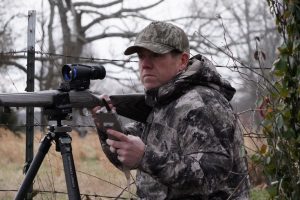
On multiple night sets, detection distance on coyotes exceeded 300 yards in open terrain. Yet most of the time, 100-200 yards was the most common distance at which a predator was first picked up on the thermal. Again, this is mostly due to the country I hunt in. A 300 yard plus shot is not as common in the Midwest as it would be if I were hunting desert country or open country in the western United States.
Positive ID was most comfortable inside 250 yards. Tracking moving animals through brush was smooth with minimal lag. Battery life lasted through full evening hunts without requiring a swap. That alone builds confidence. On most of my testing hunts, the temperatures remained in the low 20’s to 35 degrees at night.
One standout moment came on a cold, still night when two coyotes approached from different directions on the same calling stand. Being able to quickly transition between targets and maintain clarity made all the difference. The coyotes were easy to find, and the shots remained accurate.
SPECS (Typical Configuration)
- Sensor: 384×288
- Objective Lens: 25mm/35mm
- Display Resolution: 1024*768
- Optical Zoom: 4X
- Digital Zoom: 1X, 2X, 3X, 4X
- Recording: Built-in
- Power Source: Rechargeable battery system
- Mount: Standard Picatinny
WHY WOULD YOU BUY IT?
If you are serious about predator or hog hunting at night, thermal optics aren’t a luxury anymore; they’re an advantage. The GOYOJO Optics GRL335 makes sense for hunters who want a long detection range, reliable zero retention, onboard recording, and, most of all, don’t want to spend ultra premium thermal money.
It’s especially appealing for hunters stepping into thermal for the first time, but who still want performance that’s field ready and will hold up.
PROS
- Strong detection capability for a 384 core
- Balanced 35mm lens for predator distances
- Multiple color palettes
- Onboard recording
- Durable construction
- Holds zero well
- Good battery life
CONS
- Digital zoom clarity drops at higher magnification (normal for thermals)
- Not a high end 640-resolution unit
- Premium optics still outperform it at extreme distances
The GOYOJO Optics GRL335 Thermal hits a practical balance between performance and price.
It detects heat quickly. It holds zero, and it performs in real hunting conditions. For the predator hunter who wants to extend their effectiveness after dark without stepping into the highest price bracket, the GRL335 is a serious contender.
Where to Buy the GRL335 Thermal
Hunters looking for the best current pricing can find the GRL335 here:
🛒 View Current Deals on GOYOJO
As always, the real test isn’t on paper, it’s under a cold sky, with a call running, waiting for a set of glowing eyes to break the edge of a field. For the past few years, I have often used only handheld scan lights and red or white lights that mount to my scope. My wife and I have enjoyed hunting together in with me ushering the gun and she running the handheld light. After using the GRL335, it proved to be a worthy addition to our predator hunting arsenal. Her light may be replaced with a hand held thermal scanner instead. The advantages of using thermal technology outweigh our lights, and future hunts will never be the same.
FAQs About the GOYOJO Optics GRL335 Thermal Scope
What is the detection range of the GOYOJO GRL335 thermal scope?
During field testing, heat signatures from coyotes were detectable beyond 300 yards in open terrain. In most real-world predator hunting situations, initial detection occurred between 100 and 200 yards, which aligns well with the distances most coyotes are called into shooting range.
Is the GRL335 a good thermal scope for coyote hunting?
Yes. The combination of a 384×288 sensor and a 35mm objective lens makes the GRL335 well suited for predator hunting distances inside 250–300 yards. That range covers the vast majority of calling setups in wooded areas, farmland, and rolling Midwest terrain.
Can the GRL335 be used for hog hunting as well?
Absolutely. The GRL335 works well for hog hunting because thermal technology allows hunters to quickly detect animals moving through grass, brush, or crop fields at night. Its detection capability and digital zoom make it effective for identifying and tracking hogs in low-light or no-light conditions.
Does the GRL335 record video while hunting?
Yes. The scope includes built-in recording functionality that allows hunters to capture footage directly through the optic. This is useful for reviewing shot placement, documenting hunts, and sharing footage on platforms like YouTube or social media.
How difficult is it to zero the GRL335 thermal scope?
Zeroing the GRL335 is straightforward once you understand the digital reticle adjustment system. After initially zeroing at 50 yards and confirming at 100 yards, the scope held consistent groups and maintained zero during multiple hunts and range sessions.
How long does the battery last on the GRL335?
Battery life proved sufficient for full evening predator hunts during testing. Even during cold winter nights with temperatures between 20 and 35 degrees, the scope ran through entire hunting sessions without requiring a battery change.
Is a 384-resolution thermal sensor good enough for predator hunting?
Yes. A 384 thermal sensor is widely considered the practical performance sweet spot for most predator hunters. It provides clear heat signatures and good target recognition at typical shooting distances while remaining more affordable than high-end 640-resolution units.
Can the GRL335 handle centerfire rifle recoil?
The GRL335 is rated for standard centerfire rifle recoil. During testing it was mounted on a Kimber .22-250 bolt-action rifle and held zero across multiple range sessions and hunts without any issues.
What makes thermal optics better than traditional night hunting lights?
Thermal optics detect heat signatures rather than relying on visible light. This allows hunters to spot animals in total darkness, through light brush, and in conditions where traditional red or white lights might spook approaching predators.
Is the GOYOJO GRL335 a good thermal scope for beginners?
Yes. The GRL335 is a strong option for hunters entering the world of thermal hunting. It offers solid detection range, onboard recording, durable construction, and practical field performance without requiring the higher investment associated with premium thermal optics.
Per our affiliate disclosure, we may earn revenue from the products available on this page. To learn more about how we test gear, click here.