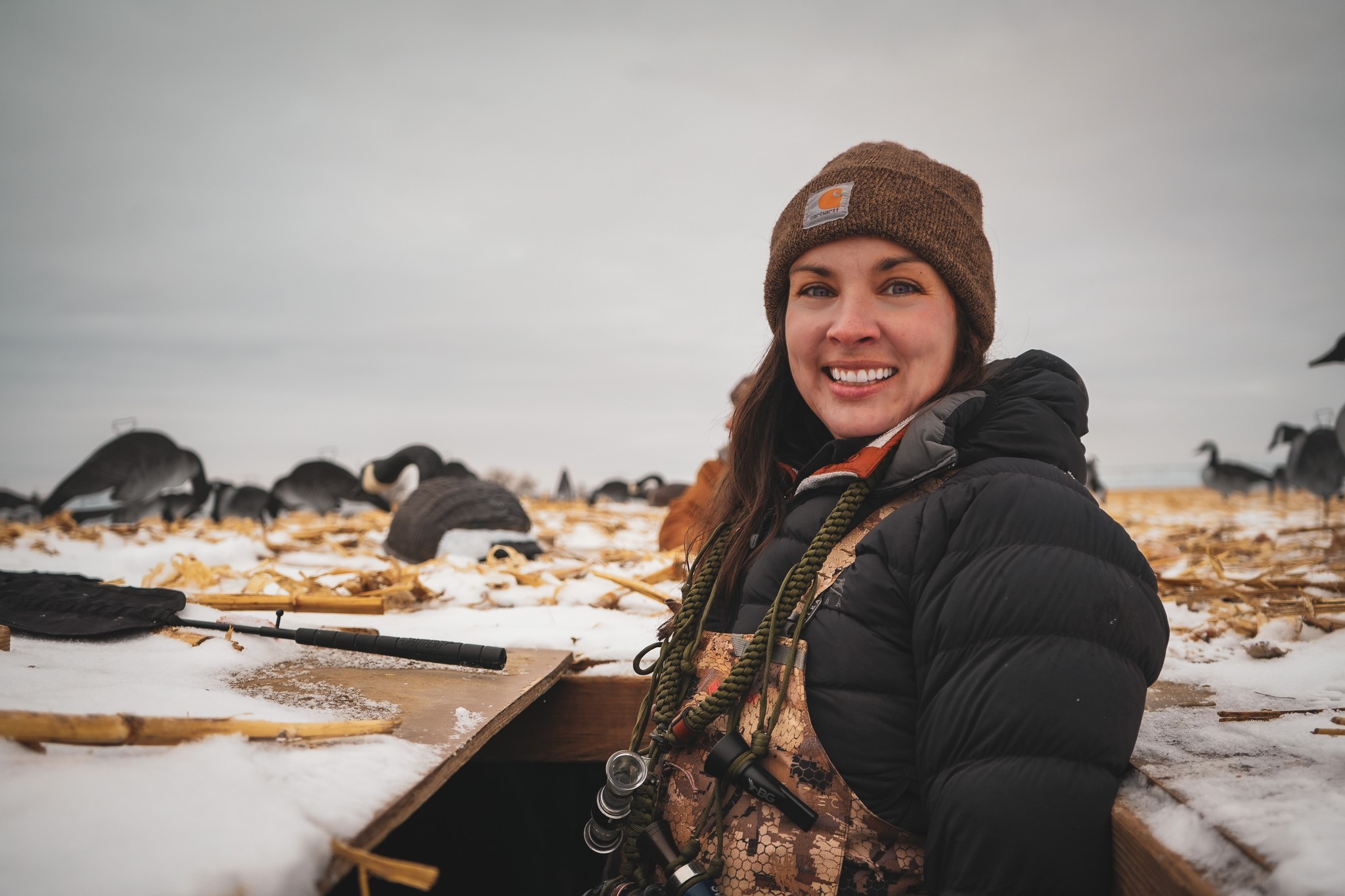
Three first-time hunters showed up at an elk camp in south-central Colorado with the same mix of nerves and excitement every beginner feels. What made this camp different wasn’t the tag or the terrain—it was that all three hunters were women, and they were there because one woman decided the outdoor world needed more doors, fewer gatekeepers, and opportunities for women in hunting. Erin Crider, founder of Uncharted Outdoorswomen, didn’t grow up as a lifelong hunter, and she didn’t enter the field through the “traditional” pathways. She found the outdoors as an adult—through fly fishing, questions about food systems, and a desire to learn the full field-to-freezer process. When she tried to get mentored hunts, meaningful instruction, and fair access to outfitters, she repeatedly hit the same wall: what was easily available to men was harder, slower, and sometimes flat-out denied to women. She realized there were few, if any, female hunting guides.

Crider founded Uncharted Outdoorswomen with a clear vision: to create a welcoming, supportive space for the fastest-growing demographic in the outdoors – women. Her goal was to bring together women from all walks of life and hunting backgrounds and give them a place to build confidence, develop outdoor skills, and learn ethical practices centered on wildlife and habitat stewardship. At its core, Uncharted Outdoorswomen is about conservation, education, and community – along with a healthy dose of fun.
But let’s not get too far ahead of ourselves. With a vision like that, you may think that Erin, a Missouri native, was born and raised to be a die-hard hunter with smokeless powder and lead pulsing through her veins. Well, you would be wrong. She actually didn’t start hunting until just a few years ago. Which may make you think that, like many of us “adult-onset” female hunters, her husband was the driving force behind her new passion. Well, you would be wrong about that, too. He’s not a hunter himself.

In 2018, she began questioning commercial food systems and the long-term availability of high-quality food sources. That curiosity led her to explore hunting as a way to provide for herself and her family. As more questions surfaced in 2020, her drive to pursue hunting more vigorously increased. And here is where the story of Uncharted Outdoorswomen really begins.
As a new hunter in a new state, Erin actively sought out opportunities not just to hunt, but to learn. She wanted to understand every aspect of the process – from field to freezer – so she could provide food for her family in a more sustainable way. Part of that motivation was also practical; gaining these new hunting skills would hopefully help reduce grocery costs over time. She applied for every mentored hunt offered by the state’s wildlife agencies, but was not selected. She then turned her attention to professional courses and classes, hoping to gain hands-on experience and instruction. Finding meaningful education proved difficult as well. While many organizations advertised “learning opportunities,” Erin saw that these offerings often felt more like retail-driven experiences than actual instruction. Few provided the depth of knowledge or mentorship she was looking for, leaving limited paths forward for a new hunter eager to build real-world skills.
With free or low-cost options proving difficult to find, Erin decided to pay for outfitted hunts. They say that “money talks,” but that was not Erin’s experience, either. She was told on more than one occasion that an outfitter was booked, even though she had recently seen their advertisement for open spaces. On one occasion, Erin had her husband make the call. The outfitter was more than happy to book her husband for the same hunt only minutes after she was told there were no openings. Erin was also told that some men who had already booked hunts were uncomfortable hunting alongside women. In other cases, outfitters said the hunters’ wives preferred that women not be included. Taken together, the message was clear: many outfitters simply did not want to book female hunters.
Through these experiences, Erin began to recognize a pattern: opportunities that were readily available to male hunters were often more challenging for her to access. Rather than discouraging her, those moments clarified the gap that existed – and planted the seed for what would eventually become Uncharted Outdoorswomen.

What Erin built became Uncharted Outdoorswomen.
Today, Uncharted Outdoorswomen may be the only known legally registered U.S. outfitter employing all-women guides in multiple states. But reducing it to a statistic misses the point. This wasn’t about novelty or exclusivity – it was about creating an environment where women could learn, ask questions, and grow without feeling like outsiders in a space that often wasn’t designed with them in mind.

At the foundation of Uncharted Outdoorswomen are three pillars: community, opportunity, and confidence. Each one is intentionally woven into every class, hunt, and experience that is offered. Community means women learning alongside other like-minded women who may be just as new or unsure as they are, or who may have more experience and be able to serve as a mentor. Opportunity means access to education and experiences that many women struggle to find elsewhere, so they can build a skill set as complete as they want it to be. And confidence is the outcome: not bravado, but quiet, earned self-assurance built through skill and understanding. With these pillars in place, women can take on the hunting challenge of their own DIY experience in the future.

The women practiced shooting from tripods while standing, working up to distances of 500 yards. It wasn’t about pushing limits for the sake of ego; it was about understanding capability. If a shot presented itself at further distances, each hunter would know whether it was ethical to take it or if she should pass. That kind of preparation builds confidence that extends far beyond one hunt.
When the hunt began in earnest, the preparation paid off. Over the course of the hunt, all three women harvested cow elk. But success didn’t mark the end of the learning. It simply started the transition to the next lesson.

That evening, the elk were hung overnight, setting the stage for the following day’s skinning and quartering class. In addition to traditional methods, the women were taught how to perform a gutless field quartering – an essential skill for anyone planning to hunt elk in the backcountry and pack meat out on their own. These were practical lessons meant to embolden and empower.
Uncharted Outdoorswomen extends that same philosophy beyond big-game hunts. The organization offers a wide range of classes, from ice fishing and fly tying to foraging for mushrooms and making jams and bread. The diversity of offerings reflects Erin’s belief that outdoor confidence isn’t built in a single moment – it’s built through repeated, hands-on experiences that connect women more deeply to their food, their environment, and themselves.
Another intentional choice Erin made was keeping hunts affordable. Many women entering the hunting world are hesitant to invest thousands of dollars before knowing whether the experience is right for them. By keeping costs lower, Uncharted Outdoorswomen removes one of the most common barriers to entry. Just as important, Erin and her guides are upfront about expectations. Hunting is never guaranteed, and understanding that reality is part of ethical participation in the outdoors.
Conservation education is also central to the experience. Participants learn how wildlife management works, why seasons and quotas matter, and how public lands play a role in access for everyone. The goal is not just to create hunters, but informed advocates who understand how their choices affect the future of the landscapes and species they enjoy.
For one hunter on the Colorado elk hunt, the experience carried special weight. A new mother, she spoke openly about what the harvest meant to her family. The elk she harvested would provide food for them for the next year – meat she had a direct hand in sourcing, processing, and understanding from start to finish. It was more than a successful hunt; it was empowerment made tangible.
That moment encapsulated what Erin set out to create when she built Uncharted Outdoorswomen. Not just hunts. Not just classes. But pathways.
When doors stayed closed, Erin didn’t walk away. She built her own – and in doing so, opened them for countless others.
Read more about Women in the Outdoors
Per our affiliate disclosure, we may earn revenue from the products available on this page. To learn more about how we test gear, click here.