



If you have ever pulled into your spot before daylight, only to find your shallow pond locked up with skim ice, you know the feeling. The forecast looked “cold but doable,” the decoys are ready, and the birds have been using the area, but overnight temps quietly erased your plan. Late-season ducks concentrate around the few places they can loaf and feed without burning extra energy, and ice removes those options quickly.
The pattern holds up season after season. When ice tightens up, ducks shift to open water, current, springs, wastewater outflows, or anywhere that stays liquid. If your best hide is on a pond that freezes first, an ice eater can be the difference between hunting “where you want” and hunting “where you can.”
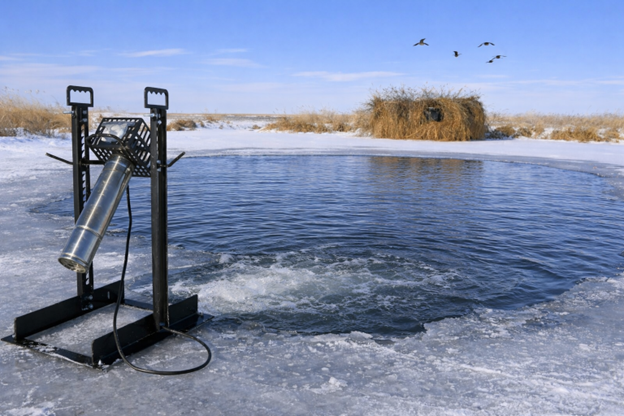
That is the idea behind a duck hunting ice eater on late-season water. Not to “heat” the pond, but to maintain a dependable pocket of open water where birds can land, raft, and move.
Why Does Open Water Matter So Much in Late Season?
Ducks are built for cold, but they still pay an energy price when ice and snow limit access to food and resting areas. Ice cover can also eliminate the shallow edges where dabblers tip and feed. When those edges lock up, birds move to bigger water, rivers, springs, wastewater outflows, or any refuge that stays open.
Winter weather and wetland icing directly influence duck movements and habitat use. When conditions change, birds shift fast in how long they stay in one spot, depending on whether it stays open. That matches what most hunters see: when the freeze hits, the “X” can move overnight.
What Exactly Is an Ice Eater, and What Does It Do?
Most ice eaters are designed to circulate water, usually by moving slightly warmer water from deeper areas up toward the surface. That circulation disrupts ice formation and maintains a consistent opening. The goal is not to keep an entire pond open in harsh conditions, because results depend on pond size, depth, wind exposure, and how fast temperatures drop. The realistic goal is a reliable landing and loafing zone that stays open longer than the surrounding water.
Agitating or aerating water creates open areas that allow oxygen exchange, and prolonged ice cover increases winterkill risk in some ponds. Duck hunting and fish health are different goals, but the underlying lesson is the same: open water changes what is possible.
Where Should You Place an Ice Eater for Duck Hunting?
Placement is where most people either win or waste effort. In my experience, you want to think like a duck and like a wind map at the same time.
A few placement guidelines that tend to hold up:
- Protect the hole from the harshest wind when possible. Wind can help keep water open, but it can also push ice into your opening and close it fast.
- Avoid the deepest part of the pond if your pond is large. A pocket near a travel corridor or the “landing side” of your spread is often more useful than a hole in the middle of nowhere.
- Use natural funnels. Small coves, points, or narrow necks often concentrate birds and make a smaller open area hunt bigger.
- Plan for access and safety. You do not want to be walking on questionable ice around moving water or thin edges.
If your pond supports fish year-round, you may only need a small percentage of surface area open to support oxygen exchange. Keeping roughly 2% of the surface area open through winter is a commonly cited benchmark for reducing winterkill risk. That number is about fish, not hunting, but it is a helpful reminder that you often do not need a giant opening to create a meaningful impact.
How Big of an Opening Do You Actually Need?
Most hunters assume bigger is always better, but that depends on conditions and pressure. Late-season ducks can stack into surprisingly small areas if they feel safe and have a reason to be there. A modest opening can:
- Offer a landing pad when nearby water is locked up
- Provide a loafing pocket where birds can rest without standing on ice
- Keep decoys visible and functional instead of frozen in place
The “right size” depends on your pond, your species mix, wind exposure, and the number of nearby open options. In many scenarios, a controlled opening that stays consistent day after day is more valuable than a huge hole that refreezes, shifts, or becomes unpredictable.
Will an Ice Eater Change Duck Behavior, or Just Keep Water Open?
It usually does both, but indirectly. Ducks are not attracted to the machine itself. They are attracted to what it creates: open water and the ability to move, land, and raft without fighting ice.
This matters even more during late-season cold snaps that follow a mild stretch. When conditions shift fast, birds shift fast too. A sudden freeze doesn’t give ducks time to adjust gradually. They move to wherever open water still exists. If your pond is one of the few places nearby with reliable open water, it can become a consistent stop, especially if you manage pressure, keep approach routes quiet, and avoid educating birds.
What Are the Common Mistakes Hunters Make With Ice Eaters?
These are the issues I see most often:
- Turning it on too late. Breaking thick ice is harder than preventing skim ice from forming in the first place.
- Putting the opening in the wrong place. A great open hole is still a bad hunt if it is upwind of your hide or off the flight line.
- Ignoring safety. Thin ice around moving water can be dangerous, especially in the dark.
- Overhunting the spot. Late-season birds often have fewer options, but they also get wary fast.
Treat your opening like a limited resource. If you hunt it hard, day after day, you can burn the advantage even if the water stays open.
How Does This Fit Into Bigger Late-Season Strategy?
An ice eater is a tool, not a shortcut. It works best when it supports good fundamentals:
- Scout where birds want to be, then keep that water open
- Time hunts around weather changes, because freeze-thaw cycles can shift movement
- Keep the spread simple when birds are pressured
- Control disturbance, especially after shooting light
Winter ice is variable year to year, and planning around that variability is part of winning the late season. Pay attention to broader ice patterns in your region, not just overnight forecasts.
Snow and ice directly influence where ducks winter and how migration timing shifts. Understanding those patterns helps you anticipate when birds will move and where they’ll go.
Closing: What to Remember Before the Next Cold Front
Late-season success often comes down to staying adaptable when the freeze squeezes birds into fewer places. A duck hunting ice eater can help you stay in the game by keeping a dependable pocket of open water when your pond would otherwise lock up.
Here are the takeaways to keep in mind:
- Open water influences where ducks can rest and feed, especially when shallow edges freeze.
- A consistent opening in the right location can matter more than a massive hole.
- Starting early and placing the unit with wind and flight paths in mind often improves results.
- Safety comes first around thin ice and moving water, especially in the dark.
The right setup starts with understanding your specific pond, your local conditions, and the pressure birds are already facing. Small adjustments in placement and timing can keep your late-season plan intact when everything else around you freezes up.
Per our affiliate disclosure, we may earn revenue from the products available on this page. To learn more about how we test gear, click here.