



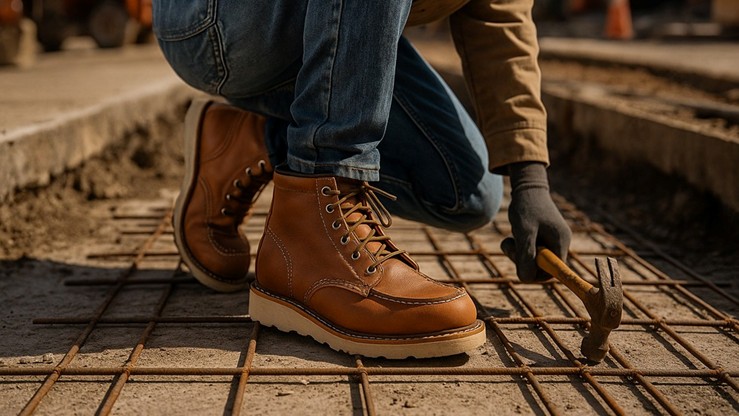
If your job keeps you moving across uneven ground, wet grass, gravel, mud, or mixed terrain, the best boot is the one that matches the real hazards you face. For many outdoor and field roles, that often means prioritizing traction, stability, and fatigue reduction over a hard toe cap. A well-built pair of non-steel-toe work boots can be the more practical, safer-feeling choice when toe-impact risk is low but footing, weather, and walking mileage are high.
Start With the Hazard: Outdoor Work Is Usually About Traction, Not Toe Crush
OSHA’s guidance is straightforward: employers must ensure protective footwear is used when there’s a danger of foot injuries from falling/rolling objects, punctures, or electrical hazards. In other words, the job-site risk assessment drives footwear choice, not habit or tradition.
In field work, the common challenges you’ll face are:
- Slips and trips on uneven or contaminated surfaces like mud, wet leaves, and loose rock
- Long walking days that amplify foot fatigue and turn minor discomfort into real problems
- Weather exposure that creates cold, wet feet and increases the risk of slipping
- Ankle roll risk on rutted terrain, creek crossings, and unstable ground
That’s why many outdoor professionals do better with high-quality non-steel-toe work boots built for grip, support, and comfort, especially when the job doesn’t regularly involve heavy material handling over the toes.
What Toe Caps Solve and What They Don’t
Safety toes exist for a reason. They protect against impact and compression when heavy objects drop or roll onto your feet.
But here’s what toe caps don’t automatically solve for outdoor work:
- They don’t improve traction. A steel toe won’t help you on wet grass or slick clay.
- They don’t guarantee waterproofing. Toe protection and weather protection are separate features.
- They don’t prevent ankle rolls. Upper support and outsole design matter more on uneven ground.
- They don’t reduce fatigue. Weight and flex matter when you’re covering miles.
This matters because slips, trips, and falls cause more injuries in outdoor work than dropped tools. When you’re navigating slopes, crossing streams, or working in wet conditions, your boots need to keep you upright first.
The Comfort and Fatigue Advantage: Less Weight, Better Flex, More Miles
Outdoor and fieldwork are often endurance tests for your feet. The boot that feels fine for 30 minutes can feel like a mistake by hour eight.
Non-steel-toe work boots can offer:
- Lower overall weight (depending on build), which reduces fatigue on long walking days
- More natural forefoot flex for climbing embankments, stepping over roots, and moving through brush
- More toe room in certain soft-toe designs, helping reduce pressure points during long wear
When you’re putting in serious miles on your feet, every ounce of unnecessary weight and every restriction in natural movement adds up.
Wet Ground Changes Everything
Fieldwork rarely takes place on clean, dry floors. Wet grass, slick clay, frozen ground, and loose gravel create traction demands that often matter more than toe-impact risk.
Outdoors, traction isn’t a bonus feature. It’s a primary safety control. Waterproof non-steel-toe work boots with aggressive, self-cleaning tread can keep you safer on muddy trails than steel-toe boots with shallow tread patterns.
Match Your Boots to Your Terrain
Different outdoor environments demand different boot priorities.
Rocky mountain trails require stiffer shanks and aggressive heel brakes for descents. Marshy bottomland and wetland work needs deep lugs that shed mud and true waterproofing that goes beyond water-resistant leather.
Desert and dry prairie environments benefit from breathable construction and lighter weight since waterproofing adds bulk you don’t need. Timber work and forestry demand ankle support and puncture-resistant midsoles to handle uneven ground and hidden debris.
Forest service, wildlife management, and survey work often involve all of the above, which is why many field professionals rotate between two or three boot types depending on the season and assignment.
When Non-Steel Toe Is The Right Call
Non-steel toe boots are often the smarter choice when:
- Your day involves walking, scouting, surveying, inspecting, guiding, or field servicing
- Toe-impact risk is infrequent or already controlled (procedures, barriers, material staging)
- You need maximum traction on wet ground, slopes, and mixed terrain
- You need all-day comfort for long wear, variable weather, and high step counts
If your tasks shift seasonally, many teams keep both options: soft-toe for field days, safety-toe for heavy-handling days.
When You Should Not Compromise: Clear Safety-Toe Scenarios
If any of these describe your day regularly, a safety toe is likely required:
- Heavy material handling where items can drop or roll
- Demolition, rigging, and logging operations with impact risk
- Warehouse and forklift zones with active traffic
- Worksites where company policy specifies ASTM-rated protective footwear
If you’re unsure, check your employer’s PPE policy or the specific hazards listed in your work tasks.
A Field-Tested Checklist for Choosing Outdoor Work Boots
Use this checklist to choose boots that match real field conditions:
Outsole Traction
- Deep, self-cleaning lugs for mud and loose soil
- Tread built for wet ground, not just aggressive looks
Stability and Support
- Heel stability that feels planted on side slopes
- Upper support matched to terrain (ankle support matters on uneven ground)
Water Management
- Waterproof membrane or treated leather when you work in wet grass, puddles, or snow
- Fast-drying lining if you’re in humid environments
Underfoot Comfort
- Cushioning that stays supportive over time
- Roomy toe box to handle swelling during long wear
- Removable insole option for orthotics or upgrades
Hazard Match
- Soft toe for low crush risk, high walking demand
- ASTM-rated safety toe when crush/impact risk is present
Bottom Line: Smarter Boots Come From Smarter Risk Decisions
The toughest boot isn’t always the best boot. For outdoor and field work, the smarter choice often comes down to what keeps you stable, moving, and comfortable across unpredictable terrain.
When toe-impact hazards are low, investing in traction-focused, comfort-driven non-steel toe work boots isn’t a compromise. It’s the right tool for the job.
Per our affiliate disclosure, we may earn revenue from the products available on this page. To learn more about how we test gear, click here.