




A quiet trail or forest road presents a different personal defense problem than a parking garage. Help may be hours away, cell service may be absent, and low light, animals, or solo travel may limit easy options.
Most trail incidents are resolved by noticing trouble early and leaving, not fighting. The seven essentials below earn space in a pack or on a belt because each serves a specific job outdoors.
The Seven Essentials at a Glance
The order matters. The first two essentials prevent far more incidents than the last two resolve, while the middle layers create distance, attract attention, and keep help within reach.
- Awareness and a shared route plan prevent trouble and start rescue quickly if plans change.
- Pepper spray or terrain-appropriate bear spray creates distance before a threat reaches contact range.
- A personal safety alarm or whistle signals distress and may interrupt an approaching aggressor.
- A headlamp and backup tactical flashlight preserve footing, visibility, and identification after dark.
- A satellite messenger or charged phone with offline maps keeps location and communication available.
- A fixed blade or sturdy multitool handles repairs, cordage, and everyday carry (EDC) needs.
- A legally carried firearm, backed by real practice, provides a final defensive option.
1. Awareness and a Shared Route Plan
Trailhead parking lots are where most avoidable encounters begin. Before unloading gear, hikers should scan the lot, note the vehicles already there, and watch for anyone lingering without an obvious reason.
Situational awareness continues beyond the trailhead, but outdoor escape planning involves terrain rather than marked exits. A hiker should know which direction descends toward a road and where the last trail junction was.
The distance to the nearest group also matters. If another party passed 15 minutes earlier, walking back toward them might offer a safer option than continuing into an isolated section.
Distance is the most dependable form of de-escalation when there is no crowd, business, or occupied building nearby. Breaking contact early is safer than staying close while trying to negotiate politely.
Route details should go to one named person, not simply sit on a kitchen counter. They should include the trailhead, expected return time, vehicle description, planned route, and a missed-check-in deadline that triggers a call.
The five practical rules of outdoor self-defense are straightforward: stay aware, maintain distance, avoid confrontation, respond proportionally, and move toward help. None requires waiting for a situation to become unmistakably dangerous.
2. Pepper Spray or Terrain-Appropriate Bear Spray
Spray, sound, and light work before physical contact. They offer options for creating distance, identifying an uncertain approach, or attracting help without immediately moving to greater force.
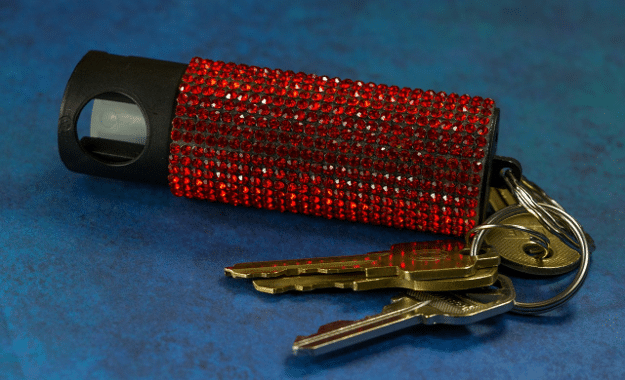
Most handheld pepper spray reaches roughly six to twelve feet. That distance closes quickly, which means a canister inside a zipped pack pocket will not function as an accessible non-lethal self-defense weapon.
Carry position matters as much as range. The canister should be reachable with either hand and oriented so the user can identify the nozzle without looking down.
Spray pattern matters, too. Gel and stream patterns generally handle wind better than cone foggers, while a strong headwind can blow a fog pattern directly back toward the person deploying it.
Bear spray and compact personal spray are not interchangeable. Bear spray releases a wider cloud and greater volume, making it the more dependable choice in bear country, even against a human threat.
A compact SABRE-style unit fits more easily on a running vest or belt, but its smaller capacity and narrower coverage leave less room for error. Neither format compensates for poor positioning or ignored wind direction.
Canister size, formulation, and oleoresin concentration can face state-level limits. Travelers crossing state lines should verify the specific rules for both the jurisdiction and managed land before packing spray.
3. A Personal Safety Alarm or Whistle
A personal safety alarm, including a She’s Birdie-style pull alarm, can interrupt intent and attract attention on a busy trail. On an empty route, its sound has nobody nearby to alert.
A pealess whistle is simpler. It does not need a battery, carries easily, and works for repeated distress signals when shouting would waste energy.
4. A Headlamp and Backup Tactical Flashlight
Lighting covers a different gap. A headlamp keeps both hands available during an unexpected night descent, while a small handheld tactical flashlight can place concentrated light on an approaching person or unfamiliar movement.
Each light needs independent power. If both rely on the same rechargeable battery or charging cable, one failure can remove the primary and backup at once.
Electronic TASER devices and stun gun models lose performance as batteries cool. Thick clothing can also interfere with contact devices, while dense fur makes them a poor answer to animal threats.
Pressure-powered Byrna launchers face their own cold-weather and access limitations. No battery-dependent or pressure-dependent personal protection device should serve as the only layer carried in low temperatures.
5. A Satellite Messenger or Charged Phone With Offline Maps
A satellite messenger extends communication beyond cellular coverage. Its check-in and SOS functions matter more than convenient texting because they connect an overdue or injured traveler with an established route and location.
A phone still belongs in the kit. Offline maps, airplane mode, and a small power bank preserve navigation and provide coordinates that can narrow a search, even where ordinary calls will not connect.
Cold drains exposed batteries quickly. Phones, messengers, and power banks should ride in an inside pocket during winter rather than cold-soaking inside a pack lid.
Location sharing strengthens the route plan. Regular satellite check-ins or available live-location data give the named contact a recent position instead of leaving searchers with an entire trail system to cover.
Communication also supports situational awareness after an encounter. Any incident that ends with the person walking out should still end with a message or report going out.
A same-day description preserves details about the person, vehicle, location, and direction of travel. Waiting a week allows useful information to fade and reduces its value to others using the area.
6. A Fixed Blade or Sturdy Multitool
A fixed blade or sturdy multitool earns pack space by cutting cordage, preparing tinder, and repairing equipment. A knife is a poor primary defensive choice because using one requires dangerously close contact.
7. A Legally Carried Firearm Backed by Practice
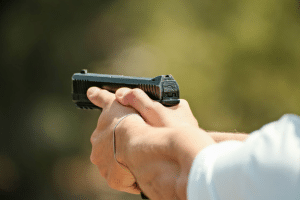
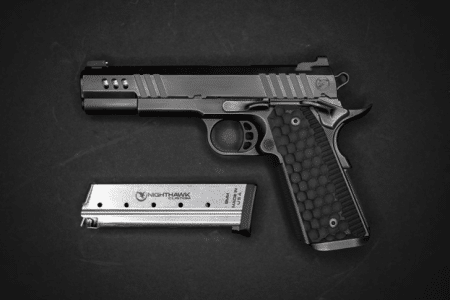
The same practical thinking applies to safe handgun selection. This discussion concerns trail carry, not choosing a home-defense gun, and accessibility matters more than specifications that look impressive on paper.
Where Carry Is Legal and Where It Is Not
Carry rules follow the land manager as well as state laws. National forests generally follow the surrounding state’s law, while national parks follow state law but prohibit firearms inside federal buildings.
State parks, local preserves, and municipal watersheds can impose tighter legal restrictions. Trailheads, visitor centers, ranger stations, and concession buildings may also have different rules from the open land around them.
Long routes add another complication. Reciprocity can change at a state border, so a permit valid at the starting trailhead might not cover the far end of the route.
Local verification should happen before departure through the relevant land manager and state authority. Rules governing firearms, knives, concealed carry, open carry, transport, and defensive spray do not always align.
Legal carry must also be genuine carry. A firearm buried beneath a pack lid, rain shell, and hip belt is stored equipment, not an accessible everyday carry (EDC) option.
Training and Ammunition You Practice With
Ownership does not create competence. Training and practice build safe handling, judgment, accuracy, and familiarity, while structured self-defense training options expose mistakes that casual range sessions often miss.
Practice volume matters more than caliber arguments. A common chambering wins because it is easy to find on the road, affordable enough to shoot in volume, and stocking up on 9×19 Ammo costs less than a single day of instruction.
Trail clothing changes the mechanics. Gloves reduce dexterity, cold hands move slowly, and layered jackets can obstruct access, so practice should use the clothing and pack configuration actually worn outdoors.
Safe drills do not require speed at first. They require consistent access, secure reholstering, muzzle discipline, and the ability to operate equipment without sweeping clothing, gear, or companions.
Carry Less, Practice More
The seven essentials work as a system, with awareness deciding whether any self-defense tool ever leaves its carry position. Equipment that cannot be reached one-handed, in gloves, and in darkness is weight rather than protection.
A smaller kit that has been tested and practiced is more useful than a crowded pack. Before departure, the traveler should also verify the legal rules for the exact land involved, not wait until reaching the trailhead.
Per our affiliate disclosure, we may earn revenue from the products available on this page. To learn more about how we test gear, click here.