





Venturing off grid for a hunting or fishing trip demands special preparation, especially with regard to your vehicle. Reliable transportation is vital when cell service is unreliable and recovery options are limited. Skipping essential safety checks increases your risk of a breakdown and a potential mishap far from help.
Off-grid travel places significant strain on vehicles due to remote distances, unpredictable road surfaces, and sudden weather changes, whether you are relying on your own vehicle or using the Zero Car fleet. Basic vehicle maintenance and a well-organized checklist can lower the risk of problems and improve your chances of self-recovery. This approach allows you to focus on the adventure rather than worry about mechanical setbacks when you are hours from the nearest assistance.
Route planning and trip constraints before departure
Before you even touch your vehicle, understanding your route is essential. Research the expected conditions, such as gravel stretches, washboard surfaces, deep mud, or possible snow drifts that could affect travel plans. Assess any shallow water crossings and the likelihood of encountering washed-out roads or blocked trails.
Examine your fuel range closely against the distances you intend to cover, including the opportunity for realistic turnarounds if obstacles arise. Running out of fuel far from a filling station can cause off-grid stranding. Always build in an extra reserve for unplanned detours, winching, or idling in severe weather, as off-road conditions often consume more fuel than highway driving.
A clear communications plan can keep you safer if things go wrong. Let someone know your intended route and expected return time, and consider low-bandwidth options like a personal locator beacon for emergencies. Using offline navigation and downloading maps ahead of time ensures you maintain situational awareness once out of cell signal.
Proper planning can improve safety and make your trip less stressful. By reducing uncertainty about where you are headed and what to expect, you can concentrate on maintaining vigilance behind the wheel instead of making rushed decisions.
Tire inspection, inflation, and essential tools
Tire failures account for many preventable problems during off-grid travel. Begin by checking tread depth to confirm sufficient grip on loose or slippery surfaces. Examine sidewalls for cuts, bulges, or embedded debris that could signal deteriorating integrity.
Setting correct tire pressure is crucial for traction and load-carrying capacity. Under-inflated tires can be more vulnerable to punctures, while over-inflation reduces the contact patch and can make control difficult on uneven terrain. Adjust pressures to suit vehicle weight and road conditions, referencing manufacturer recommendations for heavy loads and rough surfaces.
Spare tire readiness is often overlooked. Ensure your spare holds proper pressure and matches the wheel size required for your vehicle. Test-fit your jack and tire-changing tools to confirm they work as expected.
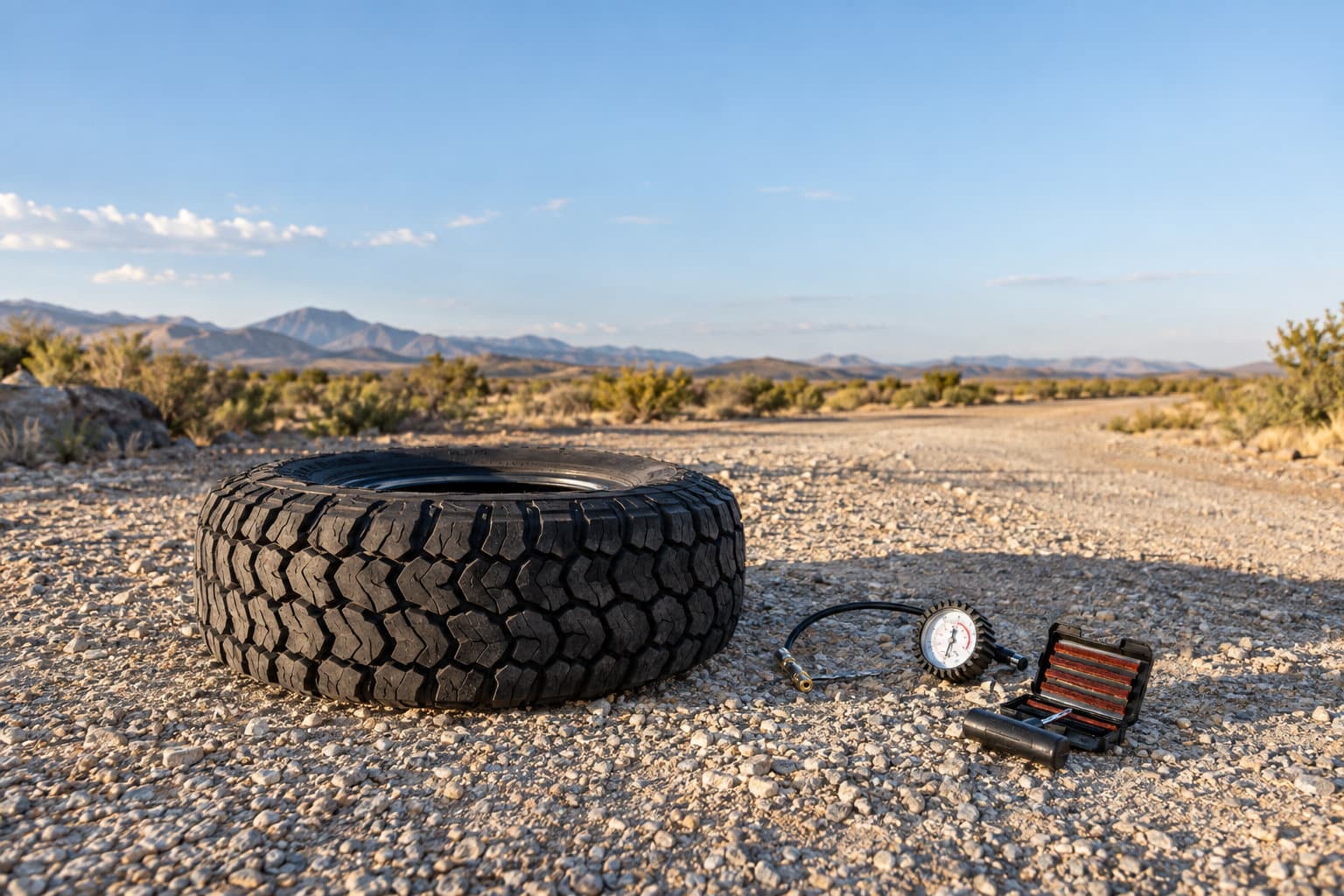
For added security, include a simple tire plug kit, since punctures from sharp rocks or sticks can occur miles from the nearest repair shop. Preparation for tire-related issues is beneficial throughout any remote journey. With reliable tires, you can focus on navigating obstacles and conserve energy for the more enjoyable aspects of your trip.
Critical checks for brakes, suspension, and steering
Brakes, steering, and suspension face particular strain on unmaintained roads. Listen for any grinding noises or vibration from the brake system during test drives. Spongy brake pedals, uneven stopping, or pulling to one side may indicate worn pads or leaking lines needing attention before departure.
Check your steering for excessive play, clunks, or unfamiliar noises while turning or driving over rough patches. Any sign of looseness can cause unpredictable vehicle control during technical maneuvers on rock-strewn or deeply rutted tracks.
Inspect the visible components of your suspension system. Look for signs of leaking shock absorbers, bent linkages, or cracked bushings, as these reduce your ability to absorb bumps and protect your cargo. Damage here can worsen quickly on rough terrain, leading to handling instability or breakdowns in remote areas.
Addressing these issues ahead of time can increase your odds of maintaining safe, predictable handling under demanding conditions. With your mechanical systems in good shape, you can negotiate challenging environments more confidently.
Fluids, batteries, and essential visibility systems
Checking all fluid levels under the hood is a simple safeguard against major breakdowns. Confirm oil, coolant, and brake fluid are at safe levels, as these support engine and braking reliability when hours from help. Running low on coolant can contribute to engine overheating, even on cool days.
Scan underneath your vehicle for fresh spots or drips before leaving, which can reveal leaks that may not be obvious from above. Repairing leaks before departure limits the potential for gradual failures far from the closest workshop.
Batteries often fail at inconvenient times, especially in cold or damp weather. Check terminals for corrosion and ensure secure connections, which can prevent starting issues after extended periods parked in the elements. Carrying basic jump-start equipment gives an additional margin for multi-day trips.
Visibility is paramount for both safety and comfort. Ensure headlights, brake lights, hazard lights, and turn signals work. Replace worn or streaky wiper blades and top up washer fluid with a mixture suitable for freezing conditions to prepare for sudden weather changes.
Traction features, load security, and recovery gear
Familiarize yourself with your four-wheel drive, all-wheel drive, and traction-control systems before venturing onto unknown roads. Knowing the proper techniques for engaging and disengaging these features, as well as when not to use them, supports both safety and mechanical longevity.
Automated traction aids can help with grip up to a point, but understanding their limitations and when to revert to manual techniques is equally important. Protecting your vehicle underbody from rocks or rut impacts relies on proper ground clearance and knowing your approach and departure angles.
Skid plates and slow driving can help avoid costly undercarriage damage in unfamiliar territory. Carrying basic recovery gear, like a sturdy tow strap, shovel, and traction boards, positions you to attempt self-recovery before a situation worsens.
Load management influences comfort and driving stability. Keep heavy gear low and as close to the front axle as possible to maintain predictable handling. Secure all luggage, coolers, and fuel cans to prevent dangerous shifts during rough travel.
Organize the vehicle to keep wet or muddy equipment separated from clean areas while ensuring that nothing obstructs your view through windows or mirrors. Prioritizing safe loading and practical recovery gear can help you handle minor setbacks without turning them into emergencies.
Per our affiliate disclosure, we may earn revenue from the products available on this page. To learn more about how we test gear, click here.