This season, we put six different vacuum sealer models through a serious workout while processing 100 pounds of sausage and another 70 pounds of venison and goose jerky. We worked with everything from compact countertop sealers to professional chamber machines. Some offered impressive capacity and controls, while others surprised us with how much work they could accomplish for their size.
My goal was simple: find the best vacuum sealers for hunters, anglers, gardeners, and anyone else who puts real effort into harvesting and preserving food. I wasn’t interested in laboratory numbers alone. I wanted to know which machines would hold up when there were dozens of bags to seal and a freezer waiting to be filled.
We paid attention to operating noise, sealing speed, ease of use, and how consistently each machine performed during repetitive work. We also tested the finished packages in water to look for trapped air and leaks. When you’ve spent the time and money to bring home good meat, a dependable seal is not optional.
Every machine had strengths, and there wasn’t a complete disappointment in the group. But after using them side by side, some were clearly better suited to particular jobs. Here are the five machines I would recommend, starting with my best overall pick.
This guide focuses on the five strongest recommendations from our field testing. Each winner has a specific use case, whether you are packaging a deer at home, storing fish fillets, or running a large game-processing operation.
Jump to a Section
Best Vacuum Sealers: Our Picks at a Glance
Best Overall Vacuum Sealer
LEM MAXVAC 300
The right combination of dependable sealing, easy cleanup, useful capacity, and family-friendly operation.
Best Chamber Vacuum Sealer
MEAT! 16-Inch Chamber
A serious machine for hunters packaging large cuts of wild game, moist foods, and high volumes of meat.
Best Value Chamber Vacuum Sealer
Weston Pro-2500
An excellent step into chamber sealing for game meat, fish, marinades, and foods containing liquid.
Best Programmable Vacuum Sealer
Weston Pro-1100
Programmable sealing time, a fan-cooled motor, and integrated bag storage make repeated processing easier.
Best Compact Vacuum Sealer
Weston Compact
A small, straightforward machine that proved more capable than its size would suggest.
How We Tested the Best Vacuum Sealers
I believe the only way to evaluate a vacuum sealer is to put it through the same work a hunter would face after a successful season. A few bags of leftovers tell you very little about how a machine will perform when you have an entire deer on the processing table.
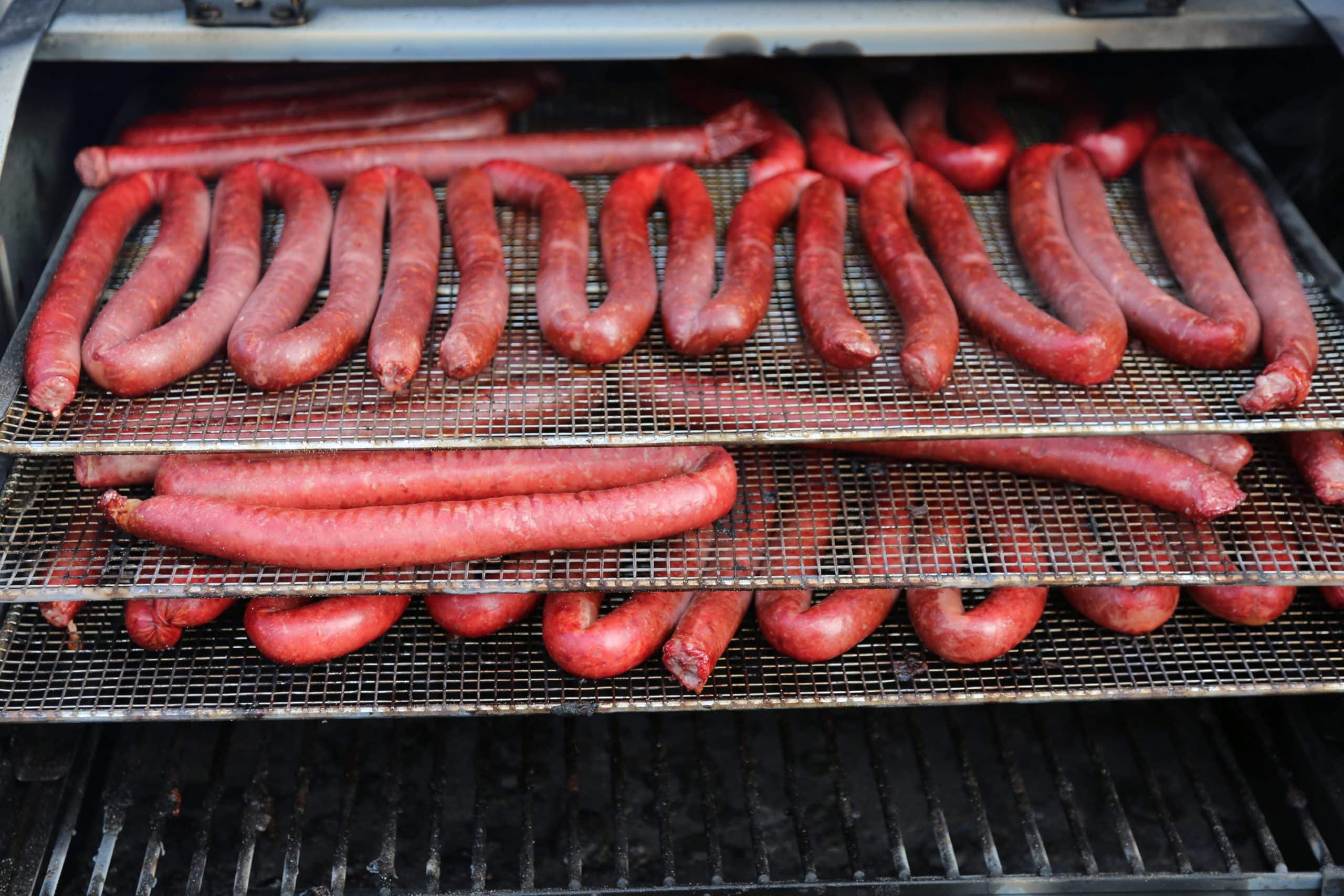
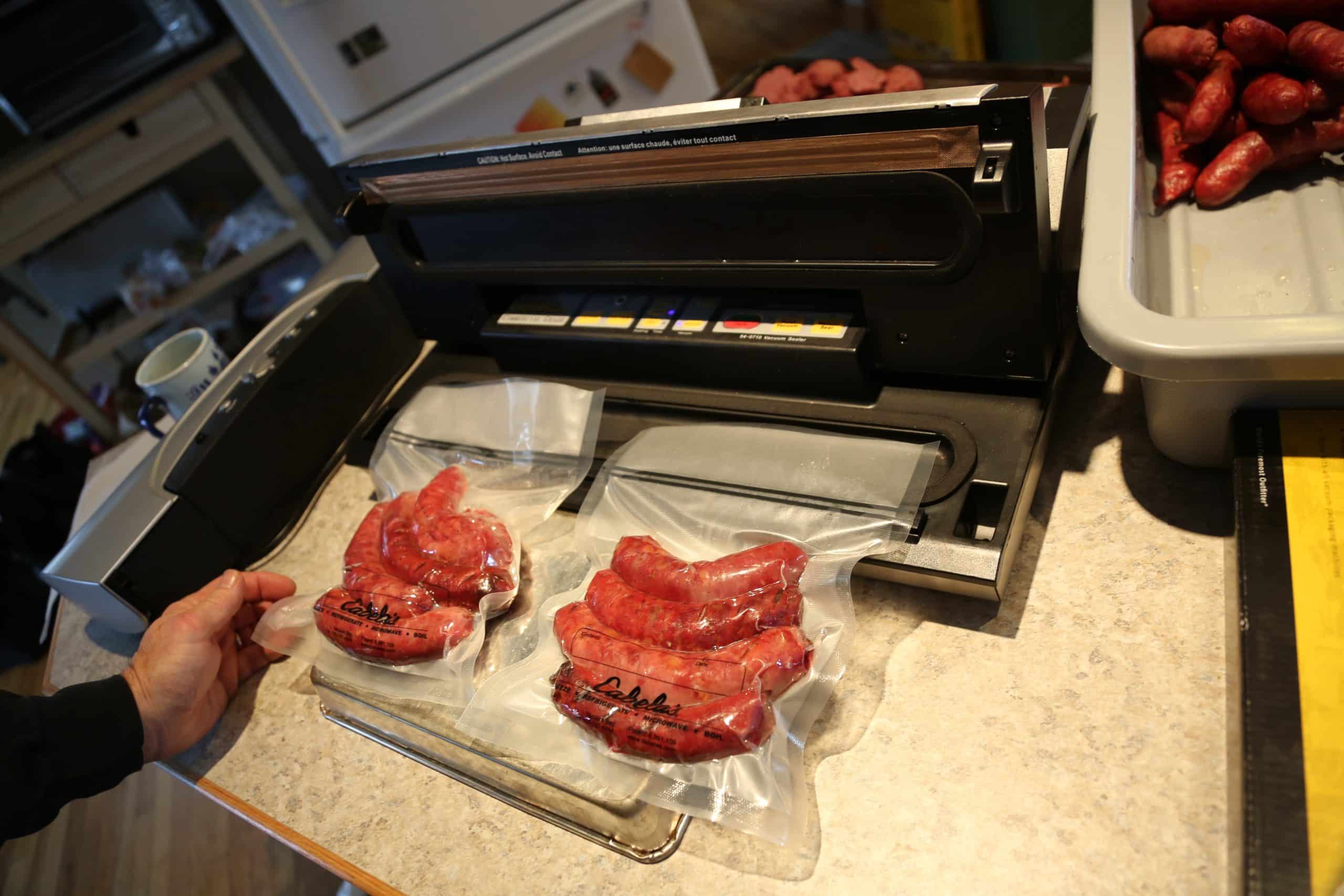
We started by making 100 pounds of sausage. That gave us everything from raw sausage ready for the freezer to warm links coming directly out of the smoker. Different temperatures and moisture levels created different challenges, and every sealer had to work through the same general workload.
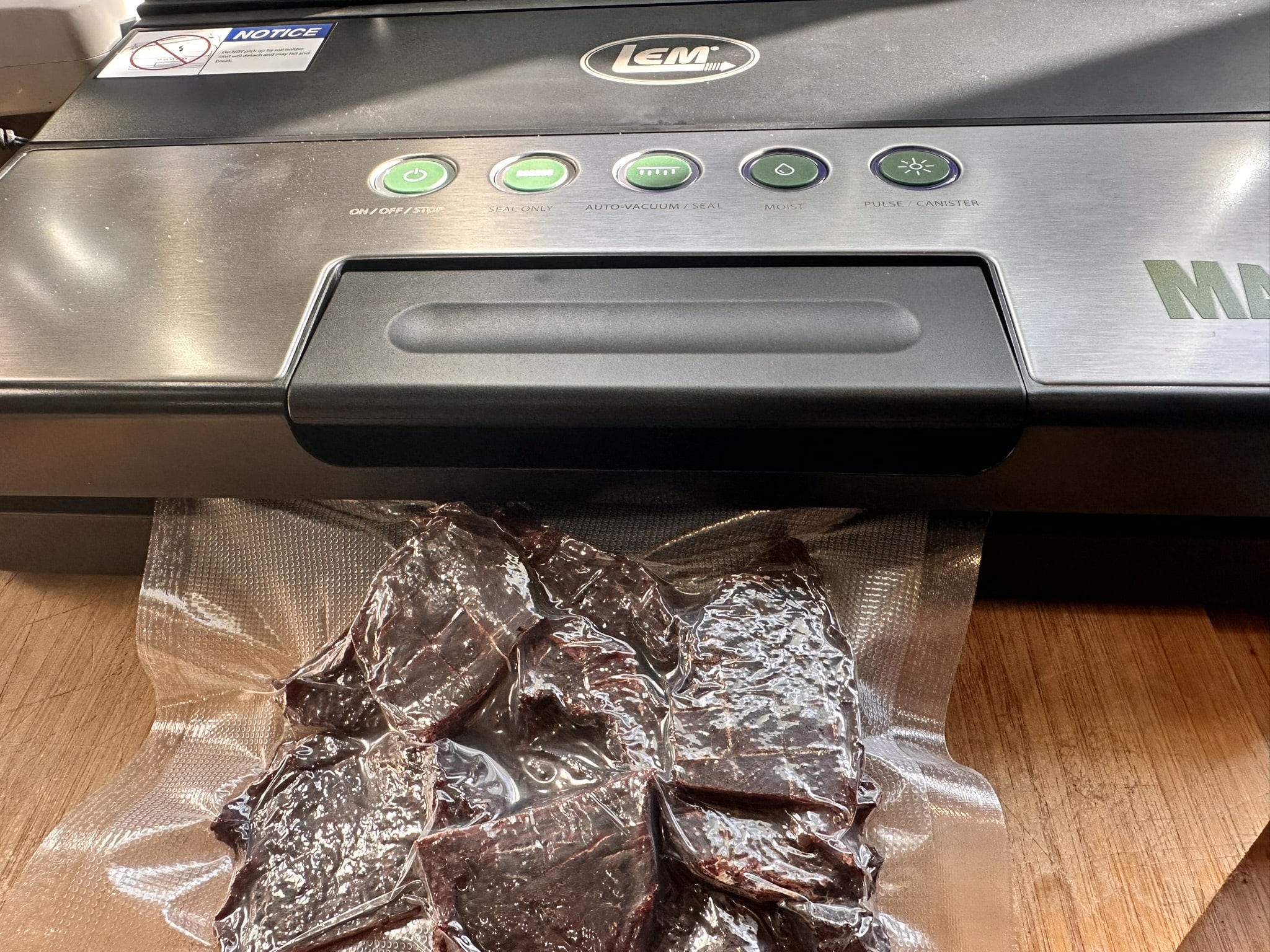
We then made 70 pounds of venison and goose jerky. Jerky creates another challenge because dry, sometimes sharp edges can interfere with packaging material. We wanted to see which machines produced reliable seals without unnecessary adjustments or wasted bags.
Our Real-World Testing Workload
- 100 pounds of sausage prepared and packaged
- 70 pounds of venison and goose jerky prepared and packaged
- Repeated vacuum and sealing cycles
- Moist and dry foods, including warm smoked sausage
- Noise and ease-of-operation evaluations
- Repeated cycle timing and comparison
- Five-minute water-submersion tests of sealed packages
- Inspection for trapped air, water intrusion, and compromised seals
Testing Vacuum Strength and Seal Integrity
For every machine, the most important question was whether the finished package would protect the food inside. We submerged sealed packages in water and watched for signs of trapped air. We then left the packages underwater for five minutes before removing and carefully inspecting them for leaks.
The water test gave us an additional way to check seal integrity beyond appearance alone. A package can look acceptable sitting on the counter and still have a small problem along the seam. We wanted to identify those issues before trusting the finished food to long-term freezer storage.
We used the floating behavior as a screening observation, but it was the combination of vacuum tightness, leak inspection, and consistent sealing performance that mattered most. A sinking bag alone is not proof of a perfect seal.
Testing Speed, Noise, and Ease of Use
We timed multiple vacuum and sealing cycles and averaged the results during testing. A few seconds may not sound important, but when there are dozens of bags in front of you, those seconds add up.
Noise was another consideration. Anyone who has spent an evening processing meat knows how irritating a loud machine can become. We paid attention to operating sound, the amount of effort required between cycles, and whether controls were easy to understand.
We also switched bag sizes, packaged different portions, and worked with machines ranging from compact suction sealers to large chamber units. That gave us a better understanding of where each design excels.
Family Testing Matters
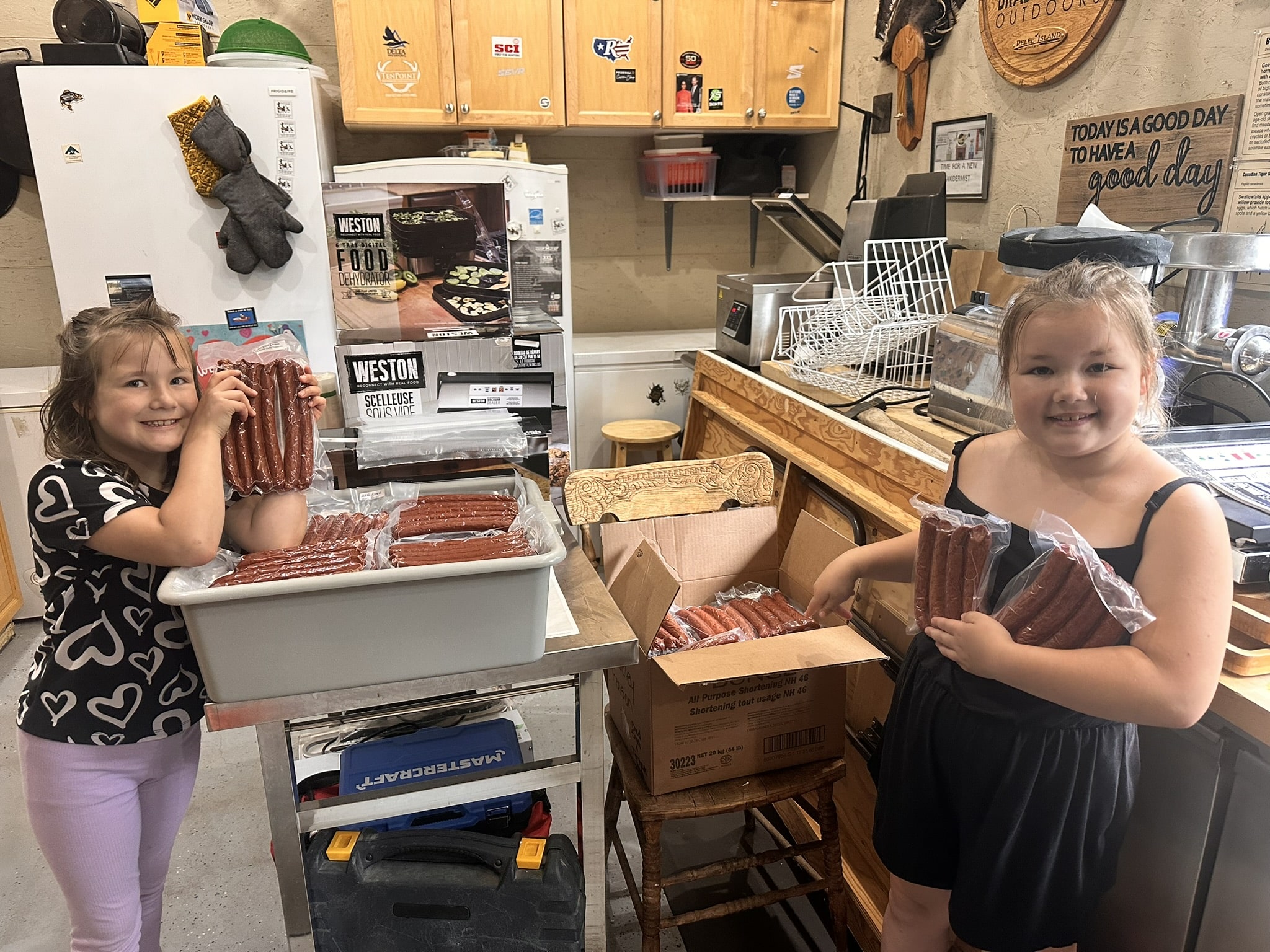
One of the most interesting aspects of the entire process was how much the rest of the family participated. Everyone had preferences, and those preferences often came down to simple things like controls, bag positioning, cleanup, and how easy a machine was to operate.
That was valuable feedback. A sealer that looks impressive on paper is not necessarily the machine everyone wants to use when packaging hundreds of pounds of food.
By the end, we had a good picture of what worked for occasional food preservation, what belonged in a dedicated game-processing room, and which features actually mattered.
Vacuum Sealer Comparison: Specifications and Best Uses
These specifications are based on the models reviewed. Bag capacity, chamber capacity, cooling requirements, and maintenance should be considered alongside the size of your usual processing jobs. Swipe sideways on mobile to compare.
An important distinction: a chamber machine’s stated sealing-bar length does not mean every bulky cut or bag of that width will fit. Internal chamber dimensions and the shape of the food determine usable capacity.
Best Vacuum Sealers for Hunters: Full Reviews
Best Overall Vacuum Sealer
LEM MAXVAC 300 Vacuum Sealer
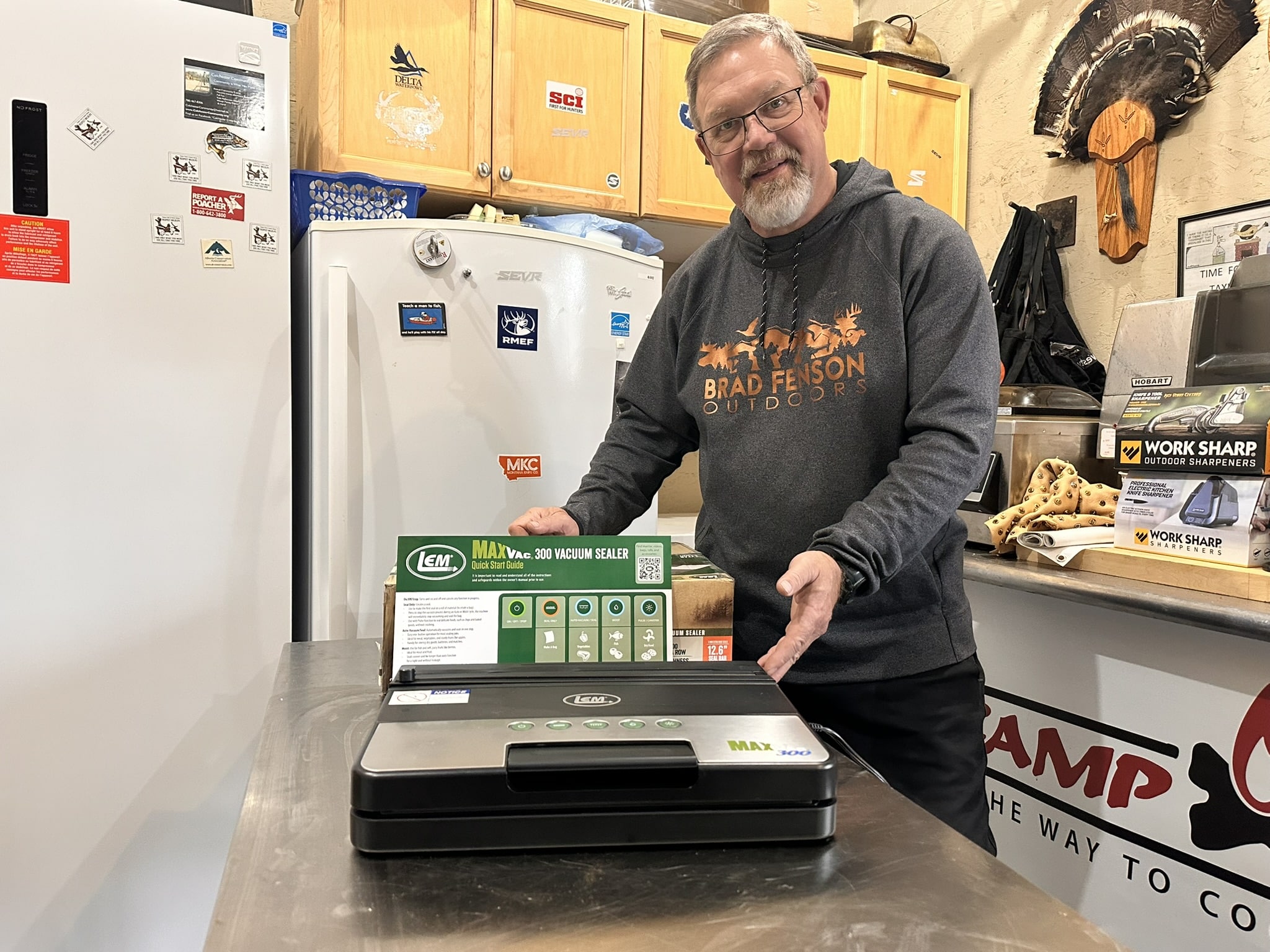
The LEM MAXVAC 300 earned my Best Overall recommendation because it does what I want a vacuum sealer to do without making the process complicated. It is easy to set up, easy to operate, and capable of working through substantial amounts of food while maintaining consistent seals.
It also became a family favorite. Our eight-year-old daughter took one look at this machine, learned how to use it, and essentially claimed it as her own. That might sound like a small detail, but when everyone in the family helps with processing, simple operation makes a big difference.
Field Note: We used the MAXVAC 300 nonstop over several processing days, and it kept working. It reminded me of the little train that could. It just kept doing its job, package after package.
Power and Sealing Performance
The MAXVAC 300 uses a 200-watt motor with a pump rated at 22 inches of mercury. LEM specifies approximately 300 consecutive seals or up to three hours of use, making it suitable for more than occasional leftovers.
The 12.6-inch sealing bar produces a 5 mm-wide seal, and the machine accepts bags up to 12 inches wide. That gives it another inch of bag capacity over the 11-inch Weston suction sealers in this comparison.
For hunters packaging venison roasts, steaks, ground meat, sausage, and fish, that extra width can be useful. It offers more flexibility without requiring a chamber-style machine.
Controls, Cleanup, and Family Use
Simple buttons and indicator lights make operation straightforward. One of my favorite features is the removable magnetic bag-roll holder and cutter. It can be positioned away from the machine, allowing one person to prepare bags while another handles the sealing.
That type of teamwork can make a real difference when processing an animal. If the bags are ready when the meat arrives, the job keeps moving instead of stopping every time someone needs to cut another length of material.
Cleanup is another strong point. The vacuum chamber lifts out for cleaning, and the silicone gaskets are designed to resist compression. After packaging moist meat and sausage, being able to clean the machine quickly is something I appreciate.
The unit can also be stored upright, making it easier to find room for it between processing sessions.
LEM MAXVAC 300 Specifications
Power: 200 watts
Maximum Vacuum: 22 inHg
Maximum Bag Width: 12 inches
Seal Width: 5 mm
Dimensions: 16.25 × 11.5 × 3.5 inches
Weight: 6.4 pounds
Included: 8-inch × 20-foot bag roll and removable holder/cutter
Warranty: Two years
Reasons to Buy
- Excellent performance through repeated sealing cycles
- 12-inch bag capacity
- Removable bag cutter and roll holder
- Lift-out chamber simplifies cleaning
- Can be stored upright
- Easy for multiple family members to use
- Two-year warranty
Reasons to Consider
- Plastic housing rather than all-metal construction
- Vacuum canister hose and containers are separate purchases
- Supplied roll is narrower than maximum bag capacity
- Not intended to seal free-flowing liquids directly like a chamber sealer
Best For: Hunters and families who process deer, fish, sausage, or garden produce regularly and want a dependable countertop vacuum sealer without the weight and expense of a chamber machine.
Hunter’s Verdict
The MAXVAC 300 has the combination of capacity, convenience, and dependability that makes a vacuum sealer worth owning. I particularly like that it does not require a large dedicated workspace or complicated controls.
When you can have one person cutting bags, another filling them, and someone else handling the sealing, a processing session becomes more efficient. The MAXVAC 300 fits into that workflow extremely well.
Buying Verdict: If I were recommending one vacuum sealer to the average hunter who processes game at home, this would be it. It handled our workload, made cleanup easy, and became a family favorite for good reason.
Best Chamber Vacuum Sealer for Hunters
MEAT! 16-Inch Chamber Vacuum Sealer
There is a point where a conventional countertop sealer no longer feels like enough machine for the job. If you’re regularly processing elk, moose, several deer, or large quantities of fish, a chamber sealer starts to make a lot of sense.
The MEAT! 16-Inch Chamber Vacuum Sealer is built for that kind of work. Its large chamber and wide sealing bar make it possible to package portions that would be difficult or impossible to handle in smaller machines.
This is a significant step up in size and capability. It is not the machine I would recommend to someone who only seals a few packages each month, but serious processors will appreciate what it brings to the table.
Field Note: We put this unit through several full processing sessions and were impressed with the speed, handling, and consistency of the seals. Even a crimped bag edge did not prevent us from getting dependable results.
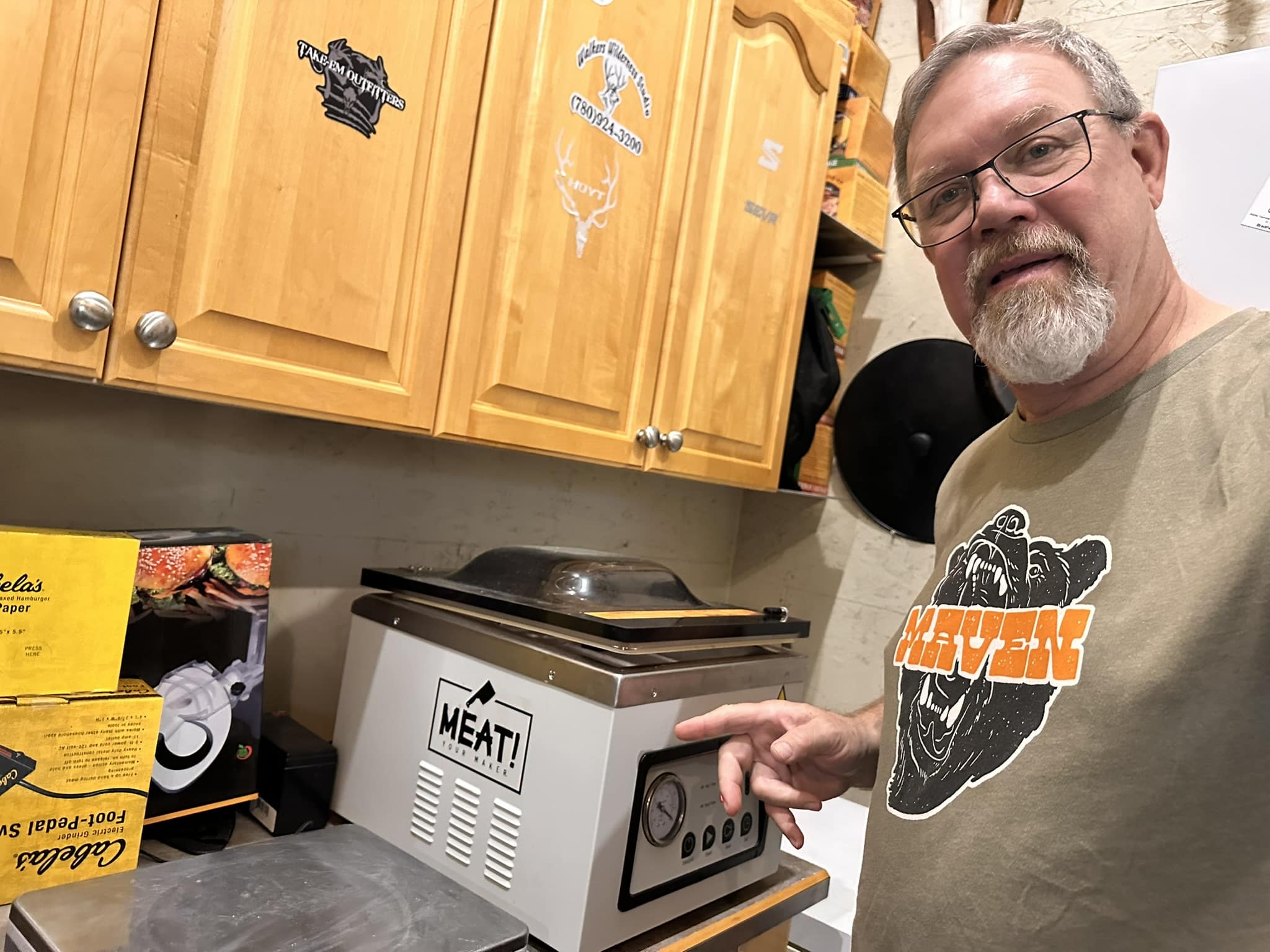
Heavy-Duty Performance and Capacity
The MEAT! uses a 1,150-watt rotary oil vacuum pump rated at 1.5 horsepower. Chamber sealers remove air from the chamber and the bag before sealing, allowing them to handle moist foods and liquids much more effectively than conventional external suction machines.
A 16-inch sealing bar uses two 3.5 mm sealing strips to produce parallel seals across the bag opening. I like that design for long-term meat storage because a dependable seal is the final protection for everything you’ve worked to put in the freezer.
The internal chamber measures 18 inches long, 16.7 inches wide, and 7 inches high. That is substantial room for larger roasts, bulky cuts, and packages that need additional space. You still have to consider the actual shape of the cut and whether the bag sits correctly inside the chamber, but the added capacity is a real advantage.
Controls and Operation
The machine offers adjustable vacuum and sealing times, allowing you to tailor the cycle to the contents and bag material. A pressure gauge and digital display help monitor operation, while manual sealing and a marinade function provide additional versatility.
These controls matter when switching from ground meat to sausage, larger roasts, or foods containing moisture. A chamber sealer can provide more flexibility than a basic suction model, particularly for hunters who prepare marinades, sauces, or other liquid-rich foods.
Size and Maintenance
At 97 pounds, this is not a machine you want to drag out of a cupboard every time you have a few steaks to package. It belongs on a sturdy processing bench with enough clearance to open the lid.
The exterior measures 21.7 inches long, 19.3 inches wide, and 17.7 inches high. Two high-density polyethylene filler plates are supplied to reduce unused chamber space when working with smaller packages.
Unlike an oil-free countertop sealer, this machine requires oil-pump maintenance. The pump must be filled with the recommended oil before its first use, and the manufacturer’s servicing instructions need to be followed. I found the process straightforward, but it is still an additional responsibility.
MEAT! 16-Inch Chamber Specifications
Power: 1,150 watts
Pump: 1.5 HP rotary oil vacuum pump
Sealing Bar: 16 inches
Seal Strips: Two 3.5 mm strips
Chamber: 18 L × 16.7 W × 7 H inches
Exterior: 21.7 L × 19.3 W × 17.7 H inches
Weight: 97 pounds
Included: Two HDPE chamber filler plates
Reasons to Buy
- Large chamber accommodates bulkier portions
- Heavy-duty rotary oil pump
- 16-inch sealing bar
- Dual sealing strips
- Excellent for moist foods and marinades
- Adjustable vacuum and sealing cycles
- Strong performance during lengthy processing sessions
Reasons to Consider
- Heavy at 97 pounds
- Requires significant bench space
- Oil pump requires servicing
- Higher purchase cost than typical countertop machines
- More machine than occasional users need
Best For: Hunters processing elk, moose, multiple deer, and larger quantities of meat who want chamber-sealing capability and have a dedicated processing space.
Hunter’s Verdict
The MEAT! chamber sealer is the machine I would choose when capacity and heavy-duty processing matter more than portability or storage convenience.
It is substantial, powerful, and designed for jobs that can overwhelm smaller sealers. If you regularly put hundreds of pounds of meat into the freezer, the extra capacity makes sense. Being able to package larger cuts without unnecessary trimming is an advantage that hunters will appreciate.
Once you’ve spent time using a capable chamber sealer, it can be difficult to go back to a conventional machine for big processing days.
Buying Verdict: My top chamber sealer for serious hunters and home processors who need large capacity, dependable seals, and professional-style performance.
Best Value Chamber Vacuum Sealer
Weston Pro-2500 Chamber Vacuum Sealer
One of the biggest advantages of a chamber vacuum sealer is being able to package foods that can cause problems with conventional suction machines. Marinades, broth, moist fish, and freshly processed meat all contain liquid that can be drawn toward the sealing area during an external vacuum cycle.
The Weston Pro-2500 provides the benefits of chamber sealing in a machine that makes sense for hunters who want to upgrade their food-processing equipment without needing the largest commercial machine available.
It was hard not to like this unit. It sealed everything we put through it consistently and was ready to work whenever we needed it.
Field Note: The Pro-2500 performed particularly well with fish, game meat, and moist foods. Its sealing consistency and liquid-handling ability make it a meaningful upgrade over a conventional vacuum sealer.
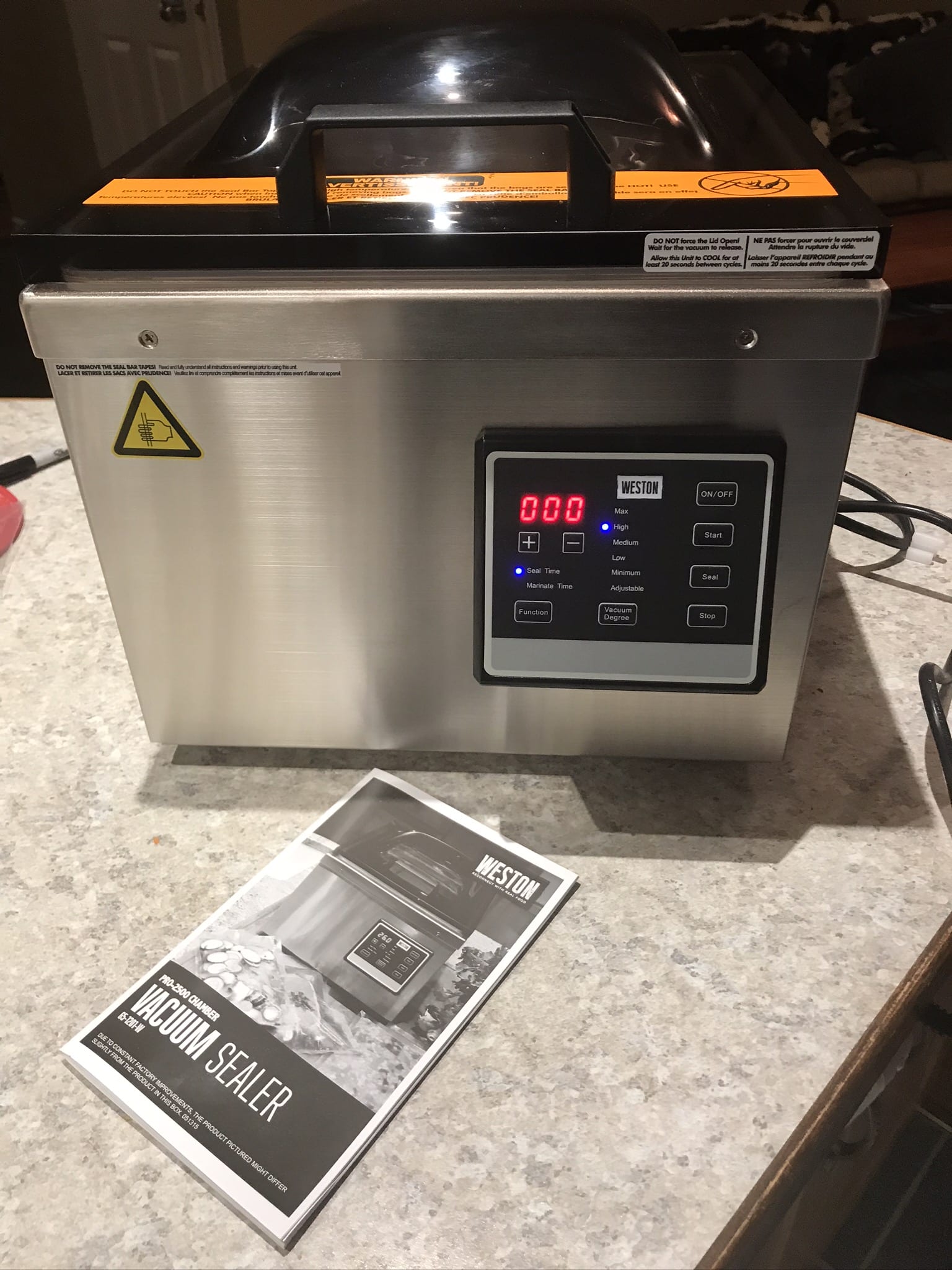
Chamber Sealing Performance
The Pro-2500 operates at 630 watts and uses a standard 120-volt electrical supply. It is rated to reach a maximum vacuum of 29.5 inches of mercury.
Because the bag sits inside the chamber, pressure changes around the package rather than simply pulling air out through the bag opening. That makes chamber sealing especially valuable for liquids and moist foods.
The machine’s fan-cooled motor helps manage heat during operation. Weston specifies approximately 20 seconds between sealing cycles with the lid open to allow the sealing bar to cool. That is an important detail to understand when planning a lengthy processing session.
Controls and Bag Capacity
A digital display provides adjustable sealing time, and the vacuum settings can be tailored to different foods. A marinating mode adds versatility, while the seal button lets the operator stop air evacuation and begin sealing.
I also like the transparent lid, which allows you to check bag positioning before starting a cycle.
The Pro-2500 accepts chamber bags up to 12 inches wide and 14 inches long. As with other chamber machines, you must pay attention to the available interior space and the shape of the food. The entire bag must fit inside the chamber with its opening positioned correctly along the sealing bar.
Weston lists 30 assorted starter bags and a two-year manufacturer’s warranty.
Weston Pro-2500 Specifications
Power: 630 watts
Electrical Supply: 120 volts, 60 Hz
Maximum Vacuum: 29.5 inHg
Type: Chamber vacuum sealer
Maximum Bag Size: 12 × 14 inches
Construction: Stainless steel body
Controls: Adjustable vacuum, sealing time, and marinating mode
Included: 30 assorted chamber bags
Warranty: Two years
Note: Confirm the current manufacturer’s complete chamber dimensions, exterior dimensions, and weight before purchasing if space is limited. Those measurements were not fully established in our review notes.
Reasons to Buy
- Chamber design handles liquids and moist foods
- Adjustable vacuum and sealing controls
- Marinating function
- Transparent lid makes alignment easier
- Fan-cooled motor
- Stainless steel construction
- Two-year warranty
Reasons to Consider
- Chamber dimensions limit bulky portions
- Requires compatible chamber bags
- Manufacturer specifies cooling time between seals
- Larger than a conventional countertop sealer
- Less room for oversized cuts than the MEAT! 16-inch chamber machine
Best For: Hunters and anglers who want the flexibility of chamber sealing for fish, game meat, broth, sauces, and marinades without moving to the largest machine in this guide.
Hunter’s Verdict
The Weston Pro-2500 is an excellent choice for someone who is ready to move beyond a standard vacuum sealer. It produced dependable results throughout testing and offered the flexibility to package foods that would be much more challenging with an external suction model.
For a hunter who processes game regularly but does not require the capacity of the MEAT! 16-Inch Chamber, I think the Pro-2500 makes a compelling case for itself.
Buying Verdict: A practical chamber-sealing upgrade for hunters who want professional-style features and dependable performance without committing to a larger heavy-duty machine.
Best Programmable Vacuum Sealer for Wild Game
Weston Pro-1100 Programmable Vacuum Sealer
Processing a deer or a pile of goose breasts puts a different demand on a vacuum sealer than packaging a few leftovers. When you are working through dozens of bags, motor cooling, seal strength, and efficient operation become important.
The Weston Pro-1100 combines a fan-cooled motor, programmable sealing controls, and a wide heat-sealing strip in a countertop unit designed for repetitive packaging.
I particularly like how this machine can be set up for a specific bag material and then used repeatedly without having to make the same adjustments every time.
Field Note: The Pro-1100 was consistent through a full processing session. Sealing speed, noise, and ease of use were excellent, and the machine handled repeated packaging without giving us problems.
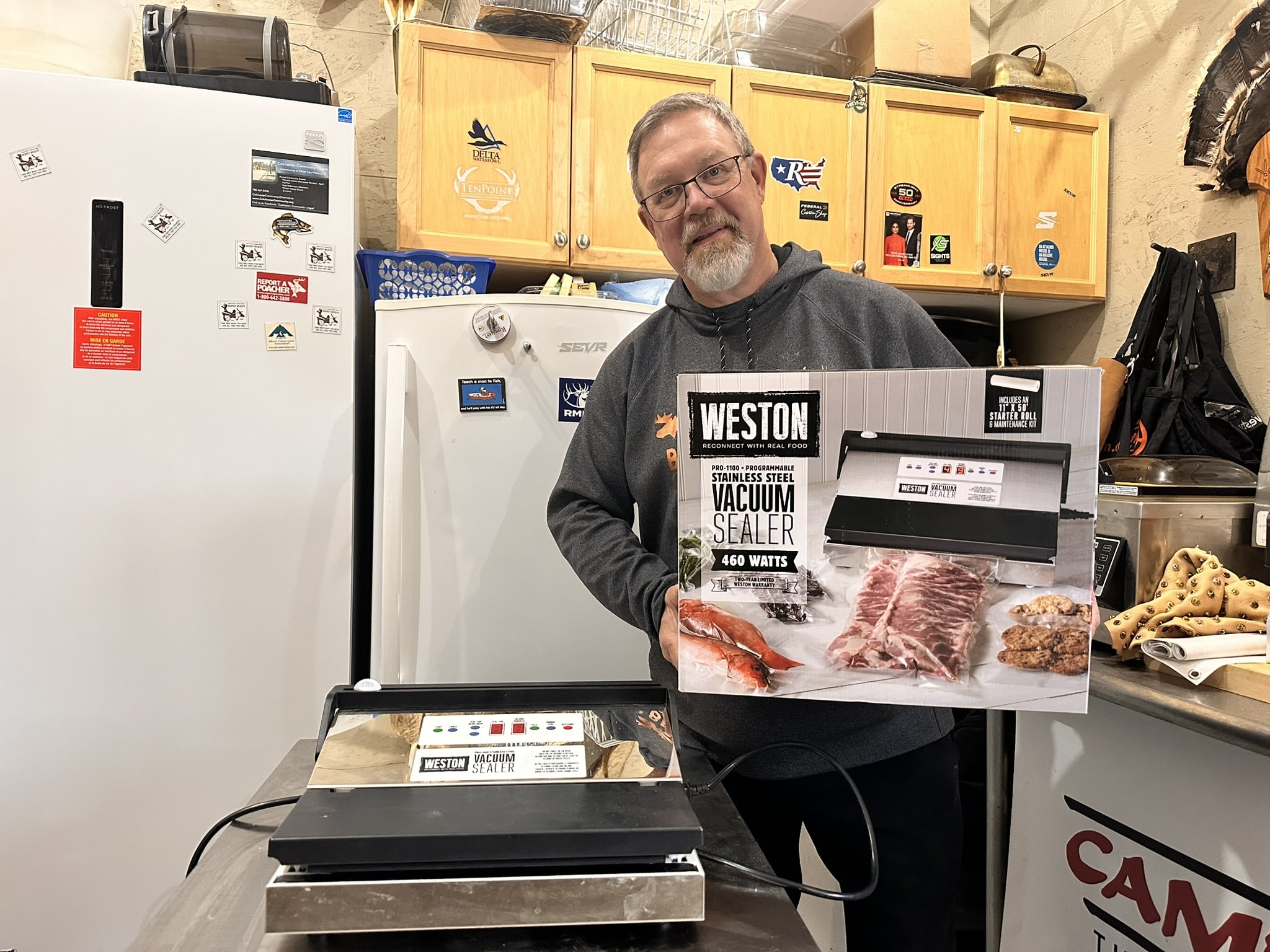
Power and Sealing Performance
The Pro-1100 uses a 460-watt motor and double-piston pump rated to draw up to 28 inches of mercury. Its fan-cooled design helps manage motor heat during repetitive use.
A 5 mm heat bar produces a broad sealing strip. When packaging wild game for long-term freezer storage, a good seal matters more than almost any convenience feature.
The Pro-1100 handles compatible bags up to 11 inches wide. For most venison steaks, ground meat, sausage, and smaller roasts, that provides plenty of room. It becomes more restrictive with oversized cuts.
Programmable Controls
Digital controls with LED indicators display the different stages of the sealing cycle. The machine offers automatic and manual operation, along with adjustable heat duration.
One useful feature is the ability to save a sealing-time setting. If you are working with the same bag material throughout a processing day, you can establish the setting that produces consistent results and reuse it.
That is particularly handy when someone is filling bags while another person operates the machine. The workflow becomes predictable, and fewer adjustments mean less wasted time.
Remember that heat duration controls the seal itself. It does not determine how tightly the contents are compressed. When switching bag materials, make sure the setting is appropriate for the material being used.
Bag Storage and Maintenance
The Pro-1100 includes a built-in roll holder and cutter. That allows you to make bags in different lengths without pulling out a separate cutting tool every time.
Weston supplies an 11-inch-by-50-foot roll along with a maintenance kit containing two chamber seals and seal-bar tape. Having replacement parts available during processing season is a welcome addition.
The power cord detaches for storage, and a side-accessible 10-amp fuse simplifies replacement.
The biggest trade-off is counter space. The machine measures 15.6 inches wide, 16.5 inches deep, and 6.4 inches high. That depth is worth checking before purchasing, particularly if storage is limited.
Weston Pro-1100 Specifications
Power: 460 watts
Pump: Double-piston
Maximum Vacuum: 28 inHg
Maximum Bag Width: 11 inches
Seal Width: 5 mm
Dimensions: 15.6 W × 16.5 D × 6.4 H inches
Controls: Automatic, manual, and programmable sealing time
Included: 11-inch × 50-foot roll and maintenance kit
Warranty: Two years
Reasons to Buy
- Fan-cooled 460-watt motor
- Double-piston pump
- Programmable sealing time
- Wide 5 mm sealing strip
- Built-in roll holder and cutter
- Maintenance parts included
- Good performance through repetitive cycles
Reasons to Consider
- 11-inch bag-width limit
- Deep footprint consumes counter space
- Different bag materials may require adjustments
- Not as versatile with liquids as a chamber machine
Best For: Hunters who regularly process deer, waterfowl, sausage, and ground meat and want programmable controls for repetitive sealing jobs.
Hunter’s Verdict
The Pro-1100 has features that matter during a long processing day. The programmable settings save time, the fan-cooled motor is designed for repetitive operation, and the built-in cutter helps keep the work organized.
It is a good choice for hunters who want more control than a basic countertop vacuum sealer provides but do not need to move into a chamber machine.
Buying Verdict: A strong programmable option for hunters who package substantial batches of wild game and appreciate consistent settings and integrated bag handling.
Best Compact Vacuum Sealer for Hunters
Weston Compact Vacuum Sealer
Not every hunter needs a large stainless steel vacuum sealer taking up permanent space on the kitchen counter. Sometimes you just want to package a few meals of venison, seal fish fillets after a successful day on the water, or prepare smaller batches of sausage for the freezer.
The Weston Compact is built around that type of work. It is small, light, and simple to operate, but it accepts bags up to 11 inches wide, just like some larger machines.
One of our twin girls preferred this unit over everything else we tested. After watching it work, I understood why. It is a small machine with surprisingly useful capability.
Field Note: We packaged 30 bags of elk smokies with the Weston Compact without a problem. The important trick is making sure the lid is properly latched. Listen for the audible click before starting the cycle.
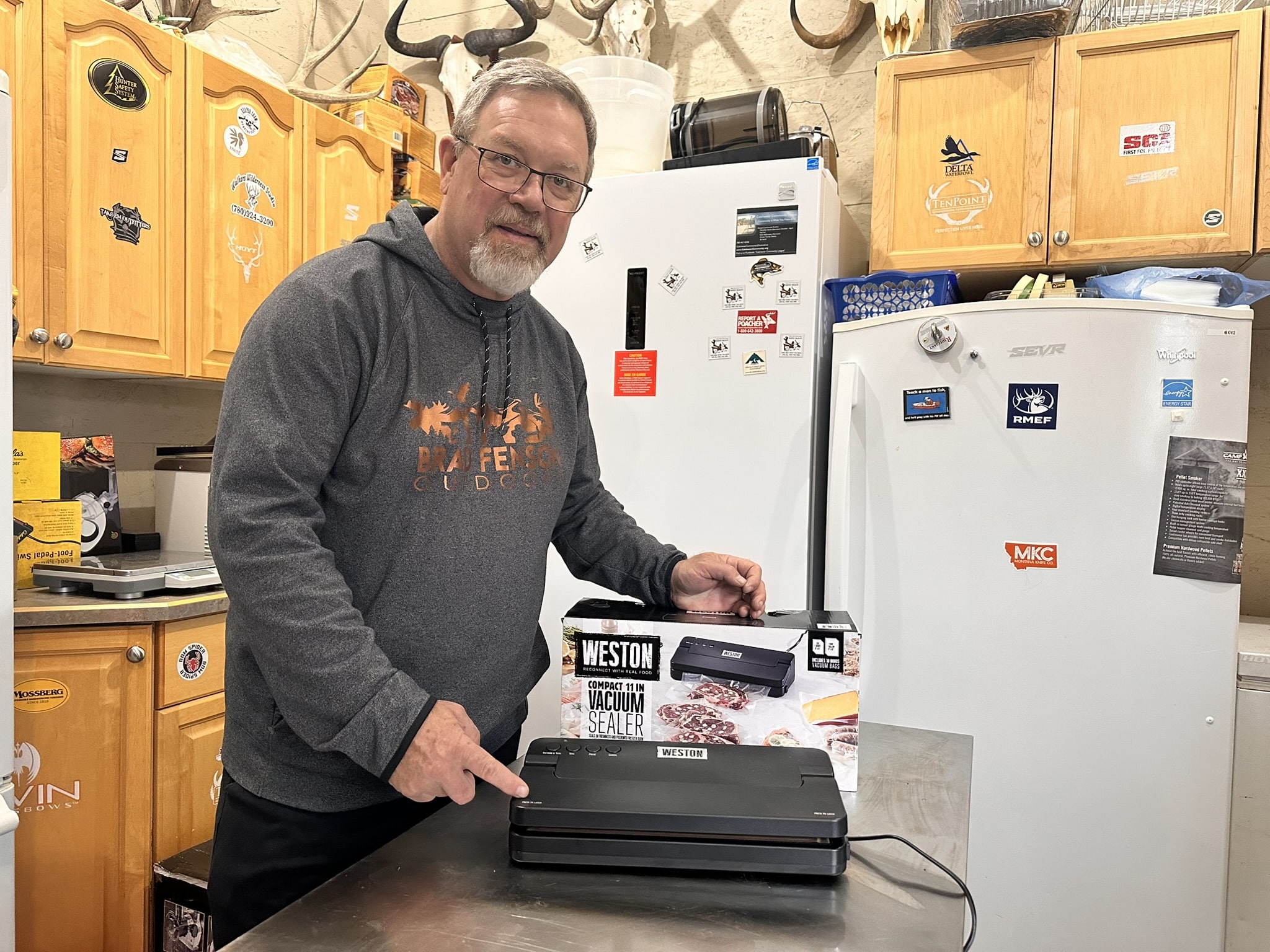
Performance and Simple Controls
The Compact has a pump rated to draw 23 inches of mercury. It offers three primary functions: vacuum and seal, seal only, and pulse.
Vacuum and seal handles the usual job of removing air and closing the bag. Seal only lets you create one sealed end when making your own bags from roll material.
Pulse gives you greater control when packaging delicate foods. That is useful for bread, berries, and other items that can be crushed by a full automatic vacuum cycle.
Corner guides and a backstop help align the bag correctly. Good alignment matters because even an otherwise capable sealer can produce a poor result when the bag opening is not positioned properly.
Bag Compatibility and Storage
The Weston Compact accepts bags and rolls up to 11 inches wide. It works with Weston, FoodSaver, Ziploc, and many other compatible heat-seal vacuum bags.
That flexibility can help keep long-term operating costs under control. You are not restricted to purchasing only one manufacturer’s packaging material.
The machine measures 14.2 inches wide, 6.1 inches deep, and 3.4 inches high. At just under four pounds, it can easily be moved from a cupboard to the counter when needed.
Weston includes four gallon-size and six quart-size starter bags, enough to begin using the machine immediately.
Weston Compact Specifications
Maximum Vacuum: 23 inHg
Maximum Bag Width: 11 inches
Dimensions: 14.2 W × 6.1 D × 3.4 H inches
Weight: 3.98 pounds
Operating Modes: Vacuum and seal, seal only, pulse
Bag Alignment: Corner guides and backstop
Included: Four gallon-size and six quart-size bags
Warranty: One year
Reasons to Buy
- Compact and lightweight
- 11-inch bag capacity
- Pulse control for delicate foods
- Bag guides simplify positioning
- Broad bag compatibility
- Easy storage
- Ten starter bags included
Reasons to Consider
- Not designed primarily for extended heavy-volume processing
- Lower maximum vacuum rating than the Pro-1100
- 11-inch bag-width limit
- One-year warranty
- Proper latching is important for reliable operation
Best For: Hunters, anglers, and families who package smaller quantities of food and want an affordable, space-saving vacuum sealer that is easy to store.
Hunter’s Verdict
The Weston Compact proves that a vacuum sealer does not have to be large or complicated to be useful. It handled our batch of elk smokies without issue and was simple enough that the kids enjoyed using it.
If you process several deer every year, I would consider something with more heavy-duty capability. But for the hunter or angler who wants a dependable machine for smaller batches, this one deserves a close look.
Buying Verdict: A surprisingly capable compact sealer for smaller processing jobs, occasional wild-game packaging, and anyone who values easy storage.
What We Learned From Sealing 170 Pounds of Food
After packaging 100 pounds of sausage and 70 pounds of venison and goose jerky, the biggest lesson was that reliability is more important than the number of features printed on a box.
Some machines are better suited to large cuts, others are ideal for repetitive batches, and a compact model can still be extremely useful when the workload is reasonable. The important thing is matching the machine to how you process food.
Seal consistency was the most important consideration. A poorly sealed bag can compromise an otherwise perfect piece of meat. We looked for machines that performed predictably through repeated cycles and produced packages we would trust in the freezer.
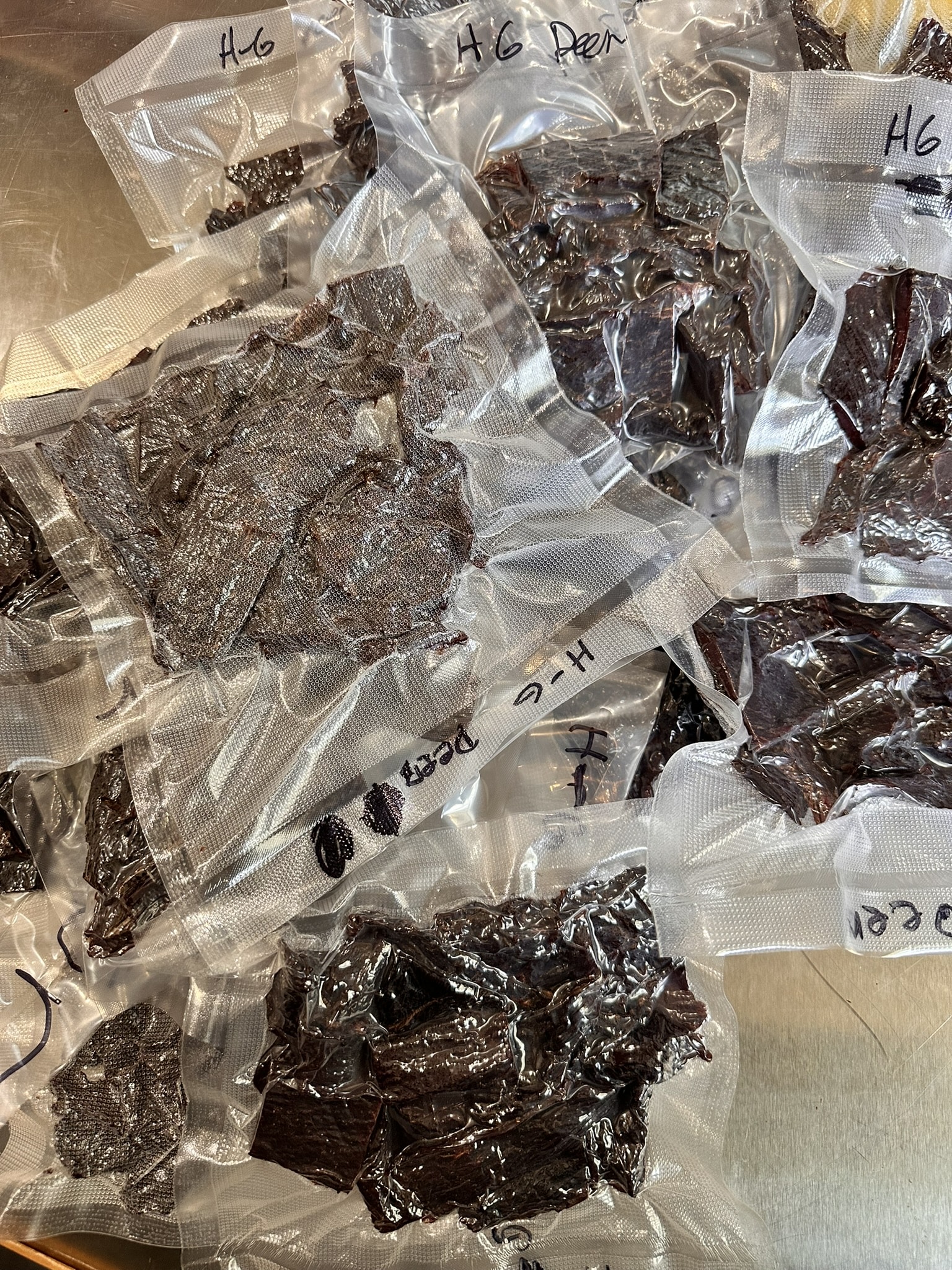
I also learned that convenience features matter more when you process in volume. A built-in cutter, easy-to-read controls, an accessible sealing chamber, or a simple way to change bag sizes might not seem important for one or two packages. After 50 packages, you notice the difference.
Our family preferred different machines, and that reinforced another important point: there is no one-size-fits-all answer. A hunter who processes two elk every season has different requirements than someone putting away a few trout fillets or preserving the vegetables from a backyard garden.
The best vacuum sealer is the one that makes preserving your food easier and gives you confidence in the finished package.
Vacuum Sealer Buyer’s Guide: What Hunters Should Know
Before buying a vacuum sealer, think about what you are going to package and how much food you typically process. A hunter who fills the freezer with deer, elk, and moose needs something different from an angler sealing a few bags of walleye fillets.
Here are the features that matter most after putting these machines to work.
External vs. Chamber Vacuum Sealers
Most home users will be well served by a conventional external vacuum sealer. These machines remove air from the bag through its opening and then seal it closed. They are relatively affordable, convenient, and easier to store than chamber models.
Chamber sealers operate differently. The entire bag sits inside the enclosed chamber, and air is removed from both the chamber and the bag before sealing.
That design makes chamber machines especially effective for liquids, marinades, and very moist foods. They are common in professional kitchens and butcher shops, but hunters processing large amounts of meat can benefit from them as well.
My advice is to buy a chamber sealer if you genuinely need its capabilities. Otherwise, a good external vacuum sealer can handle most of your everyday packaging.
Vacuum Strength and Suction Power
Vacuum strength affects how much air a machine can remove from a package. Less residual air is desirable when preserving food because it helps limit oxygen exposure and reduces the conditions that contribute to freezer burn.
Manufacturers commonly express maximum vacuum in inches of mercury, abbreviated inHg. That is useful for comparing specifications, but it does not tell you everything about real-world results.
Pump design, bag placement, moisture, sealing time, and the condition of the bag all influence the finished package. I would rather have a machine that produces a dependable seal consistently than one with impressive suction specifications that is frustrating to use.
Seal Bar Length and Bag Width
Bag width is one of the first specifications I check. Eleven-inch bags are useful for most steaks, ground meat, sausage, and smaller roasts, but some hunters will appreciate a 12-inch capacity.
If you regularly package oversized cuts, large fish fillets, or whole pieces of meat for aging, a wider sealing system may save you from having to cut the meat into smaller portions.
Remember that chamber sealers also have internal size limitations. A 16-inch sealing bar does not guarantee that a bulky roast will fit inside the chamber. Check both the sealing dimensions and usable interior space.
Seal Width and Double Sealing
The sealing strip is what closes the package and keeps outside air from entering. A broad, consistent seal provides useful protection, particularly for food that will remain in the freezer for an extended period.
Some machines have wide sealing strips, while others create two parallel seals across the bag opening.
Whichever system you choose, clean bag material and proper sealing temperature are essential. Fat, moisture, and food particles along the sealing area can interfere with the seam.
Handling Moist Meat, Fish, and Liquids
Fresh meat and fish often contain enough moisture to make conventional vacuum sealing more challenging. As air is removed, liquid can be drawn toward the opening of the bag.
On a suction sealer, that liquid can compromise the seal and create extra cleanup. Pulse controls and moist-food settings help, while partially freezing very moist food can make packaging easier.
For soups, broth, and liquid marinades, a chamber vacuum sealer is the better tool when the machine is rated for those applications. If using a conventional suction sealer, freezing the liquid into a solid portion first is the safer approach for the machine.
Duty Cycle and Motor Cooling
If you only seal a handful of packages at a time, motor cooling probably will not be your biggest concern. If you regularly package an entire deer or hundreds of pounds of processed meat, it becomes more important.
Some machines are designed for extended repetitive operation, while others require more frequent pauses between cycles. Fan-cooled motors can help manage heat, but the machine’s actual operating instructions should always be followed.
The last thing you want is to have a large processing job underway and discover that your vacuum sealer needs more frequent rest periods than expected.
Bag Compatibility and Long-Term Cost
Vacuum-sealer bags are an ongoing expense, and that cost adds up over time. Machines that work with compatible rolls from different manufacturers give you more flexibility when purchasing supplies.
Buying bulk rolls and cutting them to the length needed can reduce wasted material, especially when your packaging changes between steaks, sausage, ground meat, and roasts.
It is also important to use the correct bags for the machine. Conventional external suction sealers generally require textured or embossed vacuum bags. Many chamber machines are designed to use smooth chamber bags. Always follow the manufacturer’s compatibility requirements.
Noise, Footprint, and Storage
Noise can become irritating during a long packaging session. A machine that is tolerable for one or two bags may be less pleasant when it runs repeatedly throughout an evening.
Counter space also matters. Some larger external vacuum sealers take up considerable depth, even if the machine itself is not especially tall.
For hunters with limited kitchen or processing-room space, I recommend measuring where the machine will operate and where it will be stored. Heavy chamber sealers may need a permanent location.
Cleaning and Maintenance
Anyone who processes wild game knows there will be moisture, fat, and food particles to clean up. I appreciate a machine that makes those jobs simple.
Removable chambers, accessible sealing surfaces, and replaceable wear parts are valuable features. On heavy-duty chamber machines, pump maintenance must also be considered.
A vacuum sealer will only protect your food properly if its gaskets, sealing strip, and other components remain in good condition.
Which Vacuum Sealer Should You Buy?
Different hunters need different equipment. Here is how I would match these machines to the most common food-processing situations.
Best Vacuum Sealer for Deer Processing
LEM MAXVAC 300. For the average deer hunter packaging steaks, roasts, ground meat, and sausage, this machine offers an excellent combination of sealing performance, ease of use, bag capacity, and manageable size.
Best Vacuum Sealer for Elk and Moose
MEAT! 16-Inch Chamber. Larger animals can produce substantial quantities of meat and oversized cuts. The larger chamber and sealing bar are particularly useful for dedicated processors working through a considerable amount of food.
Best Vacuum Sealer for Fish and Marinades
Weston Pro-2500. Chamber sealing is well suited to moist fish, marinades, and liquid-rich foods. Anglers who regularly preserve fillets and prepare marinated fish will appreciate the control and flexibility.
Best Vacuum Sealer for Large Batches of Sausage
Weston Pro-1100. Programmable heat settings and a fan-cooled motor make it a useful option when repeatedly sealing similar portions in the same bag material.
Best Vacuum Sealer for Small Kitchens and Occasional Use
Weston Compact. The small footprint, straightforward controls, and broad bag compatibility make this a smart choice for hunters, anglers, and gardeners who package smaller batches.
Frequently Asked Questions About Vacuum Sealers
When people ask me about vacuum sealers, they usually want practical answers. They have a freezer to fill, fish to package, or garden produce they don’t want to waste. Here are the questions I hear most often.
What is the best vacuum sealer for hunters?
For most hunters processing deer, sausage, fish, and other food at home, I recommend the LEM MAXVAC 300. It provides a good combination of useful bag capacity, dependable operation, easy cleaning, and manageable size. Hunters processing particularly large quantities of elk, moose, or multiple deer may benefit from a chamber machine.
Are vacuum sealers worth it for deer processing?
Absolutely. If you put venison in the freezer every year, protecting that meat is worth the effort. A dependable vacuum sealer reduces air exposure, helps preserve food quality, and makes it easier to package steaks, roasts, and ground meat in usable portions. It does not replace proper chilling or freezing, but it is one of the most useful tools in a processing room.
What is the difference between a chamber vacuum sealer and a regular vacuum sealer?
A conventional external vacuum sealer removes air through the bag opening and then heat seals it. A chamber sealer places the entire bag inside an enclosed chamber, where air is removed from both the chamber and bag. Chamber machines are generally better suited to liquids and very moist foods, but they cost more, weigh more, and require additional space.
How long does vacuum-sealed venison last in the freezer?
Proper vacuum packaging can significantly improve freezer quality by reducing air exposure and moisture loss. The actual storage life depends on the cut, initial quality, freezing temperature, bag integrity, and handling. Properly frozen food kept continuously at 0°F remains safe indefinitely, but its eating quality can decline over time. I recommend labeling every package with its contents and date and rotating your freezer inventory regularly.
Can you vacuum seal raw deer meat?
Yes. Vacuum sealing is an excellent way to package raw venison for freezing. Keep meat properly chilled during processing, use clean equipment and suitable freezer-grade bags, and freeze packages promptly. Removing air helps preserve quality, but vacuum sealing does not make raw meat safe to store at room temperature.
Can you vacuum seal fish fillets?
Yes. Vacuum sealing can be useful for preserving fish fillets, particularly when preparing them for freezer storage. Pat excess moisture from the fillets before sealing, and use bags suited to your machine. Because vacuum-packed fish requires particular care during thawing, follow applicable food-safety instructions, including removing fish from reduced-oxygen packaging before thawing when directed.
Can you vacuum seal soup, broth, or marinades?
Yes, but the machine matters. Chamber vacuum sealers are designed to handle liquids more effectively than conventional suction sealers. If using an external sealer, freeze soup, broth, or other liquid foods until solid before vacuum packaging them. That prevents liquid from being drawn into the machine and interfering with the seal.
How do I prevent freezer burn on venison?
Remove as much air as practical from the package, use quality freezer-grade bags, and make sure the seal is complete. Keep the bag opening clean and dry before sealing. Freeze meat promptly and maintain a consistent freezer temperature. Vacuum sealing helps reduce freezer burn, but proper wrapping, freezing, and storage all matter.
What size vacuum sealer do I need for deer?
Most deer hunters can handle steaks, ground meat, sausage, and smaller roasts with an 11- or 12-inch external vacuum sealer. If you regularly package oversized cuts, whole fish, or large quantities of meat, a wider sealing system or chamber machine may be worth considering.
Can I use any vacuum sealer bags?
No. Use bags compatible with your machine. Most external suction sealers require textured or embossed material that allows air to escape through the bag. Chamber sealers commonly use smooth chamber bags. Always check the manufacturer’s recommendations, including size and material requirements.
Can I vacuum seal jerky?
Yes. Vacuum sealing is useful for packaging properly prepared and dried jerky, particularly when you want to freeze it or organize it into smaller portions. Sharp or dry edges can puncture bags, so use appropriate packaging material and inspect the finished seal. Vacuum sealing does not automatically make homemade jerky shelf-stable.
Do vacuum sealers work for sous vide cooking?
Yes, provided the bag is rated for the intended cooking temperature and method. Vacuum sealing can help keep food contained during sous vide cooking. Follow time and temperature guidelines appropriate for the food being prepared, and never assume every freezer bag is suitable for heated-water cooking.
How do you get the strongest possible vacuum seal?
Start with a clean bag opening. Keep moisture, fat, and food particles away from the sealing strip, leave adequate room above the food, and make sure the bag lies flat. Use the correct heat setting and packaging material. When sealing large quantities, inspect the finished packages periodically rather than assuming every cycle is perfect.
Are expensive vacuum sealers worth the extra money?
They can be, depending on your workload. Higher-end sealers may provide larger capacity, stronger pumps, programmable controls, replaceable parts, and better suitability for repetitive operation. If you only seal a few packages occasionally, a compact machine may be all you need. If you process several animals every year, investing in equipment built for that workload can make the job easier.
Can vacuum sealing make pantry foods shelf-stable?
Vacuum sealing can help protect certain properly dried foods from moisture and air, but it is not a substitute for safe food-preservation methods. Removing air does not eliminate harmful microorganisms or automatically make a food shelf-stable. Follow established storage requirements for each food, particularly meat, fish, mushrooms, and moist products.
Should vacuum sealer bags be reused?
For raw meat, poultry, and fish, I prefer starting with a fresh bag rather than risking contamination or seal problems. Some bags used for appropriate dry foods may be reusable if the manufacturer permits it and they can be cleaned safely. Follow the bag manufacturer’s instructions.
Final Thoughts: Protect the Food You Worked Hard to Harvest
A vacuum sealer is one of the most practical pieces of equipment you can add to a kitchen or game-processing room. It protects the time and effort invested in harvesting, growing, or gathering food.
For hunters, that means properly packaged backstraps, roasts, ground meat, and sausage. For anglers, it means fish fillets that can go into the freezer without unnecessary air exposure. Gardeners and gatherers can use the same equipment to preserve their harvests.
After working through all that sausage and jerky, I came away impressed with how capable modern vacuum sealers have become. The extra features are useful, but the best machines are still the ones that consistently create dependable seals without making the job more difficult than it needs to be.
My overall choice is the LEM MAXVAC 300 because it offers an excellent balance of sealing performance, versatility, ease of cleaning, and simple operation. For hunters who process significant quantities of large cuts, the MEAT! chamber machine offers a different level of capability.
The Weston Pro-2500 is a strong chamber option for moist foods, while the Pro-1100 brings useful programmable controls to repetitive processing. The Weston Compact proves that you do not need an oversized machine to package smaller batches successfully.
At the end of the day, vacuum sealing is not about owning another gadget. It is about protecting food, avoiding unnecessary waste, and making sure that when you pull a package from the freezer months later, you can enjoy the meat you worked hard to put there.
Brad’s Final Buying Advice
Buy a vacuum sealer that matches the amount of food you actually process. Prioritize a reliable seal, adequate bag capacity, suitable duty cycle, and straightforward maintenance. A machine that protects your harvest consistently is worth far more than a long list of features you never use.
Planning to grind and package your own venison? See our guide to the best meat grinders for hunters processing ground meat, burgers, and sausage.
Per our affiliate disclosure, we may earn revenue from the products available on this page. To learn more about how we test gear, click here.