





Food dehydration is one of those timeless preservation techniques that blends perfectly with modern lifestyles. It doesn’t require special canning gear or freezer space, and it lets you turn fresh produce, herbs, or meats into shelf-stable food that’s perfect for snacks, meal prep, emergency kits, or trail food. Whether you’re drying apple chips in the fall, preserving herbs from your summer garden, or making venison jerky after a successful whitetail hunt, a quality dehydrator makes the process simple and reliable.
Unlike freezing or canning, dehydration removes moisture while maintaining much of the original flavor and nutritional value. The result is food that stores easily, takes up minimal space, and requires no added preservatives. For many households, a dehydrator becomes a year-round appliance. It gets used during harvest season when produce is abundant, during meal-prep weeks when snacks are needed, and occasionally for specialty projects like homemade jerky or trail food. Hunters and anglers often rely on dehydrators to preserve meat, but these machines are just as valuable for families, gardeners, and anyone focused on reducing food waste and increasing self-sufficiency.
At its best, a food dehydrator is a quiet workhorse. It doesn’t demand much attention, but it consistently delivers reliable results. That reliability is what separates a good dehydrator from a frustrating one. Uneven drying, inconsistent temperatures, and limited capacity can turn what should be a simple process into a chore.
For your convenience, the choices are as follows. Click the link to shop the item, or keep reading to read pros/cons, and why it was chosen.
Weston 6 Tray Digital Dehydrator – Best All-Purpose Dehydrator
Weston 4 Tray Food Dehydrator – Best Simple & Budget-Friendly Weston
Weston 10‑Tray Digital Food Dehydrator – Best Large-Batch Weston
MEAT! 10-Tray Dehydrator – Best Dehydrator for Jerky
NESCO FD‑75A Snackmaster Pro Food Dehydrator – Best Compact & Flexible
COSORI Food Dehydrator – Best for Everyday Kitchen Use
Excalibur Deluxe Dehydrator 9 Tray – Best High-Capacity Horizontal Flow
LEM Meat Dehydrator 5‑Tray – Best Compact
Weston 6 Tray Digital Dehydrator – Best All-Purpose Dehydrator
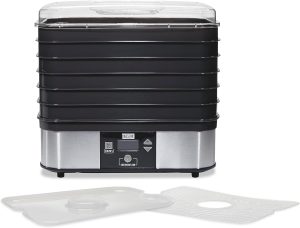
The Weston 6-Tray Digital Dehydrator strikes an ideal balance of performance, capacity, and ease of use for most home dehydrating needs. Its reliable digital thermostat allows you to dial in precise temperatures for everything from delicate herbs and fruit to higher-heat jerky projects. With six trays of drying space, it offers enough capacity for everyday snacks and small batch hunting meat without overwhelming your countertop. The unit’s thoughtful design promotes consistent heat distribution and airflow across all trays, reducing the need for constant tray rotation. Easy-to-clean trays and straightforward controls make long drying sessions more convenient, whether you’re prepping apples, vegetables, or protein strips. For everyday kitchen use and versatile food preservation, this dehydrator delivers dependable results that beginners and seasoned users alike can appreciate.
Likes: Excellent capacity for the price, consistent drying, suitable for snacks and meat, good airflow design.
Dislikes: Not as many trays as premium models, digital controls could be more responsive on some units.
This model is a great first dehydrator for general use and still robust enough that many experienced home preservers keep it in rotation year after year.
Weston 4 Tray Food Dehydrator – Best Simple & Budget-Friendly Weston
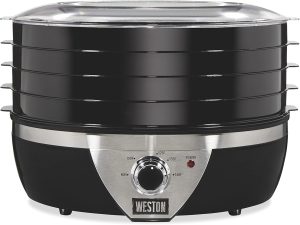
The Weston 4-Tray Food Dehydrator is a solid entry-level machine that makes food dehydration accessible without a high price tag. Its simple dial control and dependable heat output are perfect for beginners or casual users who mainly dry fruits, herbs, or small vegetable batches. With four trays of capacity, it handles everyday dehydration tasks comfortably without taking up too much countertop space. The straightforward design means fewer bells and whistles to learn, so you can start drying right out of the box. Despite its budget-friendly price, it delivers consistent results and reliable performance for basic projects. For anyone looking to explore dehydration without a big investment, this model offers excellent value and dependable functionality.
Likes: Easy to use, budget-friendly, great for small jobs and beginner projects.
Dislikes: Limited capacity for larger batches, fewer advanced controls.
Weston 10‑Tray Digital Food Dehydrator – Best Large-Batch Weston
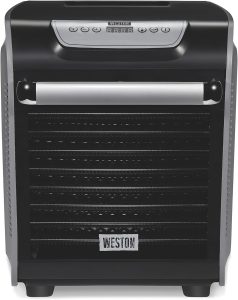
The Weston 10-Tray Digital Food Dehydrator is built for serious dehydrators who need plenty of space and consistent performance. With over 10 trays of drying area, it lets you process large volumes of fruit, vegetables, herbs, or meat in a single run, saving time and effort. Its digital controls and long-range timer support unattended drying for up to 48 hours, which is ideal for bulk jobs and seasonal harvests. The unit’s design promotes even heat distribution and strong airflow throughout all trays, helping ensure uniform drying without constant rotation. Despite its size, the controls remain intuitive and accessible, making it a practical choice for both seasoned preservers and dedicated home cooks. For anyone handling large batches of food regularly, this dehydrator delivers capacity, consistency, and convenience in one robust package.
Likes: Huge capacity, digital timer for unattended drying, precise temperature range.
Dislikes: Higher price point, larger footprint that needs dedicated space.
MEAT! 10-Tray Dehydrator – Best Dehydrator for Jerky
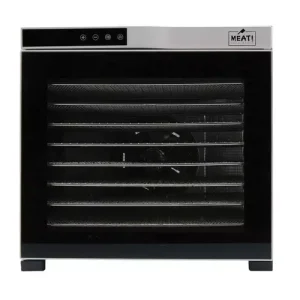
The MEAT! 10-Tray Dehydrator is designed with meat makers in mind, offering ample space and dependable performance for jerky and other protein snacks. With ten roomy trays, it lets you lay out strips without crowding, which helps airflow reach every piece for even drying. The temperature range and precision controls are tuned for consistent heat that’s ideal for safely dehydrating jerky without overcooking or drying unevenly. Users appreciate how its airflow system promotes uniform results without the need for frequent tray rotation. While it handles other foods well, this model really shines when it comes to jerky, beef sticks, and wild game strips. For hunters, outdoor cooks, and anyone serious about meat snacks, its combination of capacity, consistency, and meat-focused design makes it a standout choice.
Likes: Designed around meat dehydration, excellent airflow, plenty of space for large batches.
Dislikes: Less emphasis on aesthetics or kitchen versatility compared to other brands.
This makes MEAT! a strong runner-up if your primary goal is consistent, high-quality jerky or protein snacks whether for home use, or prepping snacks for outdoor adventures.
NESCO FD‑75A Snackmaster Pro Food Dehydrator – Best Compact & Flexible
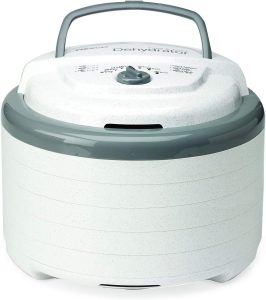
The NESCO FD-75A Snackmaster Pro Food Dehydrator is a versatile countertop unit that excels in everyday dehydration tasks while staying compact and affordable. Its adjustable temperature control and top-mounted fan promote even airflow so fruits, herbs, and jerky dry consistently without needing to rotate trays constantly. The Snackmaster Pro includes multiple trays right out of the box and can expand with add-on trays when you need extra capacity, giving it flexibility rare in a smaller model. Its lightweight design and simple controls make it easy for beginners to use, yet capable enough for experienced preservers who want reliable performance. Though compact, it handles a wide range of foods — from fruit chips and herbs to meat snacks — without sacrificing quality. For anyone looking for a dependable dehydrator that fits in a kitchen without dominating space, this model strikes a great balance of size, performance, and adaptability.
Likes: Expandable trays, strong airflow design, good for fruit, herbs, and jerky.
Dislikes: No built-in timer, and circular tray design can feel space-inefficient compared to horizontal units.
COSORI Food Dehydrator – Best for Everyday Kitchen Use
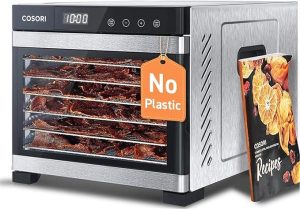
The COSORI Food Dehydrator stands out for everyday kitchen use thanks to its sleek design and intuitive digital controls that make dehydration simple and accessible. Its precise temperature settings help you confidently dry everything from fruit and herbs to homemade jerky with consistent results. Dishwasher-safe trays and easy-to-read controls keep cleanup quick and stress-free, which is ideal for busy home cooks. While its capacity isn’t as large as some bulk-focused models, it’s perfectly sized for daily snack prep and moderate drying tasks. The stainless-steel construction gives it a polished look that fits well with other countertop appliances. For anyone who wants dependable performance without a large footprint, this dehydrator delivers versatility, convenience, and excellent everyday results.
Likes: Stylish design, excellent performance for general dehydration, intuitive digital controls.
Dislikes: Slightly smaller capacity than large batch machines.
Excalibur Deluxe Dehydrator 9 Tray – Best High-Capacity Horizontal Flow
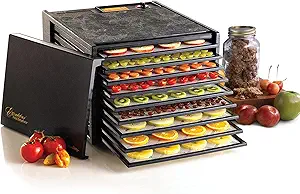
Excalibur is a brand long respected by serious home preservers. The Deluxe 9-Tray model offers a horizontal airflow system that moves heat evenly through each tray without the need for rotation, helping ensure consistent results whether you’re drying fruits, vegetables, or meats.
Likes: Large drying area, consistent results, great build quality.
Dislikes: Higher price and larger footprint, best if you dehydrate often.
For even more capacity and advanced control, the Excalibur 10 Tray Select Digital Dehydrator adds a digital control panel and expanded space while retaining the brand’s trusted airflow design.
LEM Meat Dehydrator 5‑Tray – Good Budget Stainless Option
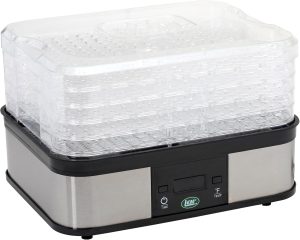
The LEM Meat Dehydrator 5-Tray is a reliable mid-range machine that delivers consistent results without overcomplicating the dehydration process. Its chimney-style airflow system promotes even drying across all trays, helping produce uniform textures whether you’re working with meat, fruit, or vegetables. The clear viewing door makes it easy to check progress without interrupting the drying cycle, and the straightforward digital controls keep operation simple. While its capacity isn’t as large as bulk-oriented models, five trays are more than enough for everyday food prep, snacks, and moderate jerky batches. Built with quality materials and thoughtful design, it feels sturdy and dependable during long runs. For anyone who wants a dependable dehydrator that performs well across a range of foods without premium pricing, this model is a well-rounded choice.
Likes: Even airflow, clear monitoring door, digital controls.
Dislikes: Smaller capacity and slightly lower average user rating than premium competitors.
How to Choose a Dehydrator – Key Criteria
Before we dive into models, it helps to understand what really matters when choosing a dehydrator:
-
Temperature Range & Control: Look for units with adjustable heat settings. Fruits and herbs require lower temperatures, while meats need higher, stable heat to dry safely.
-
Airflow System: Horizontal airflow (side-to-side through trays) typically produces more even drying than basic stack-on-top designs.
-
Capacity: Think about how much food you’ll dry at once. Smaller units are fine for snacks, while larger units save time for batch jobs.
-
Ease of Use and Clean-Up: Removable trays, intuitive controls, and dishwasher-safe parts can make a big difference.
-
Durability: A well-built dehydrator will run many hours without issue, which matters if you dehydrate seasonally or frequently.
Choosing the right dehydrator starts with understanding how you plan to use it. Temperature control is one of the most important features. Different foods require different drying conditions. Fruits and vegetables typically dry best at lower temperatures that preserve natural sugars and textures, while meats require higher, carefully regulated heat to dry safely and evenly. A dehydrator with precise temperature adjustment allows you to switch between different types of food without compromising results. This flexibility is especially valuable in households where a dehydrator might be used for everything from apple slices to marinated jerky.
Airflow is another critical factor that often goes overlooked. Even airflow ensures moisture is consistently removed across all trays. Poor airflow can lead to uneven drying, where some pieces finish too quickly while others remain damp. This affects not only texture and flavor but also shelf life. Dehydrators with well-designed airflow systems reduce the need to rotate trays during long drying sessions, making the process more efficient and hands-off. This becomes particularly important when drying larger batches or running a dehydrator overnight.
Capacity also plays a significant role in overall satisfaction. Smaller dehydrators are perfectly adequate for occasional use, but larger models are more efficient when processing bulk ingredients. Gardeners often appreciate the ability to dry an entire harvest in fewer batches. Families who meal prep regularly find that larger capacity saves time. Hunters and outdoor cooks value the space when working with larger cuts of meat. A dehydrator with expandable or multi-tray configurations offers flexibility that adapts to changing needs throughout the year.
Today’s dehydrators vary widely in features, capacity, airflow design, and control precision. Some are ideal for beginners and casual users, while others deliver performance and consistency that experienced cooks and food preservers will appreciate. After evaluating the top models across a range of brands, Weston stands out as the best overall dehydrator choice thanks to its balance of performance, durability, and versatility. MEAT! earns our runner-up spot with dehydrators that excel at meat and jerky production without sacrificing everyday use. We also include practical models from Nesco, Cosori, Excalibur, Cabela’s, and LEM so you can match the right machine to your specific needs.
How I Tested
To evaluate these food dehydrators, I focused on real-world use rather than controlled lab conditions. Each model was assessed based on how it performed during typical dehydration tasks most households, gardeners, and hunters actually care about. That included drying fruit slices (apples and bananas), fresh herbs, vegetables, and marinated meat for jerky.
I paid close attention to temperature accuracy and stability, especially when switching between low-temperature foods like herbs and higher-heat applications like jerky. Units with inconsistent heat or noticeable temperature swings were flagged, as these issues directly affect drying time, food safety, and final texture.
Airflow and drying consistency were also key factors. I evaluated whether trays dried evenly without rotation, how long full batches took to finish, and whether some trays consistently lagged behind others. Dehydrators that required frequent tray rotation or produced uneven results ranked lower than models that delivered consistent drying across all trays.
Ease of use played a major role in scoring. Controls, timers, tray loading, noise levels, and cleanup all matter when a dehydrator runs for 8–24 hours at a time. Models with intuitive controls, easy-to-clean trays, and reliable long-run performance scored higher than those that felt cumbersome or finicky.
Finally, I considered capacity and value relative to intended use. Smaller dehydrators were evaluated on efficiency and simplicity, while larger models were judged on batch handling and consistency under load. The goal wasn’t to crown one machine for every user, but to identify which dehydrators perform best for specific needs—from casual snack prep to bulk jerky production.
FAQs
What foods can you dehydrate in a food dehydrator?
A food dehydrator can be used to dry fruits, vegetables, herbs, meats, fish, and even prepared snacks like fruit leather. Many people also use dehydrators for homemade dog treats and lightweight meals for camping or emergency food storage.
Is dehydrated food healthy?
Yes. Dehydration preserves much of a food’s original nutritional value while eliminating the need for preservatives. Because moisture is removed, flavors become more concentrated, making dehydrated foods a healthy, shelf-stable snack option.
What temperature should a dehydrator run at?
Different foods require different temperatures. Fruits and vegetables typically dry best between 125°F and 135°F, herbs at lower temperatures around 95°F to 115°F, and meats like jerky should be dried at higher temperatures—usually around 160°F—for food safety.
How long does it take to dehydrate food?
Drying times vary depending on the food type, thickness, moisture content, and dehydrator airflow. Fruits and vegetables often take 6–12 hours, while jerky and thicker cuts of meat may require 8–24 hours.
Do I need to rotate trays while dehydrating?
Some dehydrators require tray rotation, especially stackable models with vertical airflow. Dehydrators with horizontal airflow systems often dry food evenly across all trays and reduce or eliminate the need for rotation.
What is the best dehydrator for making jerky?
A good jerky dehydrator should have a wide temperature range, strong airflow, and enough tray space to handle meat strips without crowding. Models designed specifically for meat dehydration, like those from MEAT! and Weston, tend to perform best for jerky.
Can you dehydrate wild game like venison or turkey?
Yes. Dehydrators are commonly used to preserve wild game such as venison, turkey, elk, and fish. Proper temperature control and safe handling are essential to ensure even drying and safe storage.
How do you know when dehydrated food is done?
Properly dehydrated food should be dry and pliable, not brittle or moist. Jerky should bend and crack slightly without snapping, while fruits should feel leathery with no visible moisture.
How long does dehydrated food last?
When stored in airtight containers in a cool, dry place, dehydrated foods can last several months to over a year. Vacuum sealing or using oxygen absorbers can extend shelf life even further.
Is a larger dehydrator better than a smaller one?
Not necessarily. Larger dehydrators are ideal for bulk processing, gardeners, and hunters, while smaller units work well for occasional snack prep. The best choice depends on how often and how much food you plan to dehydrate.
Conclusion
Food dehydration is an easy way to preserve seasonal produce, make healthy snacks, and prepare lightweight food for trips and travel. The best dehydrator for you depends on how often you plan to use it and what kinds of foods you want to make. For most general applications, from everyday snacks to occasional jerky, the Weston line delivers strong performance and excellent value across multiple models.
If you’re focused largely on meat and jerky production, MEAT! makes great dehydrators that excel at those tasks without being limited to them. For flexible kitchen use with fruits, vegetables, herbs, and protein, models from Nesco, Cosori, and Excalibur offer excellent alternatives, with features to suit a range of needs and budgets. Larger-capacity options from Cabela’s and approachable stainless steel options like LEM round out the field, giving you plenty of choices whether you’re dehydrating for the first time or expanding your food-preservation setup.
Per our affiliate disclosure, we may earn revenue from the products available on this page. To learn more about how we test gear, click here.