


If you’re anything like me, you hate wearing gloves in the duck blind. It is a pain in the you know what to feel your trigger or push that little orange button to call the dog back with a pair of gloves on. But with today’s advancements in gloves, it’s easier to do these tasks while staying warm and dry. But how much thought do you put into the gloves you wear when making your selection? Most guys I know spend big bucks on quality duck hunting waders, then skimp on their duck hunting gloves, hats, and other accessories. I believe this is a big mistake. When the hunting slows, nothing makes a hunter give up faster than getting cold.
What Makes Good Duck Hunting Gloves?
This is a good question to answer because someone in the North may be looking for a glove that is entirely different from what someone in the South would be looking for. For this story, I am going to focus on hunting in the cold, nasty conditions in the northern part of the county, but I will also touch on warmer-weather hunting. So, to answer my question, I believe a good hunting glove should not only be waterproof, but also be insulated and feel like it’s part of your hand. What I mean by the latter part of that is you should be able to feel your trigger or your decoy rope and operate it as well as you can with your bare hand, sacrificing no dexterity. Quality gloves can come with a higher price tag, but it should be no surprise that you get what you pay for. With that said, you can still find a few decent, cheaper ones.
How I Tested the Gloves:
When testing the gloves, I conducted a series of tests to evaluate functionality, comfort, and warmth. I used gloves from several manufacturers to identify what I felt were the best gloves on the market in the categories below. I put the gloves through the paces from setting up decoys, to retrieving wet ducks, to operating that little orange button on my dog’s collar remote. I focused on how well they performed when shooting, how warm and waterproof they are, and how well they withstand the elements. I feel these are the four main points a good pair of duck-hunting gloves needs to exhibit, especially in the Northern part of the country.
Beyond basic field use, I also pushed each pair of gloves into the kind of harsh, repetitive conditions that ruin mediocre gear fast. That meant long mornings breaking skim ice, brushing blinds in freezing rain, and running the boat at first light when windchill drops into single digits. I paid close attention to how materials reacted when soaked, frozen, and thawed multiple times throughout a hunt — a cycle that exposes poor insulation or weak seams almost immediately. I also evaluated dexterity during the tasks that matter most to waterfowlers: loading shells with numb hands, working safety switches and triggers smoothly, and maintaining grip on everything from a wet call lanyard to a slippery drake mallard. By paying equal attention to durability, tactile control, heat retention, and true waterproof integrity, I was able to separate gloves that simply look good on the shelf from those that can survive a full season in the marsh.
My Winners:
For your convenience, if here are the winners – click the link to shop the lowest price on the internet, and keep scrolling to read more about why the item was chosen.
Quick Picks: Best Duck Hunting Gloves
-
Best Overall Duck Hunting Gloves: Sitka Merino 330 Gloves
-
Best waterproof duck hunting gloves: Drake MST Refuge HS GoreTex Double Duty Glove
-
Best insulated duck hunting gloves: Sitka Blizzard Pro GTX Gloves
-
Best budget duck hunting glove: Hot Shot Men’s Camo Defender glove
-
Best gloves for multiple species: First Lite Migrator Shooters Glove
-
Best Glove for Calling Ducks: Sitka Callers glove
-
Best Heated Duck Hunting Gloves: Tidewe heated insulated hunting gloves
Best Overall Duck Hunting Gloves: Sitka Merino 330 Gloves
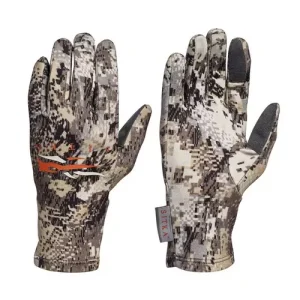
It was a challenge to pick the best overall duck hunting glove on the market. Kuiu, Firstlite, Drake, and Banded all make great waterfowl gloves, but I must give Sitka the nod for the best overall gloves. The Sitka Merino 330 gloves check all the boxes for my definition of a great duck-hunting glove. Not only that, but they are somewhat budget-friendly compared to some of the other pairs at only 55 dollars, which was the deciding factor for me. These gloves come in 3 colors, making it easy to match your favorite duck-hunting camo if it’s not Sitka, and they are also available in 3 sizes. They feature Core Merino wool, which offers a high warmth-to-weight ratio, making them less bulky while still keeping you warm. They are water-resistant and windproof. I found myself grabbing these gloves, or at least having them in a side pocket, on most hunts. They withstood whatever waterfowl season could throw at them and kept me warm and dry.
Best Waterproof Gloves: Drake MST Refuge HS GoreTex Double Duty Glove
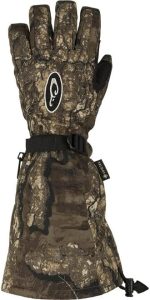
When it comes to waterproof gloves, most Gore-Tex gloves I tried were 100 percent waterproof. This made it difficult to decide what was the best waterproof glove. With that said, I feel the Drake MST Refuge HS GoreTex Double Duty decoy gloves stood out. I say this because not only do they keep your hand dry, but the extended collar also keeps much of your lower arm dry. For this reason, they are my pick for best waterproof glove. They are offered in 2 colors and five sizes and cost just under $90 a pair. They are made with Gore-Tex, which makes them 100 percent waterproof, but they offer no insulation. When it comes to dexterity, I give them an 8 out of 10. I found these gloves really shine when wading in shallow water or setting decoys. Any time you would find yourself putting your whole hand in the water, these are the gloves you want.
Best Insulated Waterfowl Gloves: Sitka Blizzard Pro GTX Gloves
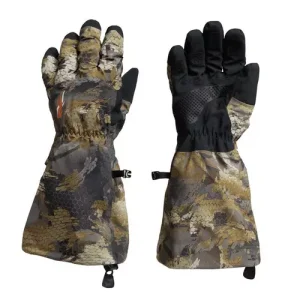
Just like the waterproof gloves, it was hard to pick one pair that I could deem the best insulated gloves, with all the different brands that make quality gloves, but one pair did stand out. The Sitka Blizzard Pro GTX Gloves, and let me tell you, these gloves are warm, some days maybe even too warm. These gloves were built for the worst of the worst days when it comes to cold. Offered in 3 colors and five sizes, most hunters will find a pair that works for them. These gloves are packed full of Primaloft Gold insulation, which, if you have tried any other Sitka stuff, you will know is superior. They have an extended chinch cuff that goes over your sleeve. I feel this is a great way to help trap warmth in your glove. They have 3 layers of Gore-Tex to not only keep you 100 percent waterproof but also allow them to breathe. When it comes to dexterity, I feel these gloves get an 8 out of 10. I thought I could feel stuff great, but when it comes to trigger control, I wish they had a little less bulk. That and the price tag of these gloves might send some guys away at $250 a pair. But I am also a firm believer in you get what you pay for, so if you’re heading to negative degree waterfowl hunts on the water, these are definitely the gloves I recommend.
Best Duck Hunting Gloves on a Budget: Hot Shot Mens Camo Defender Glove
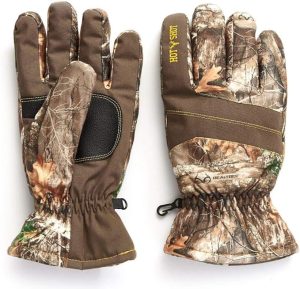
When it comes to gloves, on the cheaper side, you usually get what you pay for. While some may keep your fingers warm, they will offer zero waterproof protection, and so on. It was hard to find a pair that met all the criteria I felt made a great duck-hunting glove. With that said I think the Hot Shot Mens Camo Defender glove stood out as a quality budget-friendly duck hunting glove, coming in just under 20 dollars a pair. These gloves come in 3 different sizes and 3 different popular camo patterns. They are lined with 40 g of 3M Thinsulate and feature a 2 mm foam backing. I felt this was plenty of insulation to keep my fingers warm on those 20- and 30-degree days out on the boat duck hunting. They come with a 100 percent waterproof insert that keeps my hands dry as I help load and unload the boat and pull wet ducks out of the water. I wore these gloves on several hunts for several hours, and they held up with no quality issues. The only downside to these gloves is their dexterity. They are quite bulky compared to many other gloves on the market. I could do everything I wanted with the gloves; they just took up a lot more room, especially when it came to shooting. For 20 dollars, I don’t think you could go wrong, though.
Best Gloves for multiple species: First Lite Migrator Shooters Glove
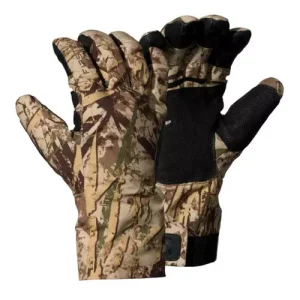
In my part of Ohio, most guys start waterfowl hunting as soon as they fill their deer tags for the season. For this reason, I feel there should be a category for gloves that can be used for both types of hunting, especially when they can be so expensive. My pick for this category would be the First Lite Migrator Shooters Glove. The reason I picked this glove is because it is not only 100 percent waterproof it also contains a little insulation without sacrificing any dexterity. Offered in 2 colors and 4 sizes, these gloves come in at 150 dollars. I found that I can not only shoot my guns with these gloves, but I can also touch off my release on my compound bow. The versatility of these gloves is why they get my nod as the best multiple species glove.
Best Glove for Calling Ducks: Sitka Callers Glove
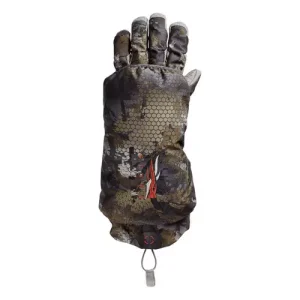
When it comes to calling, it’s something most of us waterfowl hunters do from time to time, some more than others. When it came to picking a glove as the best for calling, it was truly a no-brainer for me. The Sitka Callers glove was designed just for this. I say glove because it’s not offered in pairs. It is a single glove, so if you’re right-handed like me, you will get the left one. This waterproof GoreTex-lined glove is packed full of Primaloft gold insulation, keeping your left hand nice and warm, but what about your right hand? The glove has a belt with a highly insulated, berber-lined muff attached to it. I think this is one of the most astonishing waterfowl inventions in a while. It allows you to keep your trigger finger and calling hand bare when needed, but lovely and warm when not. If that’s not cool, I don’t know what is. At just $149, it’s a steal if you ask me, especially if you’re a waterfowl caller.
Best Heated Duck Hunting Gloves: Tidewe heated insulated hunting gloves
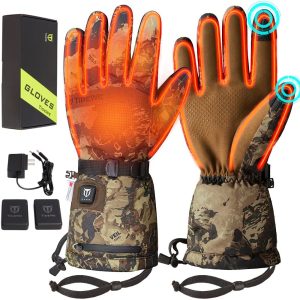
Water and electricity don’t usually mix well, so these gloves are best for guys who have zero chance of getting them wet. That said, the Tidewe heated insulated hunting gloves are an excellent choice. They are offered in 2 colors and four sizes and come packed with warm features. The first is the three different heat settings. When run on the lowest setting, you can get warmth for approximately 6.5 hours, and on the highest setting, approximately 2.5 hours. The next feature is that they are windproof and water-resistant with 3M insulation. This keeps you warm and dry when hunting. Lastly, they fit tightly to your hand, so you have full dexterity when you need it. These gloves are a great choice when you know for a fact you don’t need a waterproof glove on a hunt.
Layering Gloves for Changing Conditions
Not every duck day is a teeth-chattering grind in January. A lot of the season falls into that gray area when it’s cold enough to numb your fingers in wet gear, but not so brutal that you need the bulkiest glove in the lineup. That’s where a good layering system shines.
On mild to mid-season hunts (think 35–50°F with damp conditions), I like to run a thin liner glove under a waterproof or windproof shell. The liner gives you just enough warmth and wicks sweat off your skin, while the outer glove blocks wind and water. When I’m hiking to the blind, setting decoys, or running the boat, I keep both layers on. Once I’m settled and it’s time to shoot, I’ll often strip the shell off and shoot in the liner glove alone to get better feel on the trigger.
Layering also lets you adapt as the day changes. Early in the morning, before shooting light, it can feel like late December, especially if there’s a north wind. By mid-morning, the sun pops and the same glove that felt “just right” suddenly feels like too much. With a liner/shell combo, you can peel or add layers instead of committing to one heavy glove that’s either perfect or miserable depending on the hour.
Here are a few layering tips that have worked well for me:
-
Choose a snug liner: Something thin, stretchy, and form-fitting gives you trigger feel and works under most shells. Merino or synthetic is ideal; avoid cotton.
-
Match liner to task: If you’re doing a lot of calling or running a dog transmitter, pick a liner with some grip and good fingertip sensitivity.
-
Use a beefier shell for wet work: For handling decoys, paddling, or retrieving birds in shallow water, I’ll slip on an insulated, waterproof shell over my liners and don’t worry about it getting soaked.
-
Keep a backup pair dry: I almost always stash a second set of liners or lighter gloves in a dry bag. Once your hands get wet and stay wet, the hunt gets shorter.
The big takeaway is this: instead of asking one glove to cover every hunt from early October teal to late-season mallards in an ice storm, use layers to cover the gaps. A smart system of liners and shells gives you more control over comfort than any single glove ever will.
How to Care for Duck Hunting Gloves (So They Last More Than One Season)
Good gloves aren’t cheap, and duck hunting is brutal on gear. Mud, ice, blood, salt, and constant soaking will ruin even the best glove if you don’t take care of it. A little basic maintenance goes a long way toward keeping your hands warm and your gloves out of the trash pile.
Here’s how I care for my waterfowl gloves after a brutal hunt:
Rinse off mud and grime
When I get home, I knock off the big chunks of mud and then give the gloves a quick rinse with cool or lukewarm water. I avoid hot water, which can be hard on waterproof membranes and some synthetic insulations. If I’ve been hunting in salt or brackish water, I’m extra careful to rinse thoroughly to get the salt out before it can break down fabrics and stitching.
Clean gently when needed.
If the gloves really stink or are visibly dirty, I’ll wash them with a mild detergent designed for technical outerwear. I either hand-wash in a tub or use the gentle cycle in a front-load machine, following the manufacturer’s directions as closely as possible. Harsh detergents and fabric softeners can strip waterproof coatings and reduce breathability.
Dry them altogether — but not cooked.
Drying is where a lot of gloves get ruined. I never throw them right on high heat. Instead, I:
-
Gently squeeze out excess water (no twisting).
-
Stand them up or hang them with the cuff down so moisture can drain.
-
Use a boot dryer or low-heat setting if the manufacturer allows it.
The goal is to dry them thoroughly without baking the membrane or melting any bonding/glue. If the glove has removable liners, I pull those out to speed up drying.
Re-proof the exterior fabric
Over time, the outer fabric on “waterproof” gloves can start to wet out. When that happens, water soaks the shell, and even if the membrane doesn’t leak, your hands feel clammy and cold. A spray-on or wash-in DWR (durable water repellent) made for technical gear can revive that water-beading effect. I’ll usually re-proof once or twice a season, or any time I notice water not rolling off like it used to.
Store them dry and uncrushed
At the end of the season, I make sure every glove is bone-dry before it goes into a tote or gear bag. Storing gloves damp is a recipe for mildew and permanent funk. I also avoid jamming them under a pile of decoys where they’ll sit crushed all summer. Storing them loosely allows the insulation to keep its loft, which is a big part of staying warm next year.
Inspect seams and cuffs regularly
Gloves usually fail at the seams, fingertips, or cuffs first. A quick inspection a few times a season lets you catch small issues before they turn into a split seam on a 20-degree morning. A bit of seam sealer or a small repair now is cheaper than buying a new pair later.
Take care of your gloves the same way you’d take care of a good shotgun or a solid pair of waders. A few minutes of rinsing, drying, and re-proofing after a hunt can add years to their lifespan—and that’s money you can put toward more shells, more decoys, or another trip to the marsh instead of another emergency glove purchase.
As you can see, there are several different gloves on the market to choose from. They all shine in their own areas, but the important thing is that they all protect your hands when needed. The cold, the wind, and the water don’t mix, and it’s essential to protect your hands on these hunts so when the moment of truth comes, you’re ready. Regardless of what pair you get, if you select a quality pair that fits well and serves your purpose, that’s what matters most.
These gloves all make great stocking stuffers and make sure to keep an eye on them as they typically will be one of the best black friday hunting deals.
Per our affiliate disclosure, we may earn revenue from the products available on this page. To learn more about how we test gear, click here.