




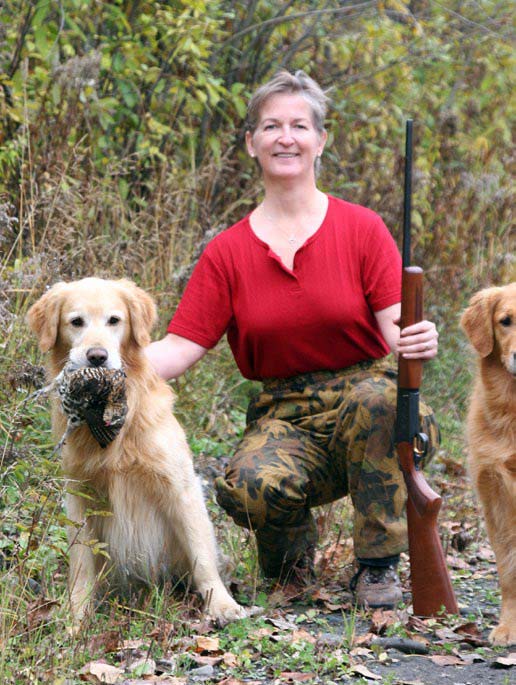
The 410 shotgun has earned a loyal following among hunters and shooters who value light recoil, easy handling, and surprising effectiveness at close range. While it is often seen as a beginner-friendly option, the 410 shotgun is also a smart choice for experienced upland hunters who understand its limits and know how to get the most from its tight patterns and compact shells. In this story, readers will learn what makes the 410 unique, how it compares to larger shotguns, and why it can be such a fun and practical tool for grouse hunting and other close-range shooting situations.
For decades, I have used a 12-gauge shotgun to hunt grouse. I even bought a second 12-gauge pump with a 26-inch barrel and adjustable chokes just for that purpose. In the past few years though, I have been realizing that, although the 12 gauge is effective, it is actually a lot more gun than I need for grouse. I started investigating smaller bores and finally bought a 20 gauge, but found that even that gun was more than I needed or wanted for short-range grouse shooting. I then turned my focus to the .410 bore; it seemed like the next logical step. Along the way, during my research, I discovered a few interesting (and important) points to note when considering a .410.
The little .410 shotgun is actually a bore, not a gauge. If you remember how a shotgun’s gauge is determined, you will know that it is the number of lead balls of that specific diameter that equals one pound in weight. Thus, a 12-gauge bore diameter is the diameter of one of the 12 balls that make up one pound, which is .729 inches. Not so the .410, though. If the .410 were to be designated in its associated gauge, it would turn out to be the number of lead balls of .410 inches that make up a pound. This works out to be about 67 – 68 gauge.
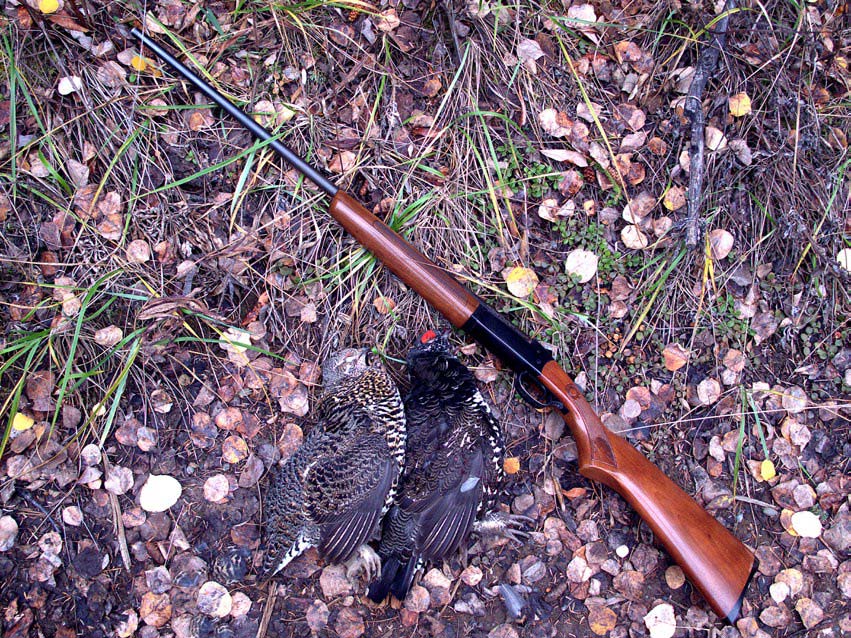
The .410 is the smallest of the shotguns, and in the hands of a good hunter or shooter who knows its capabilities and limitations, it is an effective firearm, especially for upland game birds. In the hands of the inexperienced, though, it can be a frustrating gun.
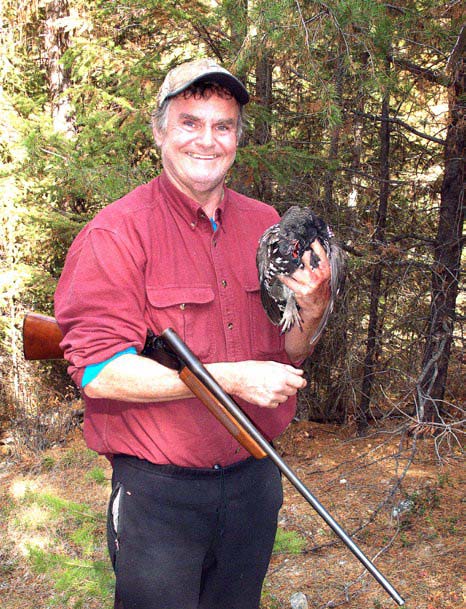
Key to becoming accomplished with any firearm is to know its limitations and capabilities; where it shoots, what it is designed to be used on, and how to use it, and then using it for its intended purpose. Key to this is knowing its effective range and ammunition type for any given game or sport shooting.
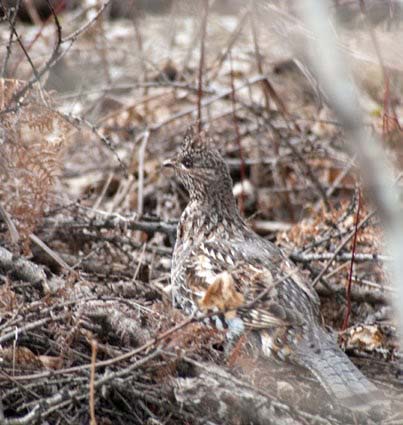
The .410, as I said, can make an effective and fun little upland game gun, but because of the small shells and limited pellet count it should be limited to about 25 – 30 metres range. Any further and, even at full choke, the small pellet count leads to shot patterns that are simply too thin to be reliable or effective in taking birds humanely, if at all. Last season, I took a shot at a ruffed grouse about 50 metres away. The bird hopped in the air about a foot, landed, shook itself, and just stood there. All I had done was perturb it. I took a second shot, and it flew away, seemingly without a scratch; I was just too far away for the little shotgun to perform well. With this little experience in mind, let’s look at the two most popular loads for the available shotshell lengths and pellet sizes for this gun and see if we can figure out what works best.
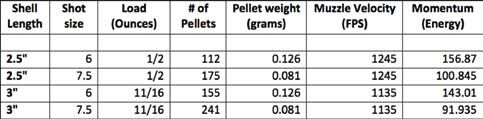 .410 ammunition comes in 2 ½ and 3-inch shell lengths. The 2 ½ inch shells contain ½ an ounce of shot and the 3-inch shells contain 11/16ths of an ounce of shot. There are many shot sizes available for the .410, ranging from a slug and 000 Buckshot through #9. The two most popular loads seem to be #6 and #7.5 for upland gamebirds. I use #6 shot for grouse, but many like to use #7 ½ shot because of the greater number of pellets per shell and thus a denser pattern. Here is a table that shows the differences in those two sets of sizes and lengths.
As you can see, the number of pellets in the patterns vary quite a bit, as does the energy (momentum) of each pellet at muzzle velocity. When you try to decide what you want to hunt with, you have to weigh the pros and cons of pattern density versus down-range momentum. I believe that the best combination of the two is a 3-inch #6 shell. Many shooters prefer the 3-inch #7.5, placing greater emphasis on pattern density than energy. I think one key to consider is the range you average when shooting. Some hunters, because of the environment they hunt in, shoot at closer ranges than others. My average shots tend to be around 20 – 30 metres so I prefer the greater energy. I have often killed grouse that showed only a single pellet through its head. For my situation, #6 kills more reliably than #7.5; I hate wounding birds. If you are averaging 10 – 20 metres, then a #7.5 may very well be the better choice, although you may end up with a few more pellets in the meat. If you are shooting trap or skeet, you certainly would prefer the #7.5 loads or smaller for the greater pellet density; it would give you a greater chance of a hit due to the increase number of pellets in the pattern. You wouldn’t be concerned so much with down range energy.
One thing I mentioned earlier, and something that is important for all gauges but is critical when shooting a .410, is patterning. You must pattern your shotgun. Patterning is simply taking a large piece of cardboard out to wherever you can shoot safely, drawing a bullseye or the outline of a grouse in the centre and shooting at it from about 25 metres away. Shoot twice with the same ammunition and then go and see where the majority of the pellets have landed. You have to memorize this because you cannot adjust shotgun “sights”; you have to adjust where you aim. Thus, the old saying “You aim a rifle, but you point a shotgun” comes from. My present .410 shoots half a bird high and half a bird to the right at 25 metres. I “aim” at the level of the bird’s feet and to the left in line with the edge of the bird. This hold kills them dead. You have to know your firearm, especially, as I said, the .410, because you are dealing with small, thin patterns, and so it is critical to get the pattern on target.
Why Choose a 410 Shotgun?
Another big advantage of the .410 is its minimal recoil. It is a great starter gun for beginners, but keep in mind its limited range. Make them pattern it themselves and teach your student the effective range so they won’t be discouraged. If you don’t, you will find them failing to approach the bird close enough and missing or wounding birds. This teaching has the added advantage of giving you the opportunity to teach them how to sneak up on the birds as well and to listen for the rustling and the cheeping they make when skittish and spooked.
If you do consider a .410 for a beginner, especially a youth, be sure to check out the different actions it comes in. It is available in most actions. I prefer a pump, so I chose the Mossberg Field 500. Remington offers an Express version in a pump action as well. Thompson Center has an Encore version that is a terrific single-shot option. It appears the most popular models are break actions, either single shot or over and under. If you are thinking of buying a break-action single-shot, be sure to test the external hammer’s tension. The one I have is very stiff, and although I have no problem cocking it, my wife struggles with it, and for her, it is dangerous because in her weaker hands, the hammer can slip and fire the gun. Not good.
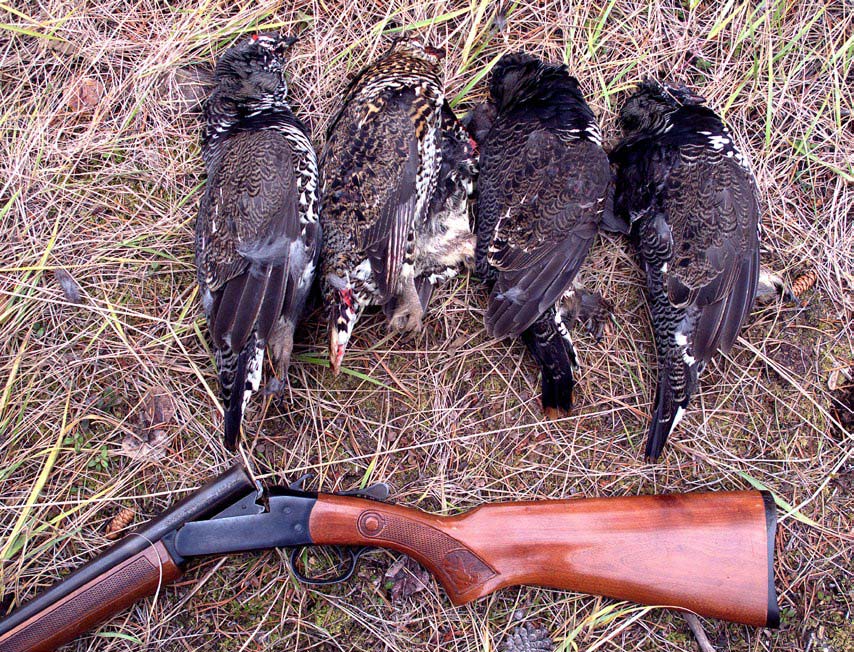
I have a hoot hunting and shooting with my .410s. They are easy to pack around, light in recoil, and simply fun little guns. If you hunt upland birds, especially grouse, in close cover (which minimizes range) then consider it. This gauge makes a great small-bore turkey gun, especially when using the new TSS shot options. If you do, remember to spend the time patterning it and learning what it can and cannot do. You’ll be far happier with it if you do.
Per our affiliate disclosure, we may earn revenue from the products available on this page. To learn more about how we test gear, click here.