




Understanding the Difference Between First Focal Plane vs. Second Focal-Plane
As long-range shooting and hunting become increasingly popular, many shooters are beginning to explore options for first focal-plane rifle scopes. In order to select the best rifle scope for your needs, this is the first question to consider.
Manufacturers are responding by offering new models each year. Zeiss just launched its LRP S5 line of scopes. The line was aimed squarely at those who are looking to shoot extreme distances with incredible accuracy. Nightforce has been the leader in this field for the past decade or so, but other manufacturers now want to get a piece of this lucrative pie, and many new options are popping up. Almost all major manufacturers now offer one or several first focal-plane models. Look for more in the coming years.
Looking for a list of the best crossbow scopes, see our article. Best Crossbow Scopes – Crossbow Magazine
Here is our library of articles on selecting specific rifle scopes, click on these articles. Rifle Scope selection
Scopes are basically offered in two configurations: first focal plane and second focal plane. Quigley Ford offers what they call a dual focal-plane scope ( more on that later). The difference between the two focal planes is where the reticle sits relative to the magnifying lenses. The magnifying lenses typically sit in the middle of the tube and are part of an assembly called the erector lens system.
In the case of the first focal-plane scope, the reticle is found at the front of the scope (towards the end of the barrel) between the objective lens and the erector lens system. In the case of the second focal-plane scope, the reticle is located toward the rear of the scope, between the erector lens system and the eyepiece. It’s really that simple (well, kind of).
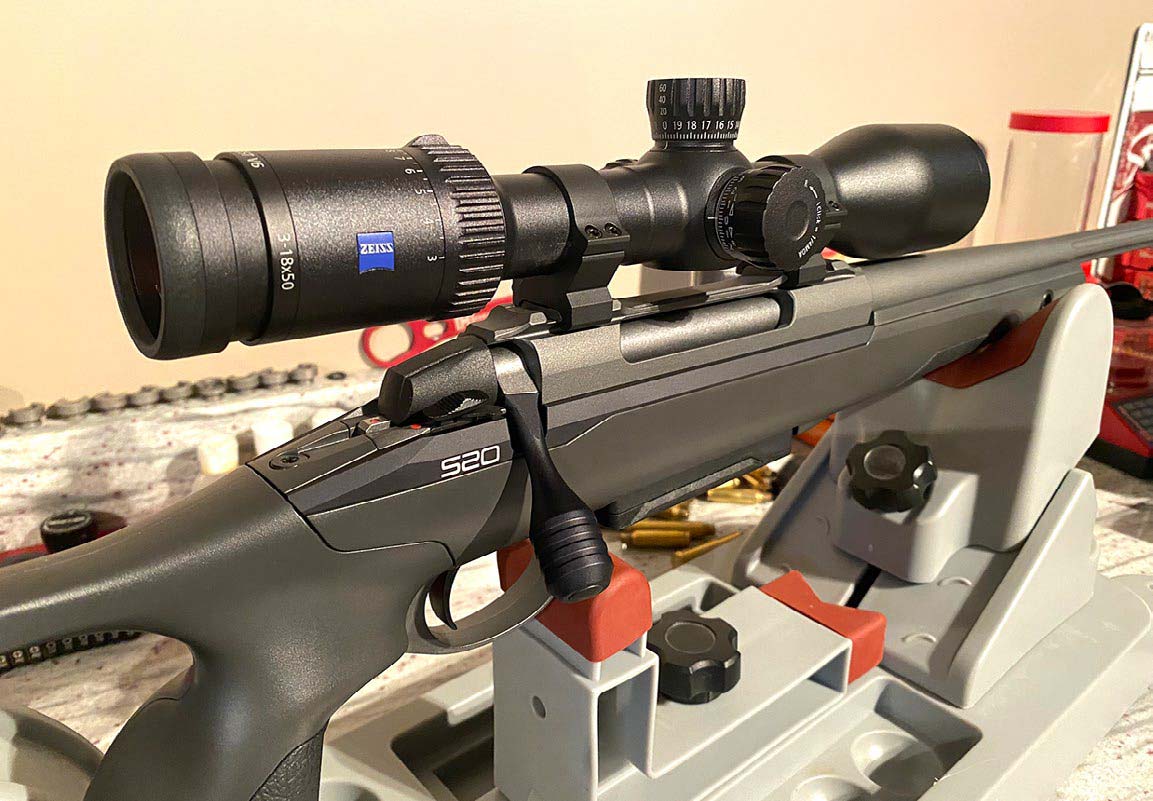
Operational Differences between First Focal Plane and Second Focal Plane
Let’s take a look at the operational difference between the two styles. Most first focal-plane scopes are equipped with ballistic-type reticles that offer secondary hash marks for elevation and windage compensation. To the average hunter, they often appear quite cluttered, but to a long-rage competition shooter, they are the norm. They offer rapid elevation and windage compensation without adjusting the turrets. Since the reticle sits in front of the magnifying lenses on a first focal-plane scope, it changes sizes as the power is adjusted. At high magnification, the reticle will appear quite thick. At low magnification, it will be extremely fine.
As competition shooters typically run their scopes at maximum magnification, the changing reticle size is not really a concern. But for hunters, it can be a disadvantage. The thick reticle at maximum magnification can partially obscure the target at long ranges. While less of an issue for target shooters on large steel targets, it can be obtrusive for the hunter trying to locate the sweet spot behind the front leg on a smaller animal. Where the typical complaint from hunters comes in is at low magnification, especially during low-light conditions. The reticle becomes so fine that it can be extremely difficult to see on a dark target against a dark background. An illuminated reticle will help, but it is still not often ideal.
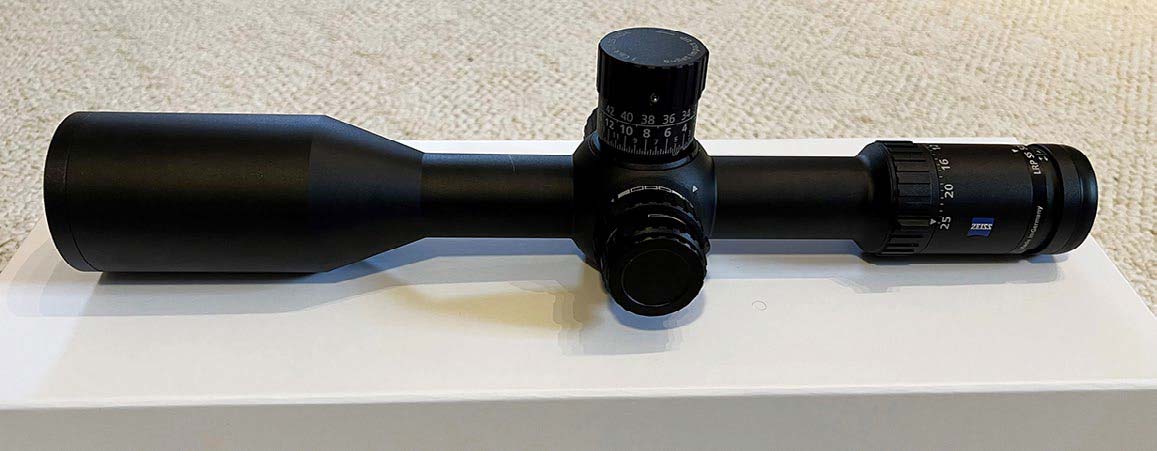
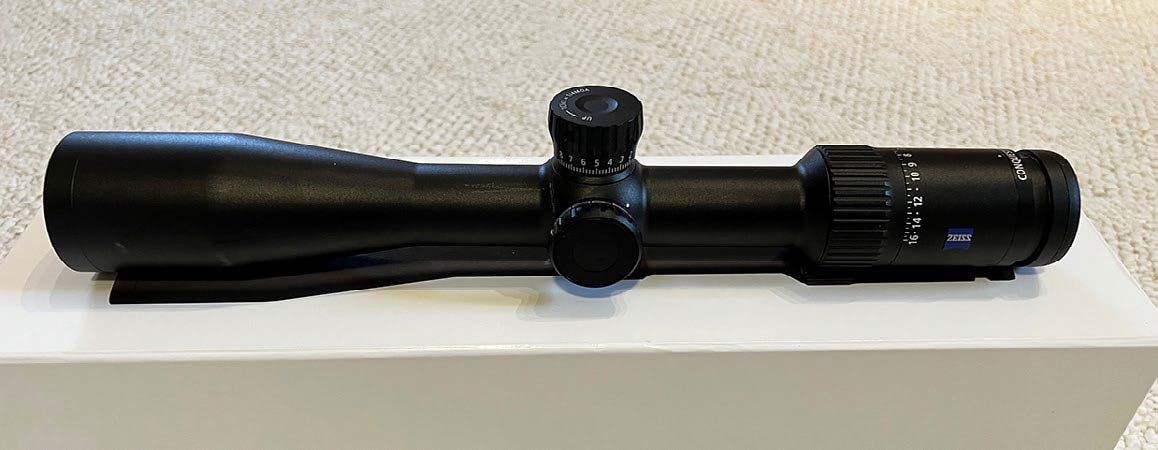
The big advantage with the reticle sitting forward of the erector lens system (first focal plane), however, is that the yardages that the secondary hash marks represent never change as magnification changes. With second focal-plane scopes, the sub-tension or distance between the secondary hash marks changes as magnification is adjusted. That makes the yardage they represent change accordingly. With both systems, the primary crosshair remains zeroed at a consistent yardage. If your primary crosshair is zeroed for 200 yards, it remains at 200 yards regardless of magnification with both systems. However, with the first focal plane, it changes in size as magnification is adjusted. For the shooter who prefers a ballistic reticle and wants the secondary hash marks to remain at a consistent yardage, the first focal-plane scopes definitely have the advantage.
Most hunters who use variable magnification scopes grew up with second focal-plane scopes and likely that many never even knew there was an option. First focal-plane scopes are typically only found in higher-end models, whereas second focal-plane scopes are found from base models up to those at the highest end.

The biggest advantage the second focal-plane scope offers is the constant reticle size. Its downfall is if you like ballistic reticles. When the use of the secondary hash marks is required, the distance is typically long enough to require the use of maximum magnification. As long as you know what yardage each secondary hash mark represents at maximum magnification, you really aren’t handicapped at all if you only use maximum zoom for long-range shots. It’s only if you try to use those secondary hash marks at a magnification other than maximum that some quick math is required. As the primary crosshair stays constant and is typically zeroed at 200 yards, there is no issue using it at lower magnification for closer shots.
Dual Focal Plane Rifle Scope
Quigley Ford offers what they call a dual focal-plane scope. It has a ballistic-type reticle in front of the erector lens system in the first focal plane, then fairly thick, horizontal lines on each side of the vertical line behind the erector lens system in the first focal plane. Those lines match up with the primary crosshair in the first focal plane. The idea behind it is that the secondary hash marks retain a consistent yardage throughout the zoom range, but the thicker lines in the first focal plane help in low-light conditions at low magnification for closer shots. The two thick horizontal lines on the primary crosshair have a gap between them. This allows the shooter to see the thinner crosshair in the first focal plane. This system does have some merit, but at low magnification, the gap between the lines is considerable. The thin first focal plane line can also be difficult to see, so placing the crosshair precisely can be a challenge. Personally, if I was stuck on having a first focal-plane scope, I’d look at one with an illuminated reticle for use at low magnification, versus having a dual focal-plane scope.
For those wanting a first focal-plane scope, be prepared to shell out big bucks. That’s the case not because of the forward reticle placement, but because these typically come with a lot more bells and whistles.
The first thing you’ll notice on a first focal-plane scope is that most have a larger tube size than normal. The amount of magnification range and the amount of MOA adjustment is to some degree limited by tube size. All the mechanics of these two systems must fit within the tube. If you want to increase their range, tube size must increase accordingly. At one time, one-inch tubes were the most popular in hunting scopes in North America and that’s why most of them are limited to a magnification range of three to four times. Swarovski and Zeiss did manage to squeeze five times magnification out of one-inch tubes. Zeiss has since dropped the HD5 line, but Swarovski still makes the Z5 available in 2.4-12, 3.5-18 and 5-25 magnification ranges. But now, even most North American manufacturers are moving to 30mm tubes on all but their base models. Once magnification exceeds a factor of five times, then larger tube sizes are required. Zeiss offers a model with eight times zoom range in a 30mm tube. To get greater than that, a further increase in tube size is required.
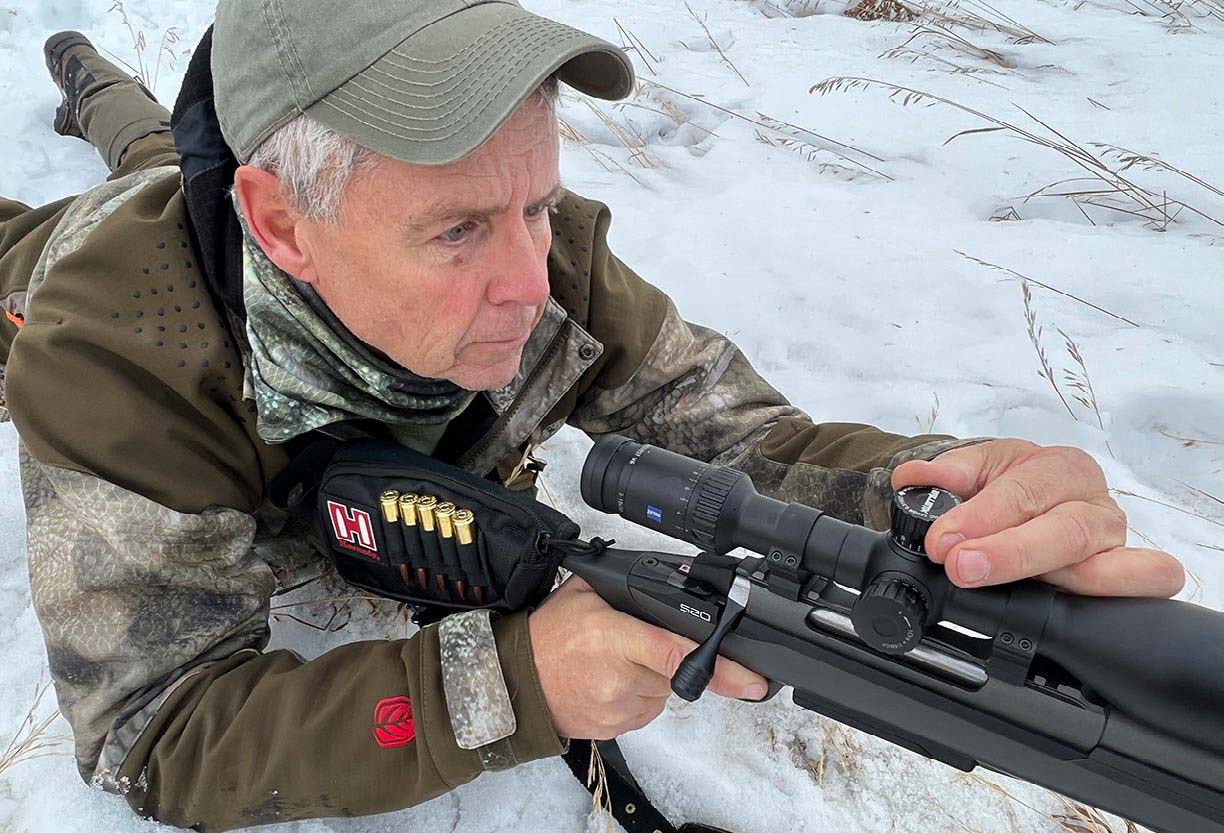
Increasing the amount of elevation adjustment also requires an increase in tube size. On many of the high-end target scopes designed to shoot extreme distances, you’ll see 34mm or even 36mm tubes. With a standard one-inch tube, the average is 40-50 MOA of adjustment. With a 30mm tube, the average is 70-80MOA of adjustment. Once you move into the 34mm and 36mm tubes, it’s common to see 110-120 MOA of adjustment. This type of elevation adjustment is required for shooting extreme ranges. You can also count on these scopes having very high-quality lenses and the high price tag that comes with all that. They are also typically quite heavy, so if you are outfitting a lightweight mountain rifle, that is something to consider. The fact that they are first focal plane in itself doesn’t lead to all this cost and weight increase. It is more so that all the other necessities of long-range shooting that are built into these scopes are primarily used for precision target competitions.
Second focal-plane scopes are more widely available. They run the gambit from $100 budget scopes to those costing $5,000 or more. You can pick the bells and whistles you need and have a wide variety of options. I run second focal-plane scopes exclusively on my hunting rifles. I’ve got a few ballistic reticle models, but recently, I have been moving more to a regular duplex reticle model with exposed elevation turrets. I use custom yardage-indicated turret caps from Ballistix on these scopes, so there’s no need to remember the yardage values on the secondary hash marks of a ballistic reticle. It’s just a simple matter of turning the elevation turret to the indicated yardage and shooting. The older I get, the simpler I like my hunting gear to be, and for long-range hunting, it just doesn’t get any easier. My go-to hunting scope these days is a Zeiss V4 4-16×44 with the custom yardage turret.
I did just pick up a new Zeiss LRP S5 5-25×56 to mount on a 300 Winchester Magnum that I plan to use for some 1,000-yard-plus plinking. I may end up trying it out as an elk rig, too, but I can’t see using it a lot for hunting.
There is no right or wrong answer when it comes to selecting a first or second focal-plane scope. It’s just important to understand how each style functions, then choose the style that best fits your shooting needs and your budget.
Per our affiliate disclosure, we may earn revenue from the products available on this page. To learn more about how we test gear, click here.