




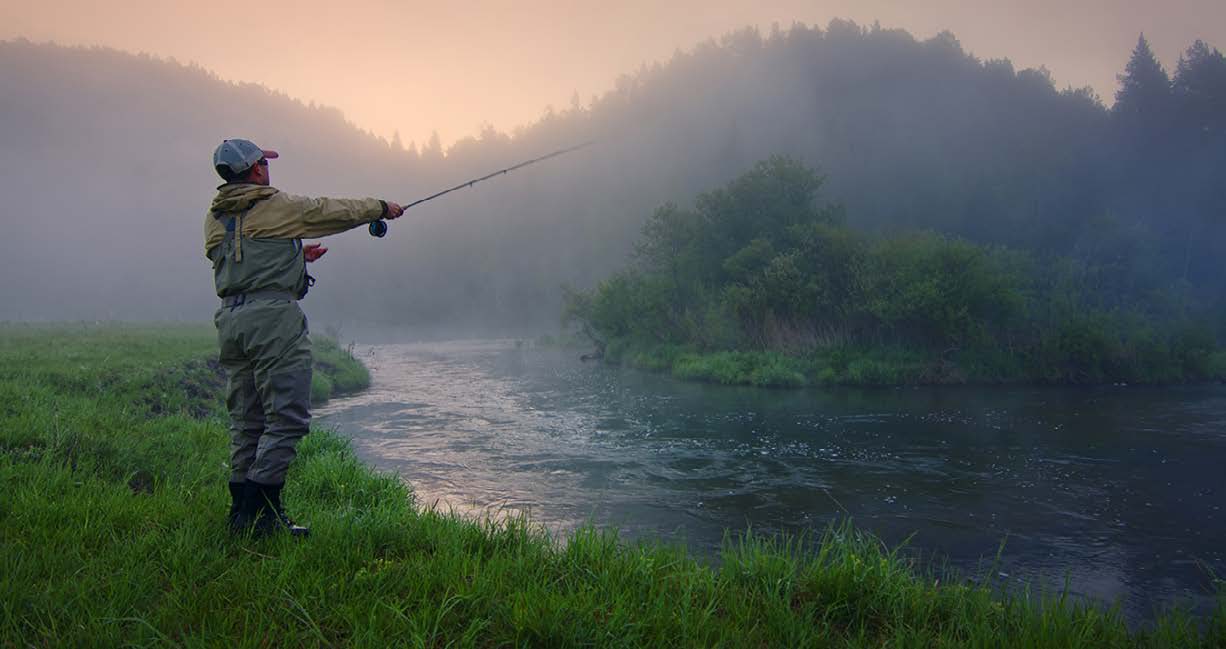
Go ahead. Ban it.
Ban hunting. Ban fishing. Shut down the seasons, eliminate the tags, close the hatcheries, and send the wildlife agencies looking for a new source of funding.
In fact, if Oregon truly wants to understand the value of hunting and fishing, then IP28 might be the fastest way to learn.
At first, many people would celebrate. Social media would be filled with photos of deer, elk, bears, and salmon accompanied by declarations that wildlife had finally been liberated from hunters and anglers. Activists would claim a victory for animals. Politicians would take credit for protecting nature.
For a little while, it might even appear they were right.
Then reality would arrive.
Because hunting and fishing are not simply recreational activities. They are the foundation upon which modern wildlife conservation in North America was built. The same hunters and anglers who are often portrayed as taking from nature are, in many cases, the people paying to protect it. They fund habitat restoration, fish hatcheries, wildlife research, public access programs, and the very agencies responsible for managing the resources everyone enjoys.
Remove hunters and anglers from the equation, and something unexpected happens. The money disappears. The management disappears. The accountability disappears.
And that’s where Oregon’s grand experiment would begin.
If history has taught us anything, it is that good intentions and successful outcomes are not always the same thing. Time and again, policies designed to solve one problem have created entirely new ones. Wildlife management is no different. Nature doesn’t respond to campaign slogans, political talking points, or social media trends. It responds to biology, habitat, funding, and science.
The irony is that a hunting and fishing ban might ultimately do more to strengthen support for hunting and fishing than any marketing campaign ever could. Because once the consequences become impossible to ignore, when conservation budgets shrink, wildlife conflicts increase, and the costs begin showing up in taxpayers’ wallets, people may rediscover something previous generations already understood.
Wildlife doesn’t manage itself.
And conservation isn’t free.
Oregon’s History with Good Intentions and Unintended Consequences
If Oregon were to ban hunting and fishing, supporters would undoubtedly promise positive outcomes. Wildlife would be protected. Ecosystems would thrive. Nature would finally be allowed to regulate itself without human intervention.
The problem is that Oregon has a long history of discovering that policy goals and real-world results don’t always align.
Take Measure 110, for example. In 2020, Oregon became the first state in the nation to decriminalize possession of small amounts of hard drugs. Supporters viewed it as a groundbreaking approach that would treat addiction as a public health issue rather than a criminal one. The idea was praised nationally as a bold alternative to traditional drug enforcement policies.
What followed, however, was far different from what many advocates envisioned. Over the next several years, Oregon struggled with rising overdose deaths, growing public concerns about open drug use, and widespread criticism that treatment infrastructure had not been established quickly enough to support the policy. Eventually, lawmakers reversed significant portions of Measure 110, effectively acknowledging that the results had fallen well short of the original vision.
The lesson wasn’t necessarily that the goal was wrong. The lesson was that complex systems often react in ways policymakers don’t anticipate.
Wildlife management operates under the same reality.
The same pattern can be seen in Oregon’s approach to forest management and wildfire prevention. For decades, debates surrounding logging, forest thinning, prescribed burns, and environmental protections have shaped policy decisions across the state. While many of those decisions were made with conservation in mind, Oregon has repeatedly faced catastrophic wildfire seasons that have burned millions of acres, destroyed communities, degraded wildlife habitat, and strained state resources.
No serious observer would suggest that any single policy caused Oregon’s wildfire challenges. Forest management is extraordinarily complicated. Climate, drought, insect infestations, fuel loads, and human activity all play a role. But the wildfire crisis serves as another reminder that managing natural resources requires more than good intentions. Ignoring practical realities can create consequences that are both costly and difficult to reverse.
That theme appears repeatedly throughout Oregon’s modern political history. Time after time, leaders have embraced policies that promised transformative results only to discover that real-world systems are far more complicated than campaign talking points. Whether the issue involves housing, drug policy, public safety, land management, or environmental regulation, the state has often learned the hard way that unintended consequences are not exceptions—they are often the rule.
Which brings us back to hunting and fishing.
Supporters of a ban would likely argue that wildlife populations would flourish once hunting seasons ended and fishing pressure disappeared. It sounds logical on the surface. Fewer animals harvested should mean more animals on the landscape.
But wildlife management isn’t that simple.
What happens when deer populations exceed available habitat? What happens when elk herds grow beyond what winter ranges can support? What happens when predators expand into areas where livestock producers and rural communities bear the costs? What happens when hatchery funding dries up because the anglers who largely fund those programs are gone?
These aren’t theoretical questions. They are exactly the kinds of unintended consequences that resource managers are tasked with preventing every day.
Oregon’s history suggests a simple truth: whenever policymakers assume a complex system will behave exactly as planned, reality usually has other ideas. If the state were to eliminate hunting and fishing, there’s little reason to believe this experiment would be any different.
In fact, if Oregon’s past is any guide, the most predictable outcome may be the one nobody intended.
The Consequences Nobody Planned For
The strongest argument against banning hunting and fishing isn’t cultural. It isn’t political. It isn’t even economic.
It’s biological.
Supporters of a ban would likely envision a future where wildlife populations thrive, ecosystems return to a more natural balance, and animals no longer face pressure from hunters and anglers. On paper, that sounds like a victory.
But wildlife management has never existed on paper.
It exists in the real world, where every action—or inaction—creates consequences.
The first consequence would likely be financial. Oregon’s fish and wildlife programs don’t operate on good intentions alone. They require funding. Fish hatcheries, habitat restoration projects, wildlife surveys, public access programs, boat launches, hiking paths, enforcement officers, and conservation research all come with a price tag. A significant portion of that funding comes directly from hunters and anglers through license sales, tags, permits, and Pittman-Robertson federal excise taxes on firearms, ammunition, archery equipment, fishing tackle, and boating equipment.
Remove hunters and anglers from the equation, and that revenue largely disappears.
The question then becomes simple: who and what replaces it?

Would taxpayers be willing to fund wildlife management at the same level? Would lawmakers prioritize fish and wildlife agencies over schools, roads, housing, public safety, and countless other competing budget demands? History suggests that when budgets get tight, conservation programs are rarely first in line.
Then come the biological consequences.
Deer populations don’t stop growing because a hunting season is canceled. Elk don’t suddenly limit their own numbers because a ballot measure passes. Wildlife populations are ultimately constrained by habitat, food availability, disease, predation, and management decisions.
When those populations grow beyond what the landscape can support, problems follow.
Crop damage increases. Vehicle collisions become more common. Disease spreads more easily through concentrated populations. Accidental interactions between dangerous animals and humans increase. Habitat quality declines as animals consume available forage faster than it can regenerate. Ironically, the very animals a ban was intended to protect can end up suffering the most when populations exceed habitat carrying capacity.
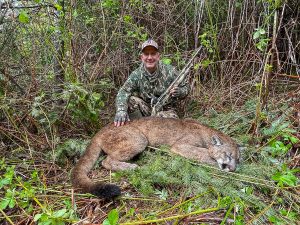
At the same time, predator management becomes increasingly difficult. Conflicts involving wolves, mountain lions, bears, and livestock producers don’t disappear because hunting ends. In many cases, they become more contentious because managers have fewer tools available to address growing problems.
And then comes the political reality.
Five years after a hunting and fishing ban, the conversation in Oregon might look very different from what it did on the day the legislation passed.
The same lawmakers who celebrated the ban could find themselves facing angry farmers dealing with crop losses. Rural communities could demand solutions for increasing wildlife conflicts. Taxpayers could question why conservation budgets require additional public funding. Insurance costs will increase with increased auto-animal collisions. Wildlife managers could warn that declining habitat quality and shrinking agency resources are creating problems that are becoming harder to solve.
Eventually, someone would ask an uncomfortable question:
“What was funding and managing all of this before?”
The answer, of course, would be hunters and anglers.
What begins as a political victory could quickly become a political liability. The state might discover that eliminating hunting and fishing didn’t eliminate wildlife management challenges—it simply transferred the costs to everyone else.
And that’s where the irony becomes impossible to ignore.
The people often portrayed as the problem were helping pay for the solution all along.
If Oregon were to ban hunting and fishing, the most likely outcome wouldn’t be a conservation utopia. It would be a statewide lesson in how conservation actually works. And if history is any guide, the state could eventually find itself reversing course—not because hunters and anglers demanded it, but because reality did.
By then, Oregon may rediscover a lesson that wildlife managers have understood for generations: effective conservation isn’t about choosing between people and wildlife.
It’s about recognizing that the two are connected, whether we like it or not.
Conclusion: Be Careful What You Wish For
Perhaps the greatest irony of an Oregon hunting and fishing ban is that it might accomplish the exact opposite of what its supporters intend.
Not because wildlife would suddenly disappear. Not because hunters and anglers would stop caring about conservation. But because the public would finally see, firsthand, the role outdoorsmen have been playing all along.
For generations, hunters and anglers have been easy targets in political debates. They are often portrayed as consumers of wildlife rather than contributors to its success. Yet the North American conservation model tells a very different story. The wildlife populations we enjoy today—from thriving elk herds and abundant deer populations to restored turkey numbers and countless fisheries—didn’t happen by accident. They were built through active management, scientific oversight, habitat investment, and a funding structure supported largely by the very people who spend their mornings in a deer stand or on a riverbank.
Most people never think about where that funding comes from. They don’t think about the biologists conducting population surveys, the hatcheries raising fish, the habitat projects restoring wetlands, or the conservation officers protecting public resources. They simply assume those things exist and always will.
A ban would force a different conversation.
When conservation dollars disappear, when wildlife conflicts increase, when habitat programs struggle for funding, and when taxpayers are asked to fill the gap, the public may begin asking questions they never had reason to ask before. They may discover that the men and women buying hunting licenses and fishing permits were doing far more than pursuing a hobby. They were helping sustain an entire conservation system.
In that sense, a ban could create something unexpected: a newfound appreciation for the outdoorsmen and women who have quietly carried much of that responsibility for decades.
People often don’t recognize the value of something until it’s gone.
We see it with traditions. We see it with freedoms. We see it with institutions that operate effectively enough to be taken for granted.
And we would likely see it with hunting and fishing.
If Oregon were to eliminate those pursuits, the state might eventually learn that hunters and anglers were never standing in the way of conservation. They were among its strongest advocates, its most consistent funders, and some of its most dedicated participants.
The real lesson wouldn’t be about hunting or fishing at all.
It would be about unintended consequences.
It would be about the danger of believing that complex systems can be improved simply by removing the people who help support them.
And it would be about recognizing that conservation is not a battle between humans and nature. It is a partnership between the two.
If Oregon ever chose to conduct this experiment, the outcome might be surprisingly simple. Years from now, after the headlines fade and the reality sets in, the state could find itself looking back at hunters and anglers with a level of respect and appreciation it never fully realized it had lost.
By then, the outdoorsmen Oregon once tried to sideline may finally receive the recognition they deserved all along. By then, it may be too late to re-create a generation of lost hunters and anglers.
Per our affiliate disclosure, we may earn revenue from the products available on this page. To learn more about how we test gear, click here.