




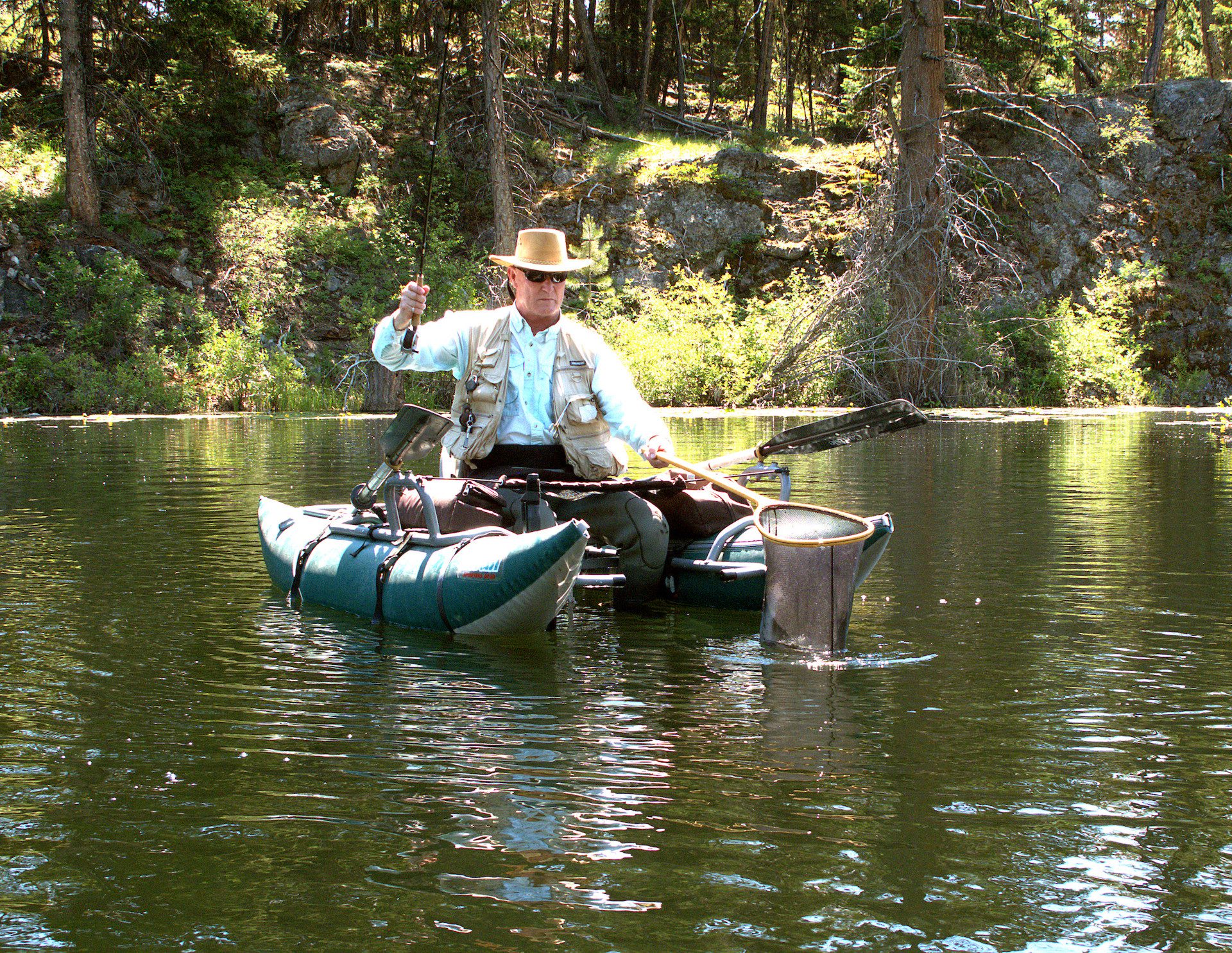
Owning a fly fishing vest is a personal choice. You don’t really have to have one to fly-fish. You can still go fly-fishing with a rod, reel, line, and a few flies—in truth, that’s all you really need. As we mature into the sport, though, we tend to collect “stuff”. This “stuff” consists of everything from lengths of once-used monofilament leader and torn-up old flies on still-good hooks, to extra spools of specialty fly lines that we only actually use once a decade but still insist on carrying with us at all times. Packing all this paraphernalia around in the pockets of our fishing jacket just doesn’t work after a while, and that’s when we finally decide we should invest in a fly vest. After all, what good is all this great stuff if we can’t find what we need when we need it? The best fly fishing vests are simple contraptions designed to keep all the various components of the art organized in a relatively logical manner.
Finding the Best Fly Fishing Vests for Your Needs
There are, however, things to look for when purchasing a vest. Just like most other items, there are cheaply made expensive vests and lower-priced high-quality vests—and everything in between. You can stumble into a poor vest with ease, so here are a few pointers to help you out. Whether you’re searching for the best fly fishing vest for beginners or a premium option for serious anglers, understanding key features will help you make the right choice. Here are some personal favorites and staff picks to get you started:
*This article was written without bias or profit in mind. The affiliate links below found in the article were found after completion of the author’s submission. If you would like to support us, so we can create more of this content for you, then you can purchase the products from the affiliate links below. Thank you!
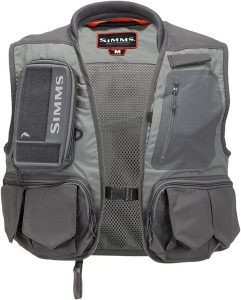
Best Overall Fly Fishing Vest: Simms Freestone Fishing Vest
Overview:
This was our pick for the best fly fishing vest for a few reasons. One being its thoughtful and sleek design in addition to its comfortable feel for those long mornings, days, and nights on the river. Two, although it’s lightweight, this thing is built to last, it’s an extremely durable vest and also water repellent. But what separates this vest is its ability to cater to all types of fishermen and situations. It is simple enough for a novice but carries enough for an expert and/or a guide.
The Simms Freestone boasts a padded collar and breathable mesh liner in addition to a nylon exterior. There are many cheaper options but you won’t find the triple threat of lightweight, breathable, AND durable at a better price. Simms materials are built to last and if you can only buy one fly fishing vest for the next 10 years, you can’t go wrong with the Simms Freestone Fly Fishing Vest.
Pros:
- Design and durability
- Made in the USA (Montana, to be exact)
- Quick drying
- Comfort
- Convenience
- Customer Service
- Zippers that won’t rust or wear out
Cons:
- Not machine washable
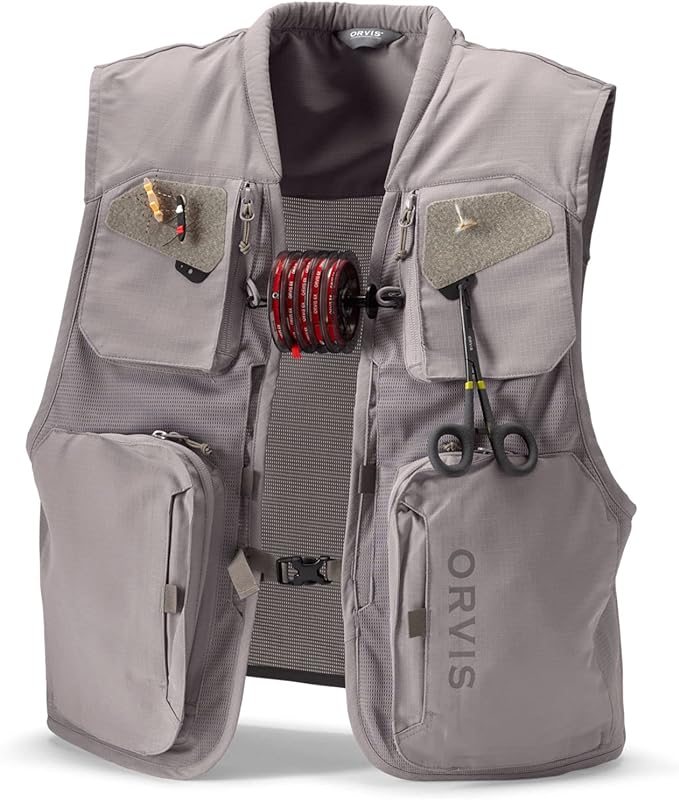
Best Looking Fly Fishing Vest: Orvis Clearwater Mesh Fly Fishing Vest
Overview:
The Orvis Clearwater Fly-Fishing Vest could have won our best overall if it had a few more pockets but it takes the cake on best looking and could just as serve as best overall depending on preference.
It fits up to 3 fly boxes comfortably and has some large pockets for heavier carriers. From a personal feel, the bulky pockets on the bottom got in the way of some rod placement and while fighting fish. It’s great for storing and but not as efficient as the Simms for separating (less pockets).
Pros:
- Design and durability
- Made in the USA (Kentucky & Tennessee)
- Quick drying
- Comfort
- Simple
- Customer Service
- Zippers that won’t rust or wear out
- Machine Washable
Cons:
- Lacks pockets for separating gear to the extent of the Simms vest.
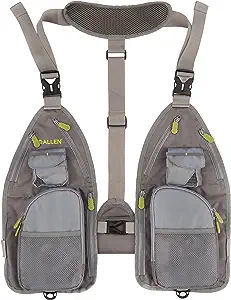
Lightest Fly Fishing Vest: Allen Company Ultra-Light Gallatin Strap Pack Fishing Vest
Overview:
The Allen Company Ultra-Light Gallatin Strap Pack Fly Fishing Vest is a great low-cost option for a fly-fishing vest and has even gained traction in the hiking and running communities as well. As mentioned, it is light in weight and in feel (no backing – very cool for hot days) but the straps do create heat and may leave sweat marks in those areas as they have to cling tight for the design to work.
Don’t let the price fool you, it is definitely built to last.
Pros:
- No back, so you can still use a backpack and get rid of one as needed
- Durability for its light nature
- Customizable with loops above pockets to add zingers
- 14 pockets
Cons:
- Some users reported chaffing or discomfort in the neck strap
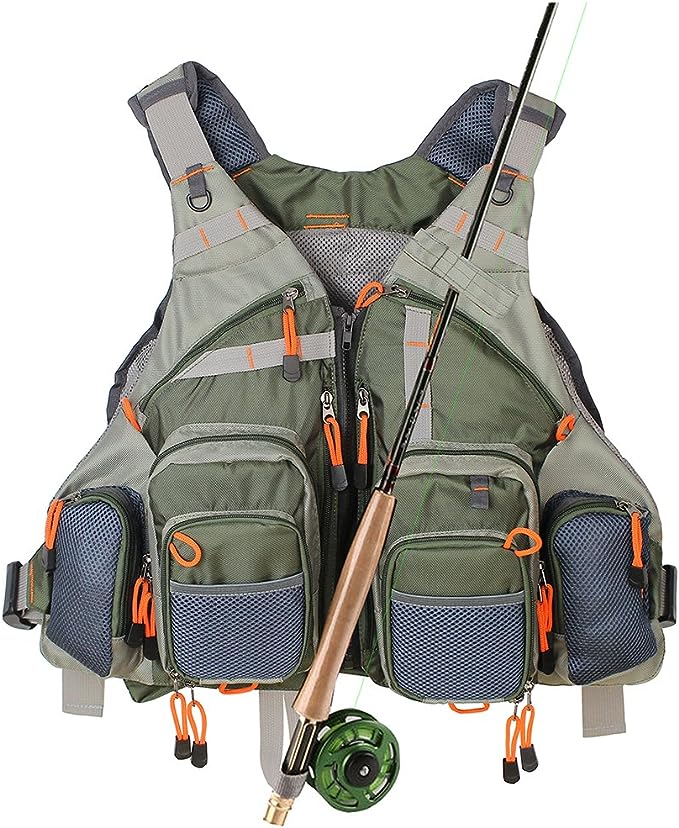
Most Adjustable Fly Fishing Vest – Kylebooker Fishing Vest
Overview:
Don’t let a reasonable price fool you. The Kylebooker fly-fishing vest is a high-quality vest with an above-average mesh fabric that is breathable, light, water-resistant, and durable enough for all seasons of fly-fishing.
Side note: Check your pockets! Some users have thought electronics (phones and cameras) were meant for specific pockets but later found drain holes in those pockets.
Pros:
- Great value, low price
- Very adjustable to size, great for both men and for women
- 8 different color options
- 17 pockets and a built-in rod holder
Cons:
- Too many zipper loops can get you caught up
- Pocket orientation isn’t as well-crafted as higher-priced items but it does have plenty of storage for the prepper in you
Best Fly Fishing Vest for the Heat: Columbia Men’s Henry’s Fork V Vest
Overview:
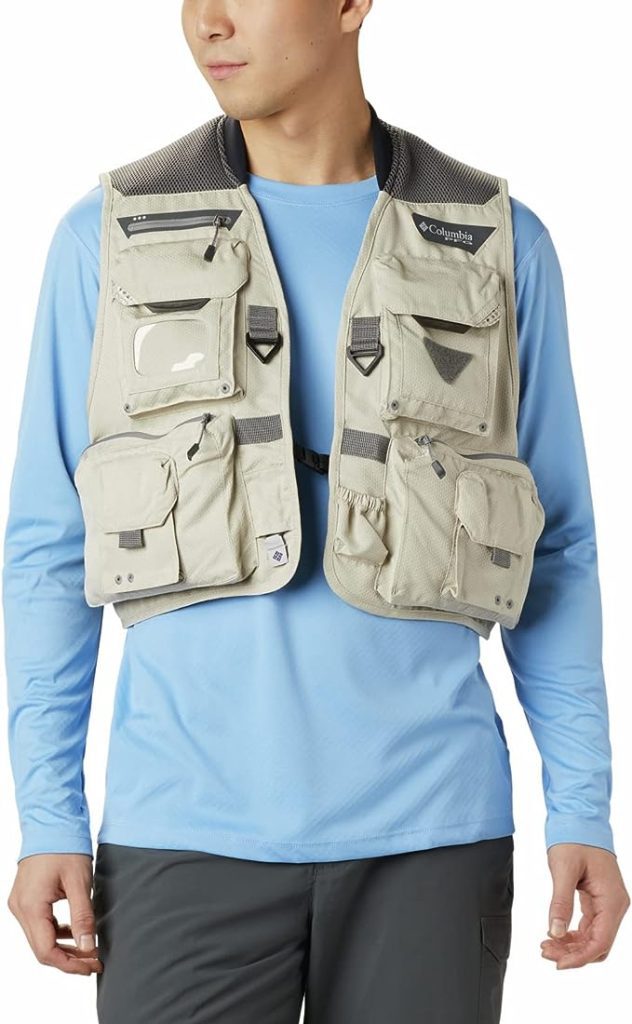
The Columbia Men’s Henry’s Fork V Vest is a great fly fishing vest for a few different occasions – but none other than those who are fishing in the heat! It’s a great, light vest for those who don’t need much for the day or for those who bring a pack and need a simple light vest for while they’re in the water and don’t want to lose their spot (for those fishing in popular honey holes).
Pros:
- Machine washable
- 12 pockets
- Beverage-friendly pocket
- Rod holder
Cons:
- Least durable on the list
How to Choose the Best Fly Fishing Vests
Haven’t Decided Yet?
If these options didn’t do it for you, let us help you out when selecting the best fly fishing vest for you with these important parts to consider. Also, consider how you will be fishing, from a boat or the shore.
Materials:
The materials that vests are made out of vary; most are constructed from a moderate-weight cotton duck (canvas). Others, especially the “floater” vests, are made from nylon, and still others are constructed mostly of mesh material for use in hot weather and to reduce weight. All three materials work, but I prefer the cotton. I find nylon to be too hot in the warm weather, and by its very nature, it doesn’t breathe, so you sweat more. It is also more susceptible to deterioration over time due to sun exposure. The mesh vests usually don’t have enough pockets for my liking but are really nice when it’s hot out.
Cotton duck vests are lightweight and breathable. They dry quickly when wet and last a long time. Be careful to avoid vests that are made from very lightweight cotton duck. They are too thin and tend to tear easily if caught on branches, etc.
Another neat invention that I think is a good idea is the convertible jacket. These are nylon jackets that have a roll-up or unzippable hood as well as thing, unzippable arms . . . sort of a super-vest. They can be expensive but, while I have never actually tested one out, they might be something worth your look as they combine a vest with a light weather rain jacket. Just make sure it meets the rest of the criteria I cover below.
No metal closures:
Fly-fishing requires that the angler be near or in water (sometimes all the way in if we’re not careful), so vests are constantly damp and often soaked in fresh and salt water. This places the vest in a perfect environment to develop rust or corrosion on any metal surfaces, zippers, or clasps. When you go shopping for a vest, avoid ones that utilize metal snap closures or metal zippers. Nylon zippers and Velcro closures are the way to go. Also, make sure that the Velcro strips used as closures are big enough; some vest manufacturers cut costs by using inordinately small pieces of Velcro to close large pockets.
Years ago, the quality of nylon zippers was such that they would pull apart with regularity. Today’s good nylon zippers are quite strong and very reliable. Best of all, they don’t rust.
Stitching:
Regardless of the material you prefer, examine the stitching on the vest. It should be straight and made from heavy thread. Wandering stitching is a sign of inattention to detail and hints at poorer quality. And remember to check the stitching on the Velcro closures; cheaper vests will have minimal stitching there, and the Velcro soon tears off. The better vests have stitching around the perimeter of the Velcro patch and then ‘X’ across its center for added security . . . great idea. If you find a vest you like, but it does not have this feature, I recommend that you do it yourself. It’s frustrating when your pocket closure tears free and exposes the contents to potential loss.
Floaters:
Some of the newer vests are personal flotation device vests. They are much the same as an inflatable life jacket, having a plastic liner inside and an attached CO2 cartridge with a tag hanging from a pocket stating “Jerk to Inflate” (I always tell my buddy I’d have to get him to pull on mine ‘cause I’m no jerk and I might drown).
In truth, though, these work well and can save your life. They are heavier and more bulky than standard vests, though. Some ‘floater” vests are constructed with buoyant foam linings like the old-style life jackets; these work well too, but are terribly bulky. If you are a poor swimmer or just like added security then you may want to check out the various options in floatation device style vests.
Pockets:
The best thing about vests is that they have huge amounts of pockets, or should. My latest has 29 of them . . . I just love it. While you may not need 29 pockets, you should pack your largest fly box and reel with you when you go to buy a vest and ensure that the pockets of any vest you are considering buying are large enough to accommodate them. If you have more than one large fly box then you will need a vest with more than one large pocket. A little forethought here can help you avoid ending up with a vest that won’t serve your needs.
Check the back of the vest too. It should have a very large pouch-type pocket in the rear to store rain gear and lunches. It should also have a sewn-in D-ring on a strap at the nape of the neck. This ring is for hanging the vest up and also to clip your retractable net reel, so your net is stored out of the way. Make sure you check its stitching; it will support all the weight of the loaded vest when you hang it up.
Fly storage:
On the front of the vest near the breast pockets, there should be at least one fleece patch. This is for storing your wet flies immediately after fishing with them. It holds them fast while allowing them to dry again before putting them back in your fly box. If you stick non-stainless-steel flies back in your box wet, they will rust and make a mess; keep that in mind when fishing.
Sizing:
You need to check the size of the vest as well to ensure a good fit. Make sure you get a vest large enough to fit comfortably over a warm jacket and allow room to freely move and cast.
Most of us fish in cooler weather, and you’ll want to be able to wear the vest during those times as well as during warmer conditions.
Length:
As a last note, you need to consider the type of wading you do most often. If you river wade only to hip depth most of the time then most any vest length will do, but if you deep wade, especially in the ocean, or you belly-boat, then you should seriously consider a “shorty” vest. The shorties, as the name infers, hang about stomach length, whereas the standard-length vests hang to about the upper hips. The short length of the shorty vests prevents the bottom pockets from being soaked while deep wading. There are combination vests out there as well and I really like them. They are a standard-length vest but have a zippered bottom section that can be unzipped and removed if you plan on wading deep; it’s the best of both worlds.
Read all of Bill Luscombe’s expert fly fishing articles.
Per our affiliate disclosure, we may earn revenue from the products available on this page. To learn more about how we test gear, click here.