



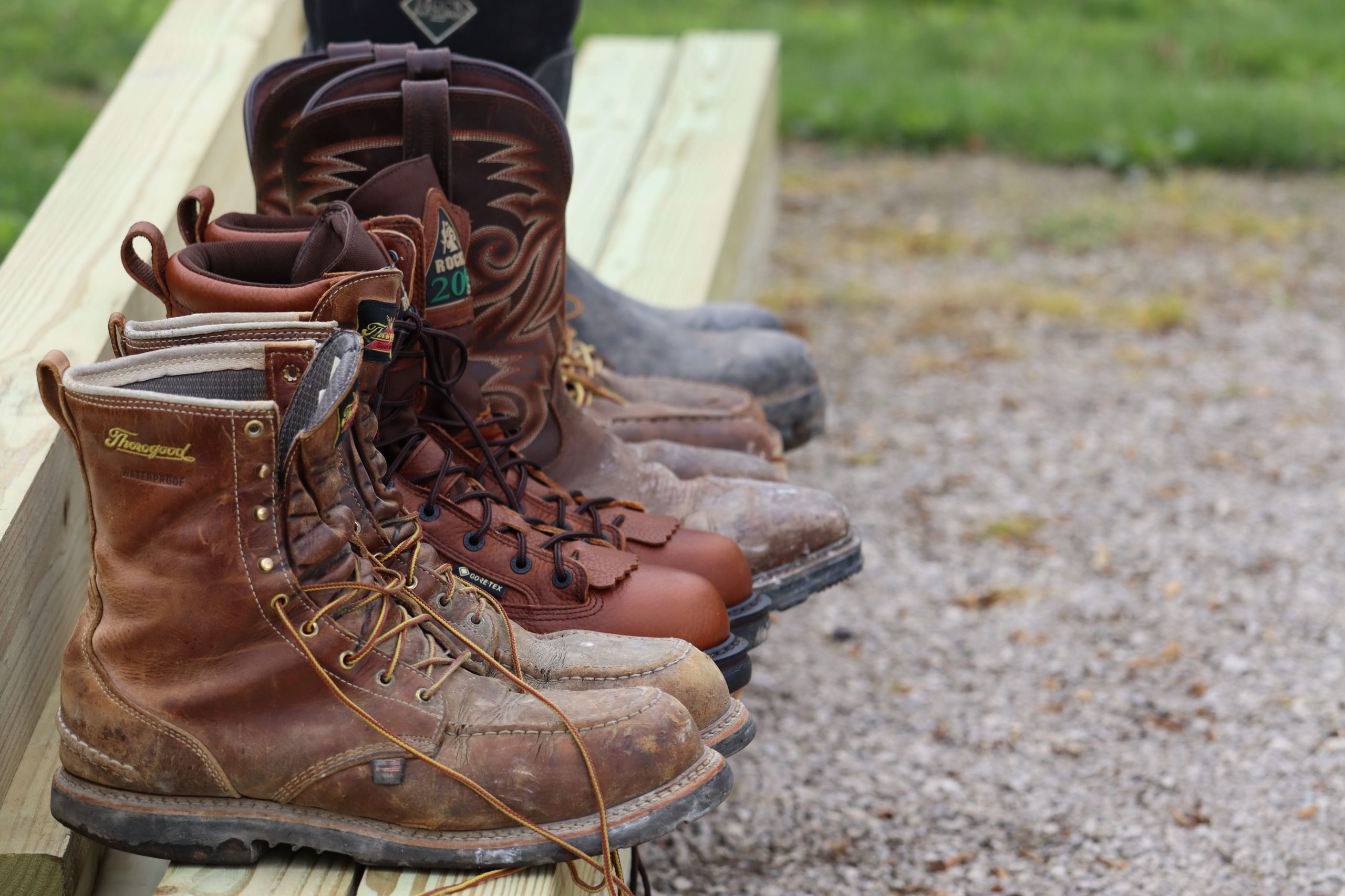
If you make your living on your feet, you already know cheap boots cost more in the long run. A bad pair will wreck your back, blister your heels, soak through in the rain, and leave you limping by lunch. A good pair becomes part of your daily routine you trust them, depend on them, and don’t think twice when the day gets rough, or at least your feet don’t.
I’ve always believed the best work boot depends on the kind of work you do. A welder doesn’t need the same boot as a farmer. A concrete finisher needs something different than a ranch hand or utility worker. That’s why I don’t believe in one “best boot” for everyone.
Instead, I picked six brands that consistently earn respect: Durango, Rocky, Thorogood, Irish Setter, Danner, and Muck Boot. Each one does something especially well, and each shines in the right environment. If you’re trying to spend your money wisely, here are the work boots I’d recommend and why.
Best Work Boots at a Glance
The right work boot depends on where you spend your day. Here’s a quick look at my six picks and where each one makes the most sense.
| Award | Work Boot | Best For | Why I Picked It |
|---|---|---|---|
| Best Overall | Thorogood American Heritage | Construction, electrical, warehouse work, carpentry and mechanics | The best balance of comfort, durability, traction and all-day support across multiple trades. |
| Best for Concrete | Irish Setter Ashby | Warehouses, delivery work, indoor maintenance, shops and light construction | Comfortable underfoot for long shifts on concrete and other hard surfaces. |
| Best for Rugged Terrain | Rocky Logger Boots | Logging, land clearing, fence work, excavation and property maintenance | Aggressive traction and strong ankle support make them a better choice for rough or uneven ground. |
| Best Pull-On | Durango Rebel Steel Toe | Ranching, farming, trucking, mechanics and equipment operation | Easy on and off with the flexibility and protection needed for active work around trucks, farms and equipment. |
| Best Lightweight Waterproof | Rocky MonoCrepe Wedge | Service work, maintenance, route jobs and mixed indoor/outdoor work | A lighter waterproof design for workers who cover a lot of ground without needing a heavy logger boot. |
| Best for Wet Weather & Mud | Muck Boot Originals | Farms, livestock, landscaping, mud, wet weather and winter chores | Fully waterproof construction makes them the obvious choice when keeping your feet dry matters most. |
My Pick for the Best Overall Work Boot
If I could only buy one pair for everyday work, I’d choose the Thorogood American Heritage. It offers the best combination of comfort, durability and versatility for workers who spend long days on their feet but don’t need a highly specialized boot.
Best Overall Work Boot: Thorogood American Heritage
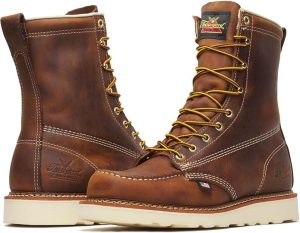
If someone asked me for one boot that can handle most trades, this is where I’d start. Thorogood has built a reputation the old-fashioned way: durable boots that workers keep buying again. Their American Heritage line is especially popular among electricians, carpenters, mechanics, warehouse crews, and anyone who spends long hours on hard floors.
What makes them stand out is balance. You get comfort, durability, traction, and structure without the boot feeling like a brick tied to your foot. The wedge sole is a huge advantage if you walk concrete all day. It spreads impact better than aggressive lug soles and helps reduce fatigue in your knees and lower back. If you’ve ever done ten-hour shifts on concrete, you know that matters. I also like that Thorogood boots break in better than many stiff work boots. Once they mold to your foot, they become a pair you don’t want to take off.
Best for: Construction, electrical, warehouse work, carpentry, mechanics, factory floors.
Why I’d choose them: If I needed one dependable pair for daily use across multiple job types, this would be hard to beat.
Best for Long Days on Concrete: Irish Setter Ashby
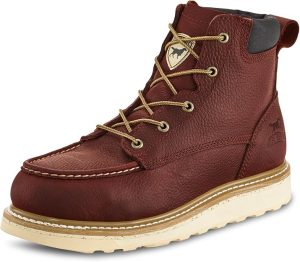
Irish Setter has always done one thing especially well: comfort right out of the box. The Ashby is the kind of boot you can wear the first day and not regret it halfway through the shift. That’s rare in leather work boots.
For guys working warehouse jobs, machine shops, delivery routes, retail maintenance, or indoor trades, comfort can matter more than extreme toughness. If you’re walking all day on smooth surfaces, a heavy stiff logger boot is overkill.
The Ashby gives you softer underfoot feel, solid leather construction, and a roomy fit that a lot of workers appreciate. Some brands run narrow and punish wide feet. Irish Setter tends to be friendlier in that department. They also look good enough that you don’t feel silly wearing them after work. That matters more than some folks admit.
Best for: Warehouse work, delivery jobs, indoor maintenance, light construction, shop work.
Why I’d choose them: If comfort is priority number one and you’re on hard indoor surfaces all day, these make a lot of sense.
Best Boot for Rugged Terrain and Outdoor Work: Rocky Logger Boots
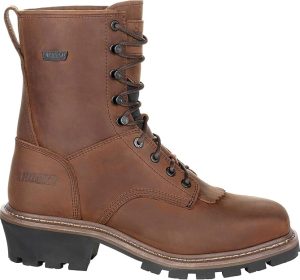
Some jobs demand traction and support more than anything else. If you’re working on hillsides, in timber, on uneven ground, or anywhere footing isn’t guaranteed, this is where a true logger-style boot earns its keep. Rocky Logger boots are built for that kind of environment. The aggressive outsole bites into dirt, mud, and loose ground in a way flat soles simply can’t. Add in the higher heel, and you get better stability when climbing, digging, or working slopes.
These boots also bring solid ankle support to the table. When you’re hauling gear, stepping over debris, or navigating rough terrain, that extra structure makes a difference by the end of the day. They’re not as forgiving on concrete as a wedge sole, that’s just the trade-off, but they shine when you’re outdoors and dealing with real ground conditions instead of smooth floors.
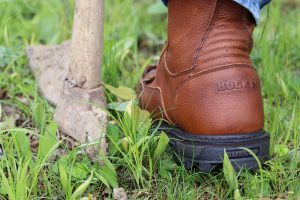
Another thing I’ve noticed with logger-style boots is durability. They’re built with tougher use in mind, and Rocky has a long track record of making boots that hold up when the work isn’t easy.
Best for: Logging, land clearing, fence work, rural property maintenance, excavation, outdoor construction.
Why I’d choose them: If I’m working on uneven ground or in rough country, I want traction and ankle support over everything else.
Best Pull-On Work Boot: Durango Rebel Steel Toe
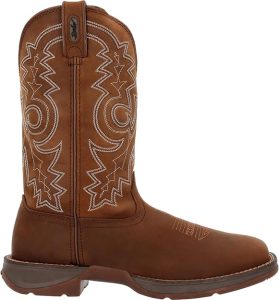
Some guys don’t want laces. I understand completely. If you’re climbing in and out of trucks, moving between jobsite and house, ranch work, equipment operation, or farm chores, pull-on boots save time and hassle. Durango does western-inspired work boots extremely well. Their Rebel line combines comfort with easier entry and practical toughness.
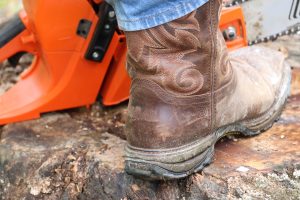
What I like most is flexibility. Some pull-ons feel stiff and clunky. Durango boots often feel lighter and easier to move in. That matters if you’re squatting, climbing, hopping off trailers, or spending the day active. Steel toe options also make them practical for many trades. They’re especially popular with ranchers, mechanics, drivers, and outdoor workers who want convenience without giving up durability.
Best for: Ranch work, trucking, mechanics, farming, equipment operators.
Why I’d choose them: If I wanted a no-fuss boot I could step into before sunrise and trust all day, Durango would be near the top.
Best Lightweight Waterproof Boot: Rocky MonoCrepe Wedge
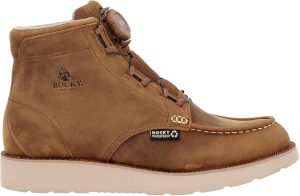
Some workers hate heavy boots more than anything else. If that sounds like you, Rocky deserves attention. Rocky has built many practical work boots over the years, and their MonoCrepe line focuses on lighter weight comfort without sacrificing work-ready features.
That lighter feel matters if you’re walking miles every shift. Every ounce on your foot feels heavier by the end of the day. I also like Rocky for mixed indoor/outdoor use. Waterproof construction helps when conditions shift, while the wedge sole stays comfortable on concrete and packed surfaces. This is a strong choice for service techs, inspectors, property maintenance crews, and workers who move constantly but don’t need maximum logger-level toughness.
Best for: Service work, maintenance, route jobs, lighter construction, mixed indoor/outdoor work.
Why I’d choose them: If I needed something easier on my legs during high-mileage days, Rocky would be high on my list.
Best Wet Weather and Mud Boot: Muck Boot Originals

There are jobs where leather boots simply aren’t the answer. If you work livestock, agriculture, landscaping, drainage, fishing property, muddy jobsites, or wet winter chores, constantly soaking leather boots is frustrating and expensive.
That’s where Muck Boot dominates. Their waterproof rubber/neoprene style boots are built specifically for wet environments. Slip them on, hose them off, and keep moving. They’re warmer than traditional leather boots, cleaner in muddy settings, and unbeatable for messy conditions. I wouldn’t choose them for welding or framing houses, but I absolutely would for barn work, wet ground, creek crossings, and miserable weather. Every outdoorsman should probably own a pair, even if it’s not their daily work boot.
Best for: Farms, livestock, landscaping, wet weather, mud, winter chores.
Why I’d choose them: When conditions are nasty, dry feet matter more than style.
How I Chose The Winners
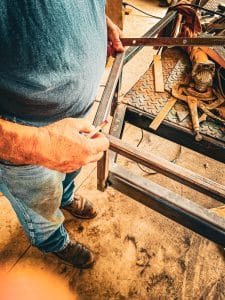
Before recommending these boots, I focused on how they actually perform where it matters—on the job. That meant long days on concrete floors, uneven ground, mud, and wet conditions, not just a quick try-on. I paid close attention to how each boot felt after 8 to 10 hours on my feet, because comfort early in the day doesn’t mean much if your knees, back, or arches are barking by lunch. Break-in time was another big factor. Some boots feel great right away, while others take a week or two before they really start working with your foot instead of against it. I also looked closely at traction, especially when moving between surfaces like smooth concrete, loose dirt, and slick mud, and at durability in high-wear areas like the outsole, toe box, and stitching. At the end of the day, a good work boot isn’t judged in a store—it’s judged after a full shift when you’re tired, still on your feet, and not thinking about your boots at all.
Final Thoughts: Which Work Boot Would I Buy?
At the end of the day, there isn’t a single “best” work boot, there’s just the best one for the job you’re asking it to do. Same goes for best work jacket.
If I needed one everyday boot that could handle a little bit of everything, I’d go with Thorogood. It’s the kind of boot that shows up, does its job, and doesn’t give you a reason to think about your feet halfway through the day.
If I was spending long hours on concrete or hard indoor surfaces, Irish Setter would be hard to pass up. Comfort adds up over time, and when your knees and back aren’t screaming at you after a shift, you realize how much that matters.
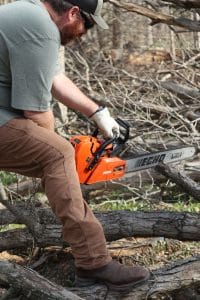
For rough ground, hillsides, or outdoor work where footing matters, I’d grab the Rocky Loggers. That traction and ankle support can be the difference between working confidently and constantly watching your step.
If I wanted something I could pull on and go without messing with laces, Durango makes a lot of sense, especially for guys bouncing in and out of trucks or working around a farm or ranch.
For days where I’m covering serious ground and don’t want to feel like I’m dragging bricks around, the Rocky MonoCrepe is a solid option. Lightweight boots don’t sound like a big deal until you’ve walked miles in a heavier pair.
And when conditions turn wet, muddy, or just plain miserable, Muck Boots earn their spot. There’s no substitute for dry feet when everything around you is soaked.
But here’s the part a lot of guys overlook, and it might be the most important piece of all: how a boot feels on your foot matters just as much as what it’s built for.
You can buy the toughest, most highly rated boot on the market, but if it doesn’t fit your foot right, it’s the wrong boot. Everyone’s foot is different. Some run wide, some narrow. Some need more arch support, others need more cushion. What feels great to one guy might be miserable to another.
That’s why break-in, fit, and overall feel should carry just as much weight as brand name or features. A boot should feel secure without pinching, supportive without being stiff, and comfortable enough that you’re not counting the hours until you can take it off.
I’ve always believed you know a good boot when you stop thinking about it. When you’re focused on the work instead of your feet, that’s when you’ve got the right pair. In the end, buy for your job, pay attention to how it fits, and don’t be afraid to spend a little more for something you’re going to live in every day. Your feet take the brunt of everything you do, taking care of them isn’t a luxury, it’s part of the job.
Per our affiliate disclosure, we may earn revenue from the products available on this page. To learn more about how we test gear, click here.