



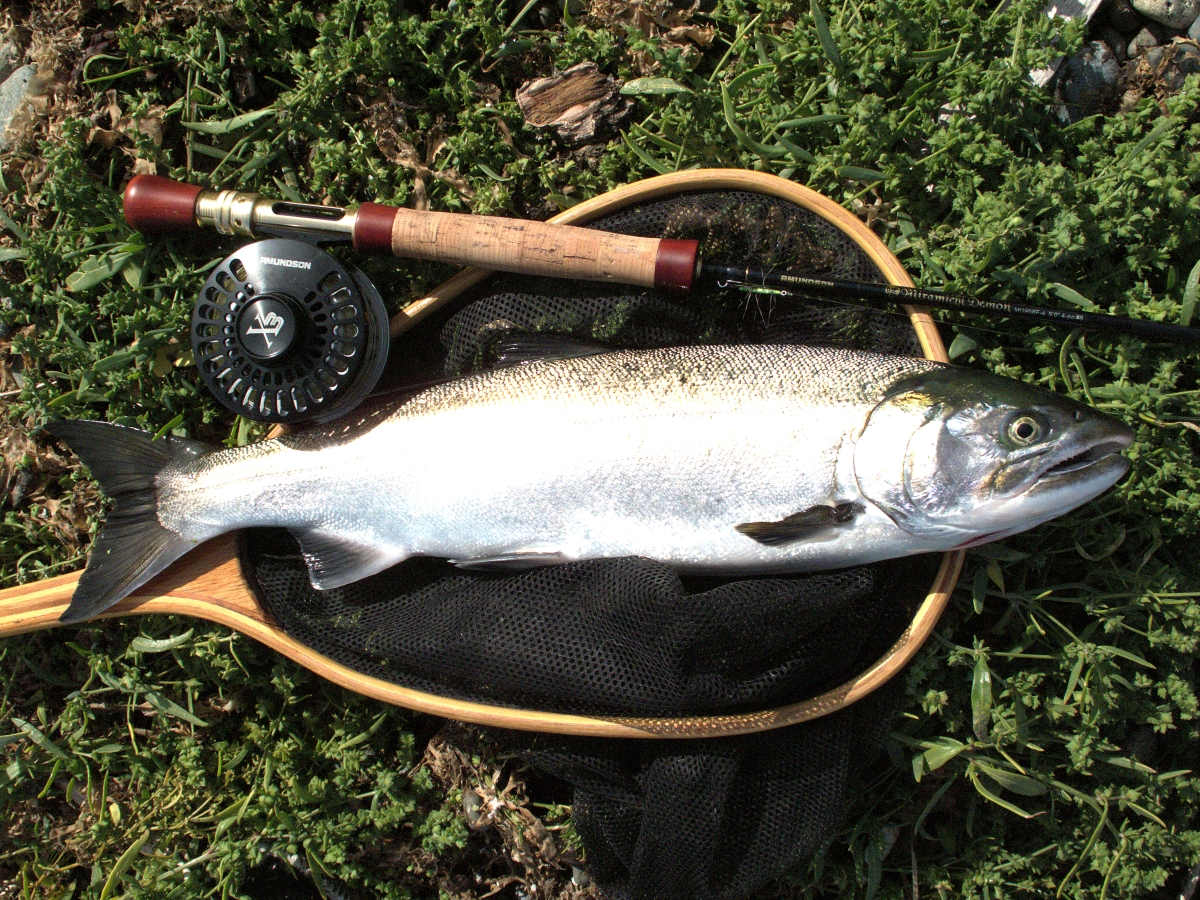
Autumn is more than just a season—it’s an invitation. With the kids back in school and the lakes growing quieter, it becomes the perfect time for seasoned anglers to reconnect with nature. Whether you’re chasing hard-fighting coho salmon or the deep-bodied trout of cooler waters, fall offers unmatched serenity and challenge. This story captures the essence of autumn fishing, with reflections from the wilds of British Columbia and a wealth of practical tips to improve your success—especially when it comes to salmon fishing during this magical season.
Why Autumn Is the Best Time for Trout and Salmon Fishing
Cooler evenings and cooler water temperatures come with the fall, and trout and salmon start to move and feed with regularity again. Autumn fishing may not be the most productive, but it produces some of the strongest, healthiest fish of the season. It also leaves me with my most memorable moments. There are not many things in this world that can match waking to the sounds of songbirds, and then crawling out of the sleeping bag to watch the rising sun cast light-spears through the lake mist on a crisp fall morning. After a leisurely breakfast, it’s up with the gear and onto the water for a chance to hook into an aquatic fireball.
It’s a mixed blessing that autumn has no prolific insect hatches to speak of really; you are saved the agony of constantly smacking the mosquitoes, blackflies, horseflies and deerflies, but there aren’t any caddisflies, mayflies, or stoneflies to bring the fish to the surface. Fall trout fishing is almost entirely wet fly fishing. However, this time of year still requires that you employ the old “match the hatch” adage religiously. This means matching the feed’s size, shape, color and movement, in that order, as closely as possible. Since there isn’t a lot of insect activity this time of year though, you are stuck imitating scuds, leeches or dragonfly nymphs unless you luck into a backswimmer mating flight.
Choosing the Correct Fly for Salmon
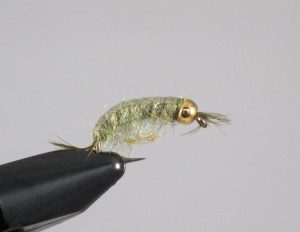
To bring this to light let me relate a little story to you. Years back a buddy and I ventured to the Cariboo area of British Columbia one fall to try our luck in a lake we had never been to before. The days were sunny and warm and the nights freezing, literally. Fishing was very poor to say the least, but we managed to land one nice three-pound rainbow the first afternoon and we gutted it. The fish was half full of green mush: diatoms. We thought we were out of luck but we decided to “match the hatch” as closely as we could. Obviously we couldn’t tie any green mush flies but we could match the color. I tied on a medium olive damsel nymph and Ian tried a green Werner shrimp. While the fishing never got exceptional, we did manage half a dozen fish each the rest of the day and continued to be successful for the rest of the trip. The fish weren’t taking anything in particular, but green was definitely the color they were onto and our success proved it; when in doubt stick to the rules.
Fly Fishing the Backswimmer Mating Flight
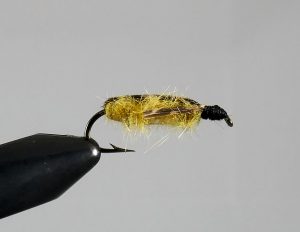
I mentioned the backswimmer mating flight. If you happen to be out on a lake during autumn and notice what looks to be a hatch occurring mid-day or into the afternoon, you should remember that the backswimmers mate at this time of year. They mate in the air and then plunge back into the water to lay their eggs. The fish feed on them much like a hatch, but their movements are from the top down instead of from the bottom up like caddisfly or midge pupae. You have to adapt your technique to imitate this motion, and it is easy with any standard wet line and a buoyant backswimmer imitation. Standard (not uniform sink) wet lines form a natural belly in the water as they sink because the thickest portion is heavier than the tapered end, thus the thick portion sinks faster. If you use a buoyant fly imitation and a bit of a long leader, then when you start to retrieve the fly the line will draw the fly under the water and towards the bottom just like the natural action. Retrieve in short jerky strips and you will have a killer imitation.
Fall Coho Salmon Fishing
For many of us who live up in the northwest, the best thing about fall is that the coho salmon start pouring into the estuaries staging for spawning. In some of the areas in the Northwest, pink salmon will also be wrapping up their run in late August and remnants can hang around into early September. This offers the estuary fly-fisher even more opportunities at the same time. And with sea run cutthroat and Dolly Varden available in most of our estuaries as well, that just pushes it all over the top for me. Guess you can figure out where I’ll be in September whenever I get some spare time. If we are lucky, the fall rains will not happen in earnest until late October. This will cause the coho to stack up in the estuaries waiting for the river levels to rise before moving into the rivers themselves and upstream to spawn. As many fly-fishers can tell you, there is nothing quite as exciting as having a bay full of coho rolling and leaping within casting distance from you. What a hoot!
Correct Presentation
It takes a bit of adjustment going from fly-fishing for pinks to fly-fishing for coho. Pinks are smaller, are soft mouthed and prefer their prey presented slowly. Coho are larger and stronger, have hard mouths and like chasing and killing their food. Generally speaking, these two species also prefer different colored flies that imitate different types of food. Actually, except for the fact that they dwell in salt water, there is very little similar when fly-fishing for these two salmon. For pinks I like to use #8 flies. For the most part I stick to pink colors as well, and I prefer sparsely tied flies, not too dense. I find simple, sparse patterns retrieved slowly (almost hand twist speed) to be the most effective. When pink isn’t working, I’ll switch to minnow patterns of green and blue, although I have heard some people have great success with a rolled Muddler minnow. If you know where the edges of the school are, cast past the school and just a hair to the side and let the current pull your fly into the fish as you retrieve. Don’t forget to mend your line as well; the salmon prefer their food facing into the current like the naturals you are imitating. If you don’t know where the edges of the school are, start by making short casts close to you and extend line a little with each consecutive cast until you either hit a fish or you spot jumpers giving away the fishes’ location. Although you may often see jumping pinks that mark the location of the schools, remember that the vast majority of the fish are usually deeper in the water column and remember to allow your fly to sink a little before starting your retrieve. You will hit into many more fish if your fly ends up directly in front of their noses.
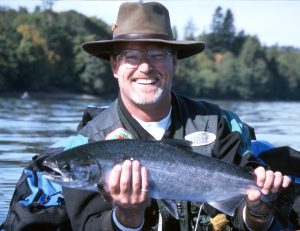
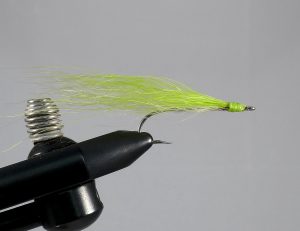
When fly-fishing the coho on the other hand, I use a #6 or #8 hook size. Over the years I have found that fluorescent chartreuse is by far the most productive color for these salmon. I fish mainly two patterns now, the California Neil and what I call my coho streamer, which is just polar bear chartreuse over white; very simple and very effective. When one isn’t working the other usually will. If both fail to work then I’ll change tactics and fish my Coho Sunset, which is a red and yellow fly a little bit like a Mickey Finn. Regardless of the fly, when you cast and retrieve for coho, retrieve the fly as fast as you can go. Coho love the chase and they attack things that run away from them. They hit hard and run and jump like crazy. Make sure your loose line is clear of obstacles and fingers because once a coho strikes, inevitably the first thing it does is head the other direction at top speed. And remember that you need a lot of backing on your spool to catch these great fish. 100 yards is not too much backing; I’ve had larger coho tear line out with impunity for great distances, then they jump!
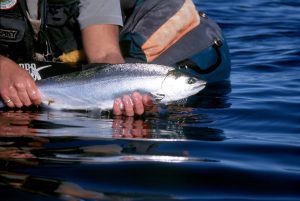
Yes, autumn is a wonderful time of year. We are so blessed to live where we do and have all these great opportunities just waiting to be experienced. Grab your rod and get out on the water. Then in the dregs of winter you’ll at least be able reminisce about the great fall you had instead of lamenting another lost opportunity.
Per our affiliate disclosure, we may earn revenue from the products available on this page. To learn more about how we test gear, click here.